

View Poll Results: Would you support lowered speed limits in your state?
Yes I would !


4
17.39%
No Way


17
73.91%
I don't know ? I have to think about it ?


2
8.70%
Voters: 23. You may not vote on this poll
Drive Less, Live Longer ?




 Drive Less, Live Longer ?
Drive Less, Live Longer
MCF Member's, Please vote in above poll `OK
Also ~> Post your thoughts/comments....Please read article before casting your `Vote
New Study Confirms Speeding Is Hazardous To Your Health Oh`No....+ it can be ExPensive On `No...
What 2 `do ~> ...So difficult going slow
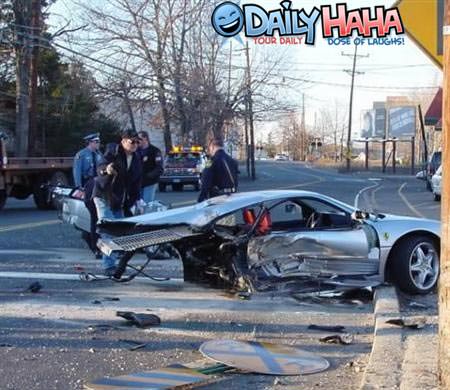
Posted: Jun 23, 2010

A new study has found that slowing down on the road can have a positive effect on your life (djsosumi, Flickr).
by: Kevin Ransom | AOL Autos
Let’s face it: Most motorists just drive too fast. Too many people are in too big a hurry to get where they’re going. Safety experts and law enforcement agencies are constantly admonishing the lead-footed to “Just Slow Down!” And to underscore that point, a recent study by a Canadian research team has determined that driving decreases life expectancy.
According to the study, every hour you spend behind the wheel in North America leads to a 20-minute loss of life expectancy due to the risks of a fatal car crash. Further, the study concluded that by slowing down just two miles per hour, the average driver would increase their life expectancy by three hours per year.
Find Out More About Car Safety:
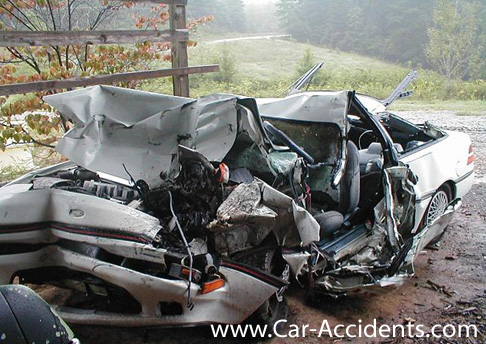
“When drivers speed to get to their destination faster, they actually lose more time because the savings from faster travel are offset by the increased prospect of a crash,” says Dr. Donald Redelmeier, the lead investigator in the study. Redelmeier is a professor of medicine at the University of Toronto and a staff physician at Sunnybrook Health Sciences Centre, Canada’s largest trauma center.
“The study suggests that small changes can have large consequences...and would translate to approximately 3 million fewer property-damage crashes, one million fewer injurious crashes, and 9,000 fewer fatalities each year in the United States,” says Redelmeier, who believes that if North American drivers would slow down by two miles per hour, it could reduce crash-related property damage by about $10 million each day.
Watch your speed while in these fast cars.~> Any year Chevrolet Monte Carlo : )
Keeping with the old truism that most crashes occur within 25 miles of your home, Redelmeier warns that the chances of being in a fatal car crash are just as high when you’re running errands around town as they are if you’re on a long trip, out on the freeway. “Even a short trip can put you into contact with 100 other drivers, some of whom may be speeding, some of whom may have poor driving skills, and any one of those could ruin your life, forever,” he says.
One sad statistic is that for every person who is killed in a car crash in North America, there are another 50 individuals who suffer crash-related injuries, with 20 of those injuries being permanently disabling, says Reidemeier.
The study was based on a combination of computerized traffic modeling, national statistics covering driving on public roadways, and the laws of physics. The computer models calculated results taking into account average distances and time drivers in the United States spend traveling daily, the number of annual crashes categorized as fatal, injuries and property damage, and the expected time losses due to accidents.
The study was supported by the Canada Research Chair in Medical Decision Sciences, the Canadian Institutes of Health Research, the National Institutes of Health Resuscitation Outcomes Consortium, and the Patient Safety Service of Sunnybrook Health Sciences Centre.
“What inspired this study was what I saw at the hospital. I am always amazed that so many of my patients in the trauma center were injured in crashes that were caused by excessive speed,” says Redelmeier. “And I’m not talking about egregious speeding, like the psycho who is driving 150 miles an hour. I’m just talking about the drivers who are maybe a little over-confident, and are maybe driving a few miles an hour faster than they should be.
“And if you’re someone who frequently drives 80 miles an hour, slowing down to 65 or 70 would result in an even more significant increase in your life expectancy.

Leonard Evans, author of “Traffic Safety,” a popular textbook on the subject, says the results of Redelmeier’s study “are very much in accord” with his own findings. “Speed is the most important factor in traffic safety,” he stresses.
Evans, a retired General Motors research scientist, cites the “three simple laws,” as he calls them, that he spelled out in his book:
“Number one, the faster you drive, the more likely you are to crash,” says Evans. “Number two, the faster you were going, the more likely you are to be injured. And number three, if you’re injured, the faster you were traveling, the more likely you are to be killed.
Redelmeier also stresses that his findings bolster the argument for increasing government efforts to reduce speeding, including photo radar, traffic calming programs, and crackdowns on street racing. "Such programs can have huge gains even if partially effective and imperfectly run," says Redelmeier.
Evans agrees that such government programs and practices need to be implemented and enforced. “There is a great deal of evidence that if you drive just two percent faster, your risk of being killed increases by 10 percent,” he says.
Redelmeier and Evans both believe that the government isn’t nearly pro-active enough in implementing such programs. “The United States lags way behind other countries in terms of programs like red light cameras and photo radar,” says Redelmeier. “The efforts to curb speeding are much more advanced in many other countries.”

MCF Member's, Please vote in above poll `OK
Also ~> Post your thoughts/comments....Please read article before casting your `Vote
New Study Confirms Speeding Is Hazardous To Your Health
Oh`No....+ it can be ExPensive On `No...What 2 `do ~>
...So difficult going slow Posted: Jun 23, 2010
A new study has found that slowing down on the road can have a positive effect on your life (djsosumi, Flickr).
by: Kevin Ransom | AOL Autos
Let’s face it: Most motorists just drive too fast. Too many people are in too big a hurry to get where they’re going. Safety experts and law enforcement agencies are constantly admonishing the lead-footed to “Just Slow Down!” And to underscore that point, a recent study by a Canadian research team has determined that driving decreases life expectancy.
According to the study, every hour you spend behind the wheel in North America leads to a 20-minute loss of life expectancy due to the risks of a fatal car crash. Further, the study concluded that by slowing down just two miles per hour, the average driver would increase their life expectancy by three hours per year.
Find Out More About Car Safety:
“When drivers speed to get to their destination faster, they actually lose more time because the savings from faster travel are offset by the increased prospect of a crash,” says Dr. Donald Redelmeier, the lead investigator in the study. Redelmeier is a professor of medicine at the University of Toronto and a staff physician at Sunnybrook Health Sciences Centre, Canada’s largest trauma center.
“The study suggests that small changes can have large consequences...and would translate to approximately 3 million fewer property-damage crashes, one million fewer injurious crashes, and 9,000 fewer fatalities each year in the United States,” says Redelmeier, who believes that if North American drivers would slow down by two miles per hour, it could reduce crash-related property damage by about $10 million each day.
Watch your speed while in these fast cars.~> Any year Chevrolet Monte Carlo : )
Keeping with the old truism that most crashes occur within 25 miles of your home, Redelmeier warns that the chances of being in a fatal car crash are just as high when you’re running errands around town as they are if you’re on a long trip, out on the freeway. “Even a short trip can put you into contact with 100 other drivers, some of whom may be speeding, some of whom may have poor driving skills, and any one of those could ruin your life, forever,” he says.
One sad statistic is that for every person who is killed in a car crash in North America, there are another 50 individuals who suffer crash-related injuries, with 20 of those injuries being permanently disabling, says Reidemeier.
The study was based on a combination of computerized traffic modeling, national statistics covering driving on public roadways, and the laws of physics. The computer models calculated results taking into account average distances and time drivers in the United States spend traveling daily, the number of annual crashes categorized as fatal, injuries and property damage, and the expected time losses due to accidents.
The study was supported by the Canada Research Chair in Medical Decision Sciences, the Canadian Institutes of Health Research, the National Institutes of Health Resuscitation Outcomes Consortium, and the Patient Safety Service of Sunnybrook Health Sciences Centre.
“What inspired this study was what I saw at the hospital. I am always amazed that so many of my patients in the trauma center were injured in crashes that were caused by excessive speed,” says Redelmeier. “And I’m not talking about egregious speeding, like the psycho who is driving 150 miles an hour. I’m just talking about the drivers who are maybe a little over-confident, and are maybe driving a few miles an hour faster than they should be.
“And if you’re someone who frequently drives 80 miles an hour, slowing down to 65 or 70 would result in an even more significant increase in your life expectancy.
Leonard Evans, author of “Traffic Safety,” a popular textbook on the subject, says the results of Redelmeier’s study “are very much in accord” with his own findings. “Speed is the most important factor in traffic safety,” he stresses.
Evans, a retired General Motors research scientist, cites the “three simple laws,” as he calls them, that he spelled out in his book:
“Number one, the faster you drive, the more likely you are to crash,” says Evans. “Number two, the faster you were going, the more likely you are to be injured. And number three, if you’re injured, the faster you were traveling, the more likely you are to be killed.
Redelmeier also stresses that his findings bolster the argument for increasing government efforts to reduce speeding, including photo radar, traffic calming programs, and crackdowns on street racing. "Such programs can have huge gains even if partially effective and imperfectly run," says Redelmeier.
Evans agrees that such government programs and practices need to be implemented and enforced. “There is a great deal of evidence that if you drive just two percent faster, your risk of being killed increases by 10 percent,” he says.
Redelmeier and Evans both believe that the government isn’t nearly pro-active enough in implementing such programs. “The United States lags way behind other countries in terms of programs like red light cameras and photo radar,” says Redelmeier. “The efforts to curb speeding are much more advanced in many other countries.”
Last edited by Space; Jun 24, 2010 at 06:34 AM.


Monte Of The Month -- January 2013





Joined: Aug 2008
Posts: 5,612
From: London, Ontario

I dunno. Driving less often I'm for. But everyone will be safe and fine if they are slow and stay out of my way while I speed. The speed limit should drop for everyone but people in red cars. But slow cars cause accidents when they meet fast cars, so its not a good plan...

You can drop the speed limit. It won't do anything. When they had drive 55 laws in this country, the people who drive 65 now were driving 55. Most people just kept on flying like they didn't even care. If anything, the difference in speed was greater and caused more accidents, I would think. When some western states raised their speed limits to 75, the Federal Highway Institutie (or whoever) came up and said that there would be like 1500 more deaths per year on those roads.... but according to Overdrive Magazine, a reading for truck drivers that is published monthly, the result was a decreased of about the same number over about a 3 year span. They determined that when people are driving faster, their reflexes were heightened and they were more alert about what they were doing. Take it for what you will... and I don't see how driving shortens your life expectancy that much. You can crash tomorrow as well as you can 15 years from now, so it's not like most people are drastically cutting their lives shorter by driving a car.
I dunno. Driving less often I'm for. But everyone will be safe and fine if they are slow and stay out of my way while I speed. The speed limit should drop for everyone but people in red cars. But slow cars cause accidents when they meet fast cars, so its not a good plan...

LOL `Brent,
Thanks for the comic relief this morning
I guess everyone should paint their Monte's RED : ) Thanks for your words/posts : )______________________________________
Hi `Duane (CowBoy), some valid points. Thanks for your comments, & I wish you and readers a safe/happy `Journey of your highways of `Life....
p.s. `Duane...Look'in 4ward to pic's/updates on your Torino


Monte Of The Month -- January 2011

Joined: May 2008
Posts: 1,035
From: Staten Island, New York
I admit that I did not read everything posted above, but I do not support lowering the speed limit....to me there are many more factors to safe driving other then the speed...
Drivers by me, are much more unsafer and not attentive to what they are doing, this cause more saftey issues by far more then speeding...
The biggest thing by me, is the lack of utilization of the directional...coupled with the fact that it always seems that people in the left lane, always have to get into the right lane at the last possible minute or vice versa...with or without a directional they will just blindly cross 2/3/4 lanes of traffic to get to where they have to go to make the turn instead of going up a lil further if they miss there turn, then coming back in a more safer manor...and if someone is going the speed limit, or even a bit faster it is impossible to stop in time, and of course the accident is attributed to speeding and not the fact that someone cut the person off last minute...
Another big thing is lack of consideration...when someone is sitting in the left lane, doing below the speed limit just cruising along while there is a big lineup of cars who wanna go behind him....now all of those cars have to make "Manuevers" to get around said person...this ussually causes lotsa issues when you have 3/4/5/10 cars going from the left lane to the middle and back again to get around 1 person....or even worse can result in tailgating which doesn't end up well if someone jams on there brakes I know this happens alot in NYC...so much so that when I take long trips elsewhere, I was amazed that when I was coming up in the left lane, cars/trucks and pretty much everyone was moving over for me, way in advance...I was SERIOUSLY Astonished at the consideration....
ANother irk, is when coming up to a light on a 2/3/4 lane road and one lane is open, so one of the cars jumps into that lane, then goes no faster then the car they were behind...
Add in the new thing of cell phones that just takes the persons attention completely away and that by far is more dangerous then anything....
As a matter of fact I think the people who are speeding are generally paying more attention to the road and whats going on around them then most anyone else...
Now I know there's a lot of studies showing this and that, there will always be studies and theories to negate things, but that's my general experience, that if people were more considerate, and more attentive to what they were doing, and what's going on around them, there would be far less accidents, and deaths then there are, and not just throw the blame on speeding...
MO,
Joe
Drivers by me, are much more unsafer and not attentive to what they are doing, this cause more saftey issues by far more then speeding...
The biggest thing by me, is the lack of utilization of the directional...coupled with the fact that it always seems that people in the left lane, always have to get into the right lane at the last possible minute or vice versa...with or without a directional they will just blindly cross 2/3/4 lanes of traffic to get to where they have to go to make the turn instead of going up a lil further if they miss there turn, then coming back in a more safer manor...and if someone is going the speed limit, or even a bit faster it is impossible to stop in time, and of course the accident is attributed to speeding and not the fact that someone cut the person off last minute...
Another big thing is lack of consideration...when someone is sitting in the left lane, doing below the speed limit just cruising along while there is a big lineup of cars who wanna go behind him....now all of those cars have to make "Manuevers" to get around said person...this ussually causes lotsa issues when you have 3/4/5/10 cars going from the left lane to the middle and back again to get around 1 person....or even worse can result in tailgating which doesn't end up well if someone jams on there brakes I know this happens alot in NYC...so much so that when I take long trips elsewhere, I was amazed that when I was coming up in the left lane, cars/trucks and pretty much everyone was moving over for me, way in advance...I was SERIOUSLY Astonished at the consideration....
ANother irk, is when coming up to a light on a 2/3/4 lane road and one lane is open, so one of the cars jumps into that lane, then goes no faster then the car they were behind...
Add in the new thing of cell phones that just takes the persons attention completely away and that by far is more dangerous then anything....
As a matter of fact I think the people who are speeding are generally paying more attention to the road and whats going on around them then most anyone else...
Now I know there's a lot of studies showing this and that, there will always be studies and theories to negate things, but that's my general experience, that if people were more considerate, and more attentive to what they were doing, and what's going on around them, there would be far less accidents, and deaths then there are, and not just throw the blame on speeding...
MO,
Joe


Monte Of The Month -- January 2010
Joined: May 2009
Posts: 8,464
From: San Jose, CA
I would be PISSED if they lowered the speed limit. Its 65 MPH on most HWY's and 70 on the main interstates. That is slow enough, and nobody follows it anyway, everyone goes 80+ around here.
Hell, i've been wishing they would raise our speed limits to 75MPH like some other states, now that would be more than welcomed!
Hell, i've been wishing they would raise our speed limits to 75MPH like some other states, now that would be more than welcomed!
Monte Of The Month -- January 2013
Joined: Aug 2008
Posts: 5,612
From: London, Ontario
Now I know there's a lot of studies showing this and that, there will always be studies and theories to negate things, but that's my general experience, that if people were more considerate, and more attentive to what they were doing, and what's going on around them, there would be far less accidents, and deaths then there are, and not just throw the blame on speeding...
And like Cowboy pointed out, speeders probably pay attention better. But not everybody is on the same page...




Monte Of The Month -- June 2010
Joined: Jul 2009
Posts: 4,528
From: Wentzville, Missouri
They've already dropped the speed limit 5mph+ in Troy & Wentzville & HWY 61 over a year ago, I'm not at other places enough to notice & I can tell ya that it hasn't made that big of a difference. It pissed me off when they lowered it & I started cursing at the stupid drivers in this area for causing that now I'm not the kid that goes 100mph down the interstate, I usually go between 65-70 when it's 60mph speed limit or I just go with the flow of traffic since I'm always in the fast lane. Like this morning on my way to school, the fast lane got up to 80mph for a few seconds & I just went right along with it
now I'm not the kid that goes 100mph down the interstate, I usually go between 65-70 when it's 60mph speed limit or I just go with the flow of traffic since I'm always in the fast lane. Like this morning on my way to school, the fast lane got up to 80mph for a few seconds & I just went right along with it