


=10 of the Fastest American-Made Cars =

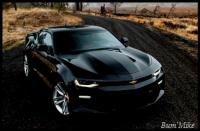






 =10 of the Fastest American-Made Cars =
10 of the Fastest American-Made Cars
Hi Member's,
Which one below do you like the best ?
If you could only test drive one (?), which one ?
Please post & let us know + add to the activity of the MCF...Our sponsor's love to
see activity on our forum & without sponsor's (?)>they would be no MCF
 Fiat Chrysler Automobiles
Speed is as American as the Constitution, Taco Bell, and the Super Bowl. It’s in our DNA – in fact, put any American, regardless of age, behind the wheel of a quick car and watch their face light up with pure, unadulterated joy as they stomp the gas. It’s just who we are. Sure, Europe may lay claim to the supercar, but they could never in their wildest dreams begin to match the pure hooliganism of a big V8, a lead foot, cheap gas, and hundreds of miles of straight, flat highway.
And with technology raising horsepower and top speeds, while emissions and prices fall, American automakers are in the middle of a golden age that harkens back to the days of fast and powerful muscle cars in the 1960s and ’70s. Only now, we’ve figured out how to handle the Europeans, and as a result our now finest performance cars also happen to be among some the best cars on the entire planet.
Not only have Americans been able to hold their own on the international stage when it comes to speed, it can also lay claim to the fastest cars in the world. And after generations of design and engineering tweaks, speed has been democratized, and is now available to almost everyone with a driver’s license. And while our daily drivers have gotten faster, our performance cars have become downright insane.These 10 fastest American-made vehicles are a sight to behold, and are a rarity in their own right. If you happen to catch a glance of one, be sure to have the camera ready, as they’ll most likely be gone in the blink of an eye. For reference, we’ve compiled them right here in an easy-to-read list.
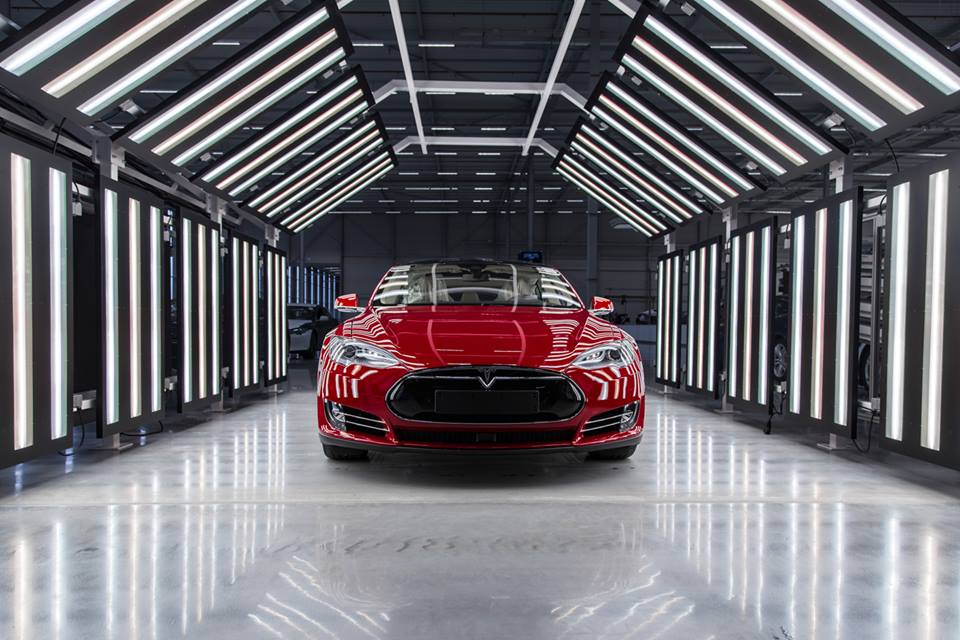
10. Tesla P90D (155 miles per hour)
 : Tesla
Yes, the P90D is limited to a top speed of “just”155 miles per hour, just like a full-size SUV from Mercedes. But unlike other cars in the 155 club (a common top speed for limited cars), the P90D has 762 horsepower and can sprint from zero to 60 in an eye-watering 2.8 seconds. Top speed be damned, the P90D is just plain quick.
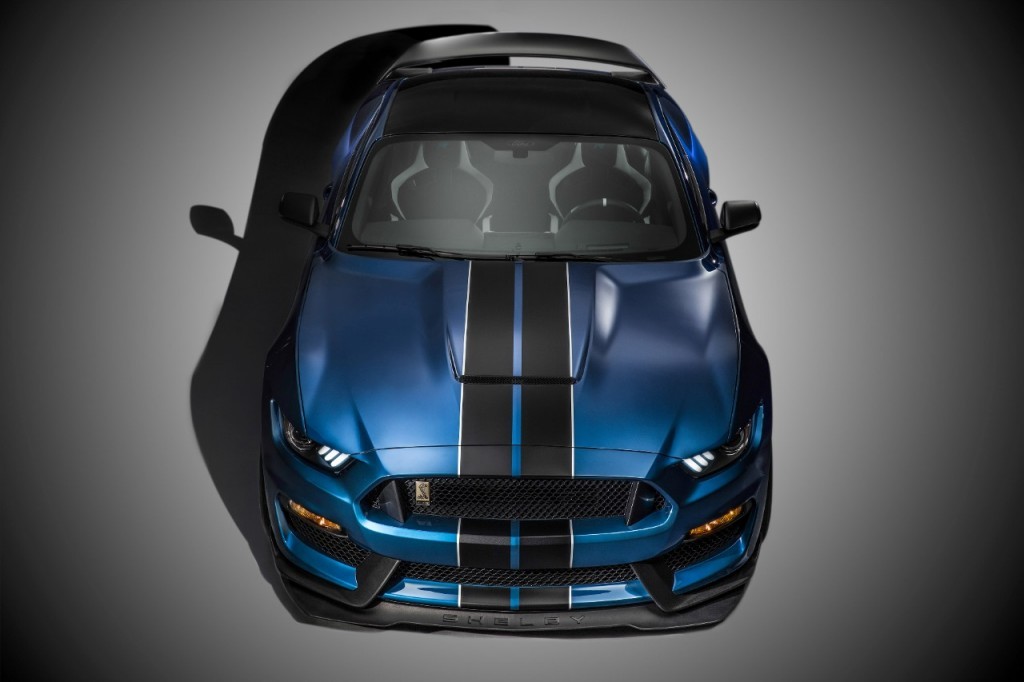
9. Ford Shelby GT350 (180 miles per hour)
Source: Ford
Unlike Shelby Musangs of yore, the GT350 is no straight-line rocket. I mean, it is that, but unlike its predecessors, this ponycar can actually take a corner too. In fact, the new GT350 carves corners about as well as Europe’s best, and is fast shaping up to be one of the most formidable track toys in the world. Zero to 60 comes in around 3.7 seconds, and with 526 horsepower and 429 pound-feet of torque coming from a Ferrari-inspired 5.2 liter flat-plane crank V8, it sounds unlike anything to ever come from the US of A. For drivers who view things like air conditioning and sound deadening as excess weight, they can opt for the even more track-focused GT350R (pictured above).
8. Chevrolet Camaro ZL1 (184 miles per hour)
Source: Chevrolet
With an all-new Camaro on the way, the current ZL1 is a lame duck, a fact Ford is all to happy to exploit with the GT350. But the current ZL1 is far from dead; it’s still available from Chevy, and with a 580 horsepower, 6.2 liter V8, it’s still one of the most formidable cars on the road. And while Ford has Chevy beat in the top end of the muscle car market for now, a next-generation ZL1 has just been spotted at the Nürburgring, and should hit the streets in 2017. Expect it to be lighter, meaner, and faster.
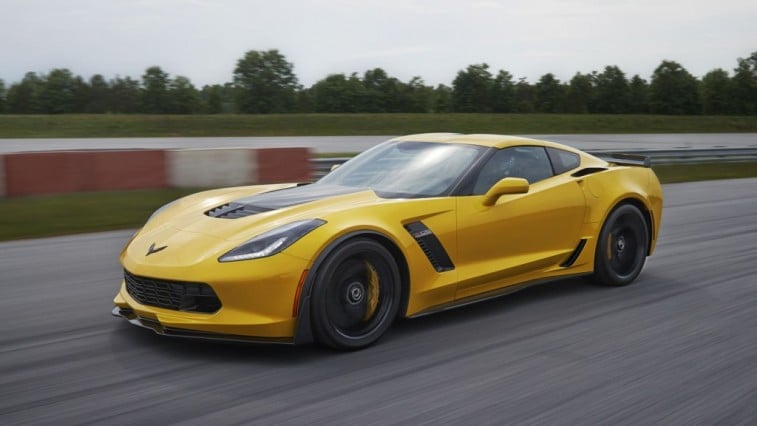
7. Chevrolet Corvette Z06 (185 miles per hour)
Source: General Motors
Like the Camaro, when the C6 Corvette was replaced by the infinitely better C7 in 2014, it lost its top-dog ZR-1. While that car could break the important 200-mile per hour mark, today’s Z06 tops out at 185. Still, the new ‘Vette is more refined in virtually every way, and with 650 horses taking the car from zero to 60 in 2.95 seconds, it’s plenty quick for most. For the few that are still unconvinced, rumor has it that Chevy is working on a next-gen ZR1 for 2017, and it may even be – gasp!– mid-engined.
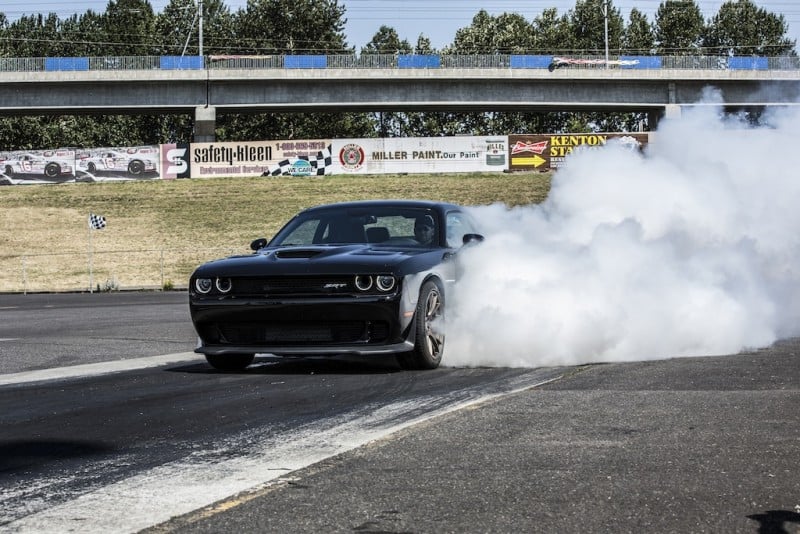
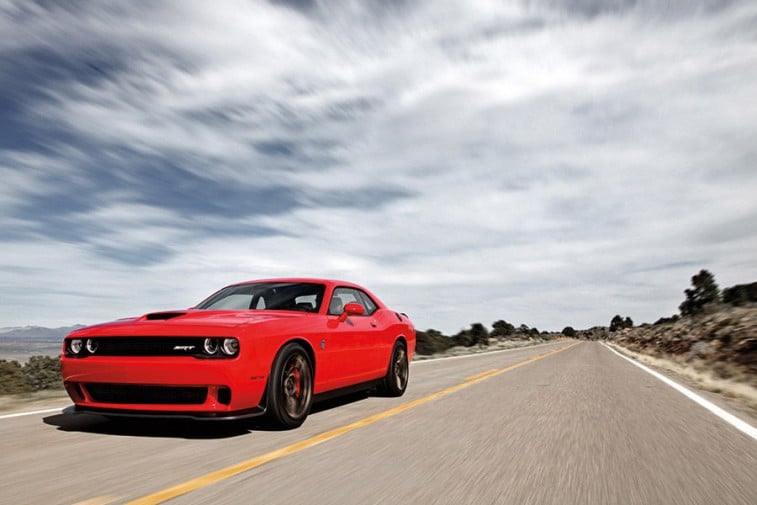
6. Dodge Hellcat Challenger (199 miles per hour)
 : Fiat Chrysler Automobiles
Frankly, we’re still getting over the fact that the mad geniuses at FCA found a way to legally sell a 707 horsepower car that can go from zero to 60 in around three seconds and top out at 199 miles per hour for under $60,000. If you ever needed a reason to love American cars, here it is.
5. Equus Bass 770 (200 miles per hour)
Source: Equus Automotive
What do you get when a shadowy European businessman decides to build a 640 horsepower, $200,000-plus sportscar that can hit the magic 200 mile per hour mark? Something as American as baseball, hot dogs, apple pie, and Chevrolet, that’s what. Unveiled at the 2014 Detroit North American International Auto Show as a 2015 model, the Detroit-built the Bass 770 is the most classic-looking muscle car to come out of the Motor City since the GM A-Body left production in ’81. Largely composed of carbon fiber and aluminum, and it borrows its 6.2-liter supercharged V8 engine form the Chevrolet Corvette.
4. Cadillac CTS-V (200 miles per hour)
Source: Cadillac
The last CTS-V was one hell of a performer. For 2016, Cadillac has made it even better. Car and Driver calls it the “four door Corvette,” and they’re not exaggerating. It shares its 640 horsepower supercharged V8 with the Z06, and astonishingly, Cadillac has found a way to make the engine even hotter. Zero to 60 comes in 3.7 seconds, on its way to a top speed of an even 200 miles per hour.
3. Dodge Hellcat Charger (204 miles per hour)
Source: Fiat Chrysler Automobiles
Like the CTS-V, Dodge’s big four-door shares its powerplant with a smaller coupe, and also like the Caddy, this sedan is faster. In fact, it’s the fastest production sedan in the world. For under $64,000, lucky Hellcat owners get a zero to 60 time of around 3.7 seconds, that 707 horsepower supercharged 6.2 liter V8 from the Challenger, and an incredible top speed of 204 miles per hour.
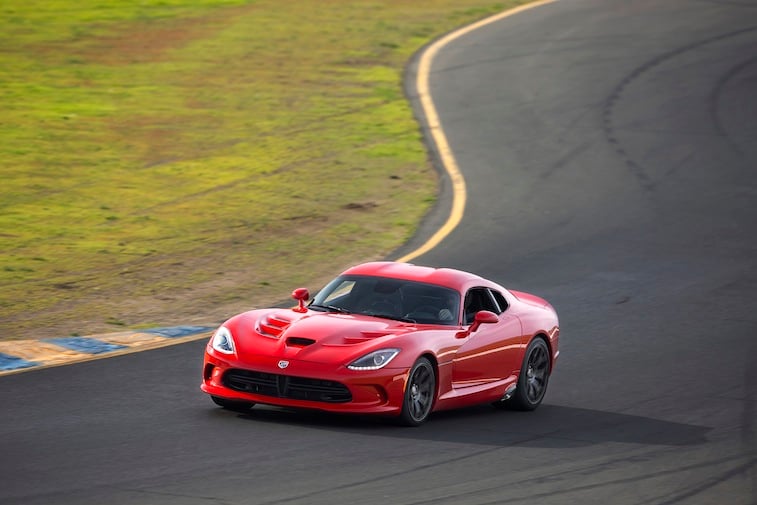
2. Dodge SRT Viper (206 miles per hour)
ource: Fiat Chrysler Automobiles
It’s no surprise that the boys and girls at Mopar all but own the top of the horsepower list, and the Viper is one of the biggest reasons why. Dodge’s long-serving halo car employs an 8.4 liter, 640 horsepower V10 engine, capable of going from 0-60 in around three seconds. With a price that starts $97,000, the Viper hardly seems like a bargain, but with that massive V10 and a top speed of 206 miles per hour, you’re talking about Ferrari performance for Mercedes S-Class prices.
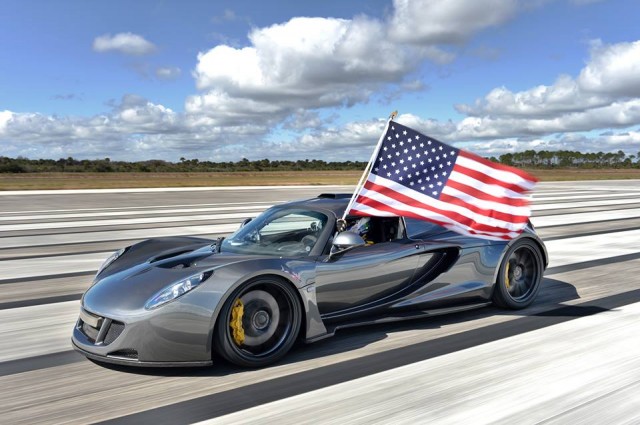
1. Hennessey Venom (270 miles per hour)
S
ource: Hennessey
More mythical beast than full-fledged production car, it would be a crime to put the Hennessey Venom GT anywhere but at the top of the list. Capable of speeds of up to 270 miles per hour, the Venom GT has beat out the Bugatti Veyron to become the world’s fastest production car. It practically leaves blisters on the asphalt, jumping from 0-100 miles per hour in 5.6 seconds thanks to its 1,244 horsepower 7.0-liter Twin Turbocharged V8 engine. Manufactured in Texas, the $1.2 million Venom GT is easily the fastest road car to ever come from America.
Hi Member's,
Which one below do you like the best ?
If you could only test drive one (?), which one ?
Please post & let us know + add to the activity of the MCF...Our sponsor's love to
see activity on our forum & without sponsor's (?)>they would be no MCF
- October 03, 2015
Fiat Chrysler AutomobilesSpeed is as American as the Constitution, Taco Bell, and the Super Bowl. It’s in our DNA – in fact, put any American, regardless of age, behind the wheel of a quick car and watch their face light up with pure, unadulterated joy as they stomp the gas. It’s just who we are. Sure, Europe may lay claim to the supercar, but they could never in their wildest dreams begin to match the pure hooliganism of a big V8, a lead foot, cheap gas, and hundreds of miles of straight, flat highway.
And with technology raising horsepower and top speeds, while emissions and prices fall, American automakers are in the middle of a golden age that harkens back to the days of fast and powerful muscle cars in the 1960s and ’70s. Only now, we’ve figured out how to handle the Europeans, and as a result our now finest performance cars also happen to be among some the best cars on the entire planet.
Not only have Americans been able to hold their own on the international stage when it comes to speed, it can also lay claim to the fastest cars in the world. And after generations of design and engineering tweaks, speed has been democratized, and is now available to almost everyone with a driver’s license. And while our daily drivers have gotten faster, our performance cars have become downright insane.These 10 fastest American-made vehicles are a sight to behold, and are a rarity in their own right. If you happen to catch a glance of one, be sure to have the camera ready, as they’ll most likely be gone in the blink of an eye. For reference, we’ve compiled them right here in an easy-to-read list.
10. Tesla P90D (155 miles per hour)
: TeslaYes, the P90D is limited to a top speed of “just”155 miles per hour, just like a full-size SUV from Mercedes. But unlike other cars in the 155 club (a common top speed for limited cars), the P90D has 762 horsepower and can sprint from zero to 60 in an eye-watering 2.8 seconds. Top speed be damned, the P90D is just plain quick.
9. Ford Shelby GT350 (180 miles per hour)
Source: Ford
Unlike Shelby Musangs of yore, the GT350 is no straight-line rocket. I mean, it is that, but unlike its predecessors, this ponycar can actually take a corner too. In fact, the new GT350 carves corners about as well as Europe’s best, and is fast shaping up to be one of the most formidable track toys in the world. Zero to 60 comes in around 3.7 seconds, and with 526 horsepower and 429 pound-feet of torque coming from a Ferrari-inspired 5.2 liter flat-plane crank V8, it sounds unlike anything to ever come from the US of A. For drivers who view things like air conditioning and sound deadening as excess weight, they can opt for the even more track-focused GT350R (pictured above).
8. Chevrolet Camaro ZL1 (184 miles per hour)
Source: Chevrolet
With an all-new Camaro on the way, the current ZL1 is a lame duck, a fact Ford is all to happy to exploit with the GT350. But the current ZL1 is far from dead; it’s still available from Chevy, and with a 580 horsepower, 6.2 liter V8, it’s still one of the most formidable cars on the road. And while Ford has Chevy beat in the top end of the muscle car market for now, a next-generation ZL1 has just been spotted at the Nürburgring, and should hit the streets in 2017. Expect it to be lighter, meaner, and faster.
7. Chevrolet Corvette Z06 (185 miles per hour)
Source: General Motors
Like the Camaro, when the C6 Corvette was replaced by the infinitely better C7 in 2014, it lost its top-dog ZR-1. While that car could break the important 200-mile per hour mark, today’s Z06 tops out at 185. Still, the new ‘Vette is more refined in virtually every way, and with 650 horses taking the car from zero to 60 in 2.95 seconds, it’s plenty quick for most. For the few that are still unconvinced, rumor has it that Chevy is working on a next-gen ZR1 for 2017, and it may even be – gasp!– mid-engined.
6. Dodge Hellcat Challenger (199 miles per hour)
: Fiat Chrysler AutomobilesFrankly, we’re still getting over the fact that the mad geniuses at FCA found a way to legally sell a 707 horsepower car that can go from zero to 60 in around three seconds and top out at 199 miles per hour for under $60,000. If you ever needed a reason to love American cars, here it is.
5. Equus Bass 770 (200 miles per hour)
Source: Equus Automotive
What do you get when a shadowy European businessman decides to build a 640 horsepower, $200,000-plus sportscar that can hit the magic 200 mile per hour mark? Something as American as baseball, hot dogs, apple pie, and Chevrolet, that’s what. Unveiled at the 2014 Detroit North American International Auto Show as a 2015 model, the Detroit-built the Bass 770 is the most classic-looking muscle car to come out of the Motor City since the GM A-Body left production in ’81. Largely composed of carbon fiber and aluminum, and it borrows its 6.2-liter supercharged V8 engine form the Chevrolet Corvette.
4. Cadillac CTS-V (200 miles per hour)
Source: Cadillac
The last CTS-V was one hell of a performer. For 2016, Cadillac has made it even better. Car and Driver calls it the “four door Corvette,” and they’re not exaggerating. It shares its 640 horsepower supercharged V8 with the Z06, and astonishingly, Cadillac has found a way to make the engine even hotter. Zero to 60 comes in 3.7 seconds, on its way to a top speed of an even 200 miles per hour.
3. Dodge Hellcat Charger (204 miles per hour)
Source: Fiat Chrysler Automobiles
Like the CTS-V, Dodge’s big four-door shares its powerplant with a smaller coupe, and also like the Caddy, this sedan is faster. In fact, it’s the fastest production sedan in the world. For under $64,000, lucky Hellcat owners get a zero to 60 time of around 3.7 seconds, that 707 horsepower supercharged 6.2 liter V8 from the Challenger, and an incredible top speed of 204 miles per hour.
2. Dodge SRT Viper (206 miles per hour)
ource: Fiat Chrysler Automobiles
It’s no surprise that the boys and girls at Mopar all but own the top of the horsepower list, and the Viper is one of the biggest reasons why. Dodge’s long-serving halo car employs an 8.4 liter, 640 horsepower V10 engine, capable of going from 0-60 in around three seconds. With a price that starts $97,000, the Viper hardly seems like a bargain, but with that massive V10 and a top speed of 206 miles per hour, you’re talking about Ferrari performance for Mercedes S-Class prices.
1. Hennessey Venom (270 miles per hour)
S
ource: Hennessey
More mythical beast than full-fledged production car, it would be a crime to put the Hennessey Venom GT anywhere but at the top of the list. Capable of speeds of up to 270 miles per hour, the Venom GT has beat out the Bugatti Veyron to become the world’s fastest production car. It practically leaves blisters on the asphalt, jumping from 0-100 miles per hour in 5.6 seconds thanks to its 1,244 horsepower 7.0-liter Twin Turbocharged V8 engine. Manufactured in Texas, the $1.2 million Venom GT is easily the fastest road car to ever come from America.
Last edited by BeachBumMike; Oct 3, 2015 at 05:36 PM.




Thanks `Barbara, Ken & John,
Thanks for posting & selecting. (I know BIG PICTURES), but I just couldn't delete any of them `John, I knew that you would choose the awesome CVT
I'd like 2 have them `all, but I'd be happy to test drive anyone of them.
John, you are lucky to have one, but I know U work hard for your toys.
I choose the Corvette Z07 (It's a Dream)
Thanks for posting & selecting. (I know BIG PICTURES), but I just couldn't delete any of them
`John, I knew that you would choose the awesome CVT I'd like 2 have them `all, but I'd be happy to test drive anyone of them.
John, you are lucky to have one, but I know U work hard for your toys.
I choose the Corvette Z07 (It's a Dream)
 > BONUS POST >45 years ago (WoW)<
Drive Fast With Class in a 1970 Buick GSX
 Jordon Shultz/Autos Cheat Sheet
Though Buick is often thought of as a geriatric brand that only your grandparents would buy, the American automaker has a proud history of flying under the radar. The 1987 Buick GNX came out of nowhere to become the fastest U.S. production car in the world. While it’s far less publicized, this wasn’t the first time Buick silenced its critics and took the automotive industry by storm.
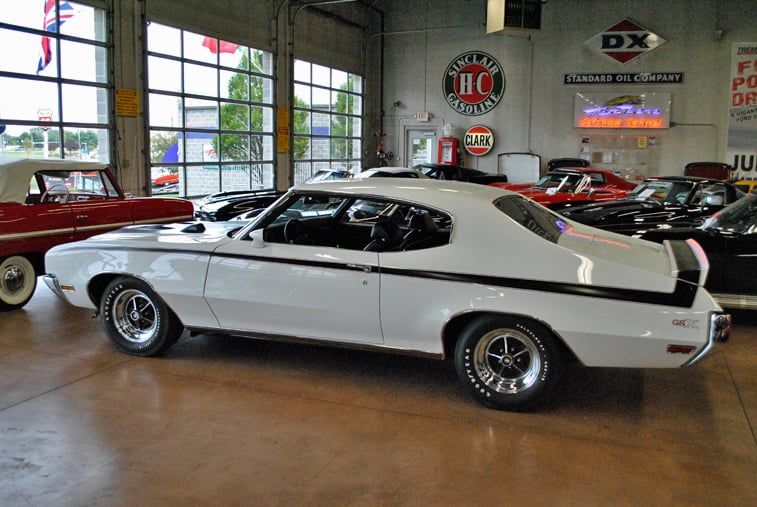
Seventeen years earlier, Bill Sanders from Motor Trend was putting a 1970 Buick GSX Stage 1 through its paces on a racetrack. Available only in flashy Saturn Yellow or Apollo White paint, the GSX looked very different from the rest of the Skylark Gran Sport lineup. An aggressive front air dam, trunk spoiler, black side panel, and hood stripes ensured the GSX wouldn’t go unnoticed.
With a tire-shredding 510 pound-feet, it had more torque than any American car ever produced at the time — a title that stood for 33 years until the debut of the 2003 Dodge Viper. According to Sanders, the car could accelerate from zero to 60 miles per hour in 5.5 seconds and blaze through the quarter-mile in a blistering 13.4 seconds at 105.5 miles per hour.
Its astonishing acceleration and quarter-mile times made the GSX the quickest production car Motor Trend had ever tested, leading Sanders to write that its horsepower rating “must be some kind of understatement record for the year.”
Sanders certainly wasn’t wrong, as Buick advertised its Stage 1 455 cubic-inch V8 with a 360 horsepower rating at only 4,600 RPM to keep insurance costs down. At the engine’s 5200 RPM redline, output was supposedly closer to 400.
Its corporate A-body siblings typically receive the most press in automotive publications and almost all of the attention at car shows. In the movie theaters, the LS6 Chevelle and GTO Judge often take center stage while the Buick’s cinematic legacy seems to start and end with YouTube.
 Jordon Shultz/Autos Cheat Sheet
Unsurprisingly, the GSX is rarely mentioned in discussions to determine the fastest muscle car of the 1960s and ‘70s. To be honest, I’m not sure Buick owners would have it any other way. Playing the role of the underdog is simply too much fun.
But in the November 1984 issue of Muscle Car Review, the underrated automaker finally got the respect it deserved after the 1970 Buick GS Stage 1 was named the third-fastest muscle car of all time behind only the 427 Cobra Roadster and 1966 427 Corvette. Soon after the issue was released, the publication received phone calls and letters from furious muscle car enthusiasts who couldn’t believe that a Buick was higher on the list than even the legendary Hemi-powered Mopars.
Like any good publication would do, Muscle Car Review decided to organize a shootout between the loudest Buick and Hemi rivals to fuel the fire. To determine the champion, Buick GS Club of America founder Richard Lasseter’s 1970 Buick GS Stage 1 would go head-to-head against Mopar maniac Roy Badie and his ’70 Plymouth GTX. Both cars were slightly modified with headers, different camshafts, and racing slicks.
In a letter complaining about MCR’s top-50 list, Badie wrote that “Buicks run like they’re tied to a tree.” So you can only imagine how he felt when Lasseter’s Buick demolished him in the quarter mile running a 12.30 to the Plymouth’s 13.03. Badie sold his GTX shortly afterward.
The ensuing chaos only got worse as the publication was flooded with even more letters demanding a rematch. After Lasseter and Badie’s run, a brewing rivalry was born that still runs strong today.
Three decades later, the historic race is almost all but forgotten. But Lasseter’s victory proved that a Stage 1 Buick certainly belonged in the muscle car conversation — if not at the very top.
- October 03, 2015
Jordon Shultz/Autos Cheat SheetThough Buick is often thought of as a geriatric brand that only your grandparents would buy, the American automaker has a proud history of flying under the radar. The 1987 Buick GNX came out of nowhere to become the fastest U.S. production car in the world. While it’s far less publicized, this wasn’t the first time Buick silenced its critics and took the automotive industry by storm.
Seventeen years earlier, Bill Sanders from Motor Trend was putting a 1970 Buick GSX Stage 1 through its paces on a racetrack. Available only in flashy Saturn Yellow or Apollo White paint, the GSX looked very different from the rest of the Skylark Gran Sport lineup. An aggressive front air dam, trunk spoiler, black side panel, and hood stripes ensured the GSX wouldn’t go unnoticed.
With a tire-shredding 510 pound-feet, it had more torque than any American car ever produced at the time — a title that stood for 33 years until the debut of the 2003 Dodge Viper. According to Sanders, the car could accelerate from zero to 60 miles per hour in 5.5 seconds and blaze through the quarter-mile in a blistering 13.4 seconds at 105.5 miles per hour.
Its astonishing acceleration and quarter-mile times made the GSX the quickest production car Motor Trend had ever tested, leading Sanders to write that its horsepower rating “must be some kind of understatement record for the year.”
Sanders certainly wasn’t wrong, as Buick advertised its Stage 1 455 cubic-inch V8 with a 360 horsepower rating at only 4,600 RPM to keep insurance costs down. At the engine’s 5200 RPM redline, output was supposedly closer to 400.
Its corporate A-body siblings typically receive the most press in automotive publications and almost all of the attention at car shows. In the movie theaters, the LS6 Chevelle and GTO Judge often take center stage while the Buick’s cinematic legacy seems to start and end with YouTube.
Jordon Shultz/Autos Cheat SheetUnsurprisingly, the GSX is rarely mentioned in discussions to determine the fastest muscle car of the 1960s and ‘70s. To be honest, I’m not sure Buick owners would have it any other way. Playing the role of the underdog is simply too much fun.
But in the November 1984 issue of Muscle Car Review, the underrated automaker finally got the respect it deserved after the 1970 Buick GS Stage 1 was named the third-fastest muscle car of all time behind only the 427 Cobra Roadster and 1966 427 Corvette. Soon after the issue was released, the publication received phone calls and letters from furious muscle car enthusiasts who couldn’t believe that a Buick was higher on the list than even the legendary Hemi-powered Mopars.
Like any good publication would do, Muscle Car Review decided to organize a shootout between the loudest Buick and Hemi rivals to fuel the fire. To determine the champion, Buick GS Club of America founder Richard Lasseter’s 1970 Buick GS Stage 1 would go head-to-head against Mopar maniac Roy Badie and his ’70 Plymouth GTX. Both cars were slightly modified with headers, different camshafts, and racing slicks.
In a letter complaining about MCR’s top-50 list, Badie wrote that “Buicks run like they’re tied to a tree.” So you can only imagine how he felt when Lasseter’s Buick demolished him in the quarter mile running a 12.30 to the Plymouth’s 13.03. Badie sold his GTX shortly afterward.
The ensuing chaos only got worse as the publication was flooded with even more letters demanding a rematch. After Lasseter and Badie’s run, a brewing rivalry was born that still runs strong today.
Three decades later, the historic race is almost all but forgotten. But Lasseter’s victory proved that a Stage 1 Buick certainly belonged in the muscle car conversation — if not at the very top.


Monte Of The Month -- January 2013

Joined: Aug 2008
Posts: 5,612
From: London, Ontario

I guess I'd settle for any of them. But I'm loving the Vette and 'Stangs these days. I'm 180 degrees on my original take on those Mustangs. I don't find them very photogenic, but I've loved every one I've seen in person.
The Tesla really growing on me from a technical stand point, but I'd call the styling "not what it could be".
I'd never heard of the Equus Bass 770, so I had to google that one. It's okay, but I'm not in love with that one or the Challenger. They are just too unoriginal. I'm always pointing out that for all the horsepower, Chrysler don't make a real race-ready "trackable" Challenger like Chevy has done with the Camaro or Ford with the Mustang. Chrysler wants you in a Viper for other than straight line performance.
The Tesla really growing on me from a technical stand point, but I'd call the styling "not what it could be".
I'd never heard of the Equus Bass 770, so I had to google that one. It's okay, but I'm not in love with that one or the Challenger. They are just too unoriginal. I'm always pointing out that for all the horsepower, Chrysler don't make a real race-ready "trackable" Challenger like Chevy has done with the Camaro or Ford with the Mustang. Chrysler wants you in a Viper for other than straight line performance.