


> 2017 Honda Ridgeline - First Drive Review<

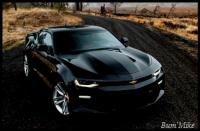






 > 2017 Honda Ridgeline - First Drive Review<
Hi Member's, do you like the new Ridgeline ?
What's your favorite truck in this price range of $30K ?


It’s also the only truck in its class with a bed that doubles as a giant speaker. In top trim levels, six so-called “exciters” are mounted behind the bedsides. If you think of these as speaker magnets that use the panels to which they’re affixed as cones, you’re pretty close. The upside is that they’re waterproof and impact proof. The downside is that the sound quality is a little low-fi, and bass is nonexistent. Which, if you have any friends who tend toward techno, is not a downside at all. But for doing what one does with a truck bed—standing around leaning on it—it’s a good means of reproducing country music. Honda expects that you’ll use the 400-watt power inverter that upper trims have in the truck bed to power a big-screen TV at tailgate parties, during which the bed speakers should wow all of your inebriated neighbors.
Different Blokes
What's your favorite truck in this price range of $30K ?
2017 Honda Ridgeline
Honda's next crack at the civilized pickup looks more pedestrian—and promising.
- MAY 2016
- BY JARED GALL
First Drive Review
It’s not as if the first-generation Honda Ridgeline was ahead of its time. It made its debut in 2005, just as gas prices were transitioning from “Whoa, this is getting a little expensive,” to “WTCrap is going on here?!” Not only was it not ahead of its time, it was one of the timeliest automotive introductions in history. There could not have been a better occasion to bring out a more civilized, more efficient pickup. We named it a comparison-test winner, then ordered one for 40,000 miles of fawning.
It’s not as if the first-generation Honda Ridgeline was ahead of its time. It made its debut in 2005, just as gas prices were transitioning from “Whoa, this is getting a little expensive,” to “WTCrap is going on here?!” Not only was it not ahead of its time, it was one of the timeliest automotive introductions in history. There could not have been a better occasion to bring out a more civilized, more efficient pickup. We named it a comparison-test winner, then ordered one for 40,000 miles of fawning.
That Honda’s reimagined pickup seated five far more comfortably than any of its crew-cab contemporaries and rode incomparably better should have kick-started a revolution. And it nearly did. In barely over a month at the beginning of 2008,Toyota and then GMC debuted similarly conceived unibody pickup concepts. GMC’s erstwhile chief told us then that he expected the entire compact-truck market to go unibody.
But after the tumult of that year, the automakers backpedaled to the safety of familiarity. Toyota continued churning out the Tacoma, General Motors kept on building the Chevrolet Colorado and the GMC Canyon, and the Ridgeline faded into obscurity, tumbling from 50,193 sales in 2006 to a low of 9759 in 2011 before getting canned after the 2014 model year.
But after the tumult of that year, the automakers backpedaled to the safety of familiarity. Toyota continued churning out the Tacoma, General Motors kept on building the Chevrolet Colorado and the GMC Canyon, and the Ridgeline faded into obscurity, tumbling from 50,193 sales in 2006 to a low of 9759 in 2011 before getting canned after the 2014 model year.
Good Idea, Weird Idea
But the Ridgeline was a good idea—a good idea packed with weird ideas: the dual-action tailgate, the in-bed trunk, the flying-buttress cab, and the dramatically sloping edge topping each bedside. Many of those good and weird ideas remain in the new generation, but Honda reversed course significantly on the one that it most blames for the Ridgeline’s subpar sales: exterior design. What used to be adventurously overstyled now looks far more conventional, a Pilot with the roof lopped off aft of the second row.
The structure is shared with the Pilot crossover—and related to the underpinnings of the upcoming next-generation Odyssey—but nearly every major component is beefed up to handle pickup duty. Engineers tell us the front structure is 17 percent stronger than that of the Pilot, while the rear is 31 percent sturdier. The Ridgeline’s maximum payload of 1584 pounds virtually ties that of the segment-leading and recently redesigned Colorado, while its 5000-pound tow rating brings up the rear of the class. (And that’s only for all-wheel-drive models; front-drivers are rated to tow 3500 pounds.)
Engines of Change
Engines of Change
Our experience with the nine-speed automatic transmission in the Honda Pilot hasn’t been entirely satisfactory. So we were pleased that Honda has employed a six-speed in the Ridgeline. With the nine-speed, shifts vary in quickness and smoothness as speed builds, whereas the six is consistently swift and seamless. With 280 horsepower and 262 lb-ft of torque, the 3.5-liter V-6 tops the outgoing truck’s engine by 30 horsepower and 15 lb-ft. It’s smooth and unobtrusive, a perfectly acceptable if uninspiring engine for a mid-size pickup. Honda predicts best-in-class acceleration, but we’ll see. The Ridgeline is proof that unibody doesn’t mean light as much as sturdy means heavy. The company claims—and our experience so far bears out—that the Ridgeline is stiffer than its competition, but the result is a curb weight of 4500 pounds, heavier than the GM twins, the Nissan Frontier, and the Toyota Tacoma. The last Chevy Colorado we tested was a touch lighter and carried 25 more horsepower.
Honda claims best-in-class fuel economy of 19/26 mpg city/highway and 22 combined for front-drivers and 18/25 city/highway and 21 combined for models with all-wheel drive. But that requires interpreting the class as omitting GM’sgasoline and diesel four-cylinders, both of which better the Honda V-6.
Got Baggage? Ridgeline Has Cubbies
Honda claims best-in-class fuel economy of 19/26 mpg city/highway and 22 combined for front-drivers and 18/25 city/highway and 21 combined for models with all-wheel drive. But that requires interpreting the class as omitting GM’sgasoline and diesel four-cylinders, both of which better the Honda V-6.
Got Baggage? Ridgeline Has Cubbies
As before, the interior of the Ridgeline positively embarrasses the competition. It feels enormous and comfortable front and rear. The flip-up rear seat remains, providing yet another yawning, weather-protected storage cavity when raised and hiding up to 2.9 cubic feet—enough for at least one golf bag—beneath seated passengers. The primary storage location, the bed, now is four inches longer than before, at 64 inches, which makes it longer than those of the crew-cab Tacoma and the short-bed Colorado but 10 inches shorter than a long-box Chevy. And the Ridgeline is the only truck in the class that can take a four-by-eight-foot sheet of building material (or a four-by-eight-foot medieval triptych) laying flat between the wheel wells. Of course, you’ll have to drop the tailgate to accommodate an eight-foot load, so invest in some good plastic wrap.
It’s also the only truck in its class with a bed that doubles as a giant speaker. In top trim levels, six so-called “exciters” are mounted behind the bedsides. If you think of these as speaker magnets that use the panels to which they’re affixed as cones, you’re pretty close. The upside is that they’re waterproof and impact proof. The downside is that the sound quality is a little low-fi, and bass is nonexistent. Which, if you have any friends who tend toward techno, is not a downside at all. But for doing what one does with a truck bed—standing around leaning on it—it’s a good means of reproducing country music. Honda expects that you’ll use the 400-watt power inverter that upper trims have in the truck bed to power a big-screen TV at tailgate parties, during which the bed speakers should wow all of your inebriated neighbors.
Different Blokes
Neither does any competitor have the Ridgeline’s clever tailgate that either drops like a regular truck’s or swings open to the driver’s side like an old-fashioned station wagon’s. Nor do they have the Ridgeline’s in-bed trunk beneath the load floor. And most important, none of them come anywhere close to the Ridgeline’s ride quality. All it takes is one bump in the Honda to realize that GMC guy from 2008 should have been right. According to Honda’s research, less than 10 percent of mid-size truck buyers ever tow more than 5000 pounds. Therefore, less than 10 percent need anything beefier than a Ridgeline.
The Honda Ridgeline enjoys a ride that no live-axle, body-on-frame vehicle could dream of. It’s all lightness and composure, carlike body control and smoothness. Here, too, the distinction between light-truck-duty Ridgeline and even-lighter-duty Pilot is appreciable. Whereas the Pilot can wallow and feel a little sloppy, the Ridgeline’s firmer tuning gives it a more controlled ride. The soft brake pedal and light steering are perhaps a little too smooth, but at least their operation is progressive. And in this segment, vague controls are a norm that only the Colorado and Canyon deviate from.
Listening to Honda’s engineering team rattle off their list of best-in-classes, we couldn’t help but detect a hint of exasperation in their voices. They might as well have said, “For the love of God, people, buy our truck!” Tech features are another area in which the Ridgeline’s more civilized roots place it ahead of the class’s top sellers. Adaptive cruise control, forward-collision warning and automatic braking, lane-departure warning and assist, and blind-spot monitors are all available. There’s also Apple CarPlay and Android Auto, but no matter how much tech you pack in, we’re a long way from accepting Honda’s touchscreen infotainment system, which is organized about as logically as the tiles on your Samsung Galaxy’s home screen when you turned it on for the first time in the store.

The March of Profits
The Honda Ridgeline enjoys a ride that no live-axle, body-on-frame vehicle could dream of. It’s all lightness and composure, carlike body control and smoothness. Here, too, the distinction between light-truck-duty Ridgeline and even-lighter-duty Pilot is appreciable. Whereas the Pilot can wallow and feel a little sloppy, the Ridgeline’s firmer tuning gives it a more controlled ride. The soft brake pedal and light steering are perhaps a little too smooth, but at least their operation is progressive. And in this segment, vague controls are a norm that only the Colorado and Canyon deviate from.
Listening to Honda’s engineering team rattle off their list of best-in-classes, we couldn’t help but detect a hint of exasperation in their voices. They might as well have said, “For the love of God, people, buy our truck!” Tech features are another area in which the Ridgeline’s more civilized roots place it ahead of the class’s top sellers. Adaptive cruise control, forward-collision warning and automatic braking, lane-departure warning and assist, and blind-spot monitors are all available. There’s also Apple CarPlay and Android Auto, but no matter how much tech you pack in, we’re a long way from accepting Honda’s touchscreen infotainment system, which is organized about as logically as the tiles on your Samsung Galaxy’s home screen when you turned it on for the first time in the store.
The March of Profits
The 2017 Ridgeline will go on sale this June. The RT, RTS, Sport, RTL, and RTL-T trim levels are offered with either front- or all-wheel drive (an $1800 upcharge), while the RTL-E and Black Edition are strictly all-wheel drive. For $30,375, the entry-level RT includes a rearview camera, keyless start, a tilting and telescoping steering column, and a seven-speaker stereo with Bluetooth, auxiliary device, and USB connectivity. At $32,415, the RTS adds keyless entry, remote start, and tri-zone climate controls. The $33,915 Sport nets black exterior trim, red footwell lighting, and gray-painted wheels.
Luxury starts creeping in with the $34,680 RTL, which gets leather seats (heated in front), with 10-way power adjustability for the driver and four-way for the passenger. An acoustic windshield cuts interior noise to let occupants hear those little motors work.
Tech begins to arrive at $36,830 in the RTL-T. That one includes an 8.0-inch touchscreen navigation/infotainment system with Apple CarPlay, Android Auto, satellite radio, a second USB input for the front and two USB charging ports for rear-seat passengers, and Honda’s LaneWatch blind-spot camera system. But the full complement of safety tech doesn’t come into play until the $42,270 RTL-E. Here, the Honda Sensing system includes adaptive cruise control, lane-departure prevention, blind-spot monitors, and automated emergency braking. Additionally, you get blue ambient lighting, a heated steering wheel, a sunroof, a power-sliding rear window, and truck-bed audio, plus eight traditional speakers and the 400-watt in-bed power inverter. Like the RTL-E, the $43,770 Black Edition is fully loaded. But it’s as sinister as a Ridgeline can look (until accessory lift kits become available), with black paint, exterior trim, and wheels as well as a black headliner and red ambient lighting.
No matter how it’s outfitted, the Ridgeline is a no-brainer of a truck: unmatched in smoothness and comfort, and full of innovation well beyond its unibody construction. It deserved far more sales than it netted in its inaugural generation. Here’s hoping this one realizes its full potential.
View Photos
Luxury starts creeping in with the $34,680 RTL, which gets leather seats (heated in front), with 10-way power adjustability for the driver and four-way for the passenger. An acoustic windshield cuts interior noise to let occupants hear those little motors work.
Tech begins to arrive at $36,830 in the RTL-T. That one includes an 8.0-inch touchscreen navigation/infotainment system with Apple CarPlay, Android Auto, satellite radio, a second USB input for the front and two USB charging ports for rear-seat passengers, and Honda’s LaneWatch blind-spot camera system. But the full complement of safety tech doesn’t come into play until the $42,270 RTL-E. Here, the Honda Sensing system includes adaptive cruise control, lane-departure prevention, blind-spot monitors, and automated emergency braking. Additionally, you get blue ambient lighting, a heated steering wheel, a sunroof, a power-sliding rear window, and truck-bed audio, plus eight traditional speakers and the 400-watt in-bed power inverter. Like the RTL-E, the $43,770 Black Edition is fully loaded. But it’s as sinister as a Ridgeline can look (until accessory lift kits become available), with black paint, exterior trim, and wheels as well as a black headliner and red ambient lighting.
No matter how it’s outfitted, the Ridgeline is a no-brainer of a truck: unmatched in smoothness and comfort, and full of innovation well beyond its unibody construction. It deserved far more sales than it netted in its inaugural generation. Here’s hoping this one realizes its full potential.
View Photos
Last edited by BeachBumMike; May 18, 2016 at 06:57 AM.
 >Spec's<
Specifications
VEHICLE TYPE:front-engine, front- or 4-wheel-drive, 5-passenger, 4-door truck
BASE PRICES:RT, $30,375;
RTS, $32,415;
Sport, $33,915;
RTL, $34,680;
RTL-T, $36,830;
RTL-E, $42,270;
Black Edition, $43,770
ENGINE TYPE:SOHC 24-valve V-6, aluminum block and heads, direct fuel injection
DISPLACEMENT:212 cu in, 3471 cc
Power: 280 hp @ 6000 rpm
Torque: 262 lb-ft @ 4700 rpm
TRANSMISSION:6-speed automatic
DIMENSIONS:
Wheelbase: 125.2 in
Length: 210.0 in
Width: 78.6 in Height:70.2-70.8 in
Passenger volume: 110 cu ft
Cargo volume (in-bed trunk): 7 cu ft
Curb weight (C/D est):4250-4500 lb
PERFORMANCE (C/DEST):
Zero to 60 mph: 6.4-6.7 sec
Zero to 100 mph: 16.6-17.4 sec
Standing ¼-mile: 15.0-15.3 sec
Top speed: 110 mph
FUEL ECONOMY:
EPA city/highway driving: 18-19/25-26 mpg
BASE PRICES:RT, $30,375;
RTS, $32,415;
Sport, $33,915;
RTL, $34,680;
RTL-T, $36,830;
RTL-E, $42,270;
Black Edition, $43,770
ENGINE TYPE:SOHC 24-valve V-6, aluminum block and heads, direct fuel injection
DISPLACEMENT:212 cu in, 3471 cc
Power: 280 hp @ 6000 rpm
Torque: 262 lb-ft @ 4700 rpm
TRANSMISSION:6-speed automatic
DIMENSIONS:
Wheelbase: 125.2 in
Length: 210.0 in
Width: 78.6 in Height:70.2-70.8 in
Passenger volume: 110 cu ft
Cargo volume (in-bed trunk): 7 cu ft
Curb weight (C/D est):4250-4500 lb
PERFORMANCE (C/DEST):
Zero to 60 mph: 6.4-6.7 sec
Zero to 100 mph: 16.6-17.4 sec
Standing ¼-mile: 15.0-15.3 sec
Top speed: 110 mph
FUEL ECONOMY:
EPA city/highway driving: 18-19/25-26 mpg
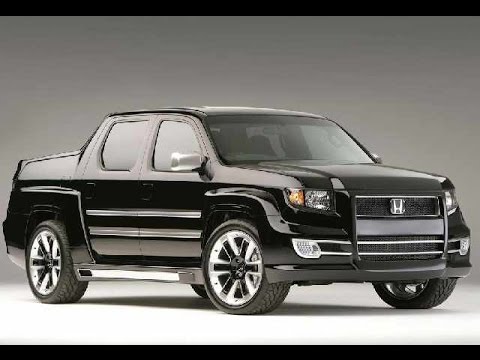





The former Ranchero owner in me likes it.
My financial situation says $30K for a truck? No way. Nope. Not gonna do it.
For a truck I'd want a classic - like a 72 C10 stepside in honor of my uncle,
My financial situation says $30K for a truck? No way. Nope. Not gonna do it.
For a truck I'd want a classic - like a 72 C10 stepside in honor of my uncle,


Joined: Feb 2008
Posts: 6,471

I guess I just don't get it. I don't understand the type of person that wants a pickup and even remotely considers a Honda as a top contender. The big 3 American companies should be stop #1-3. I suppose Toyota has made some strides lately with the Tundra, but I just don't see why you wouldnt go with a company that has tons of experience in the truck market.
I'll admit, I'm not at all a truck guy so maybe I'm just misguided and out of touch with modern reality, but I just can't imagine buying a foreign truck, especially a Honda. They're just too far out of their element with this IMO, should stick to lawn mowers and econoboxes.
I'll admit, I'm not at all a truck guy so maybe I'm just misguided and out of touch with modern reality, but I just can't imagine buying a foreign truck, especially a Honda. They're just too far out of their element with this IMO, should stick to lawn mowers and econoboxes.
LoL `Chad, I really enjoy your input and your opinions on so many topic's on the MCF >Thank You!...
I think if you drove one, that you would fall in love with it & buy one >
 <>
<>
I thought for-sure that you would get on me for the above words I posted "Chevy Camaro 0r a Honda Truck" 
=========================================
Hi Barovelli, Yes 30K is a high price 4-Sure...
Yes, they should bring back cars/trucks like the Chevy Camino & the Ford Ranchero's

I think if you drove one, that you would fall in love with it & buy one >
<>I thought for-sure that you would get on me for the above words I posted "Chevy Camaro 0r a Honda Truck"
=========================================
Hi Barovelli, Yes 30K is a high price 4-Sure...
Yes, they should bring back cars/trucks like the Chevy Camino & the Ford Ranchero's
And I agree that a return of the Elco would be a great for a light truck, we almost had a comeback in the form of an Australian Holden 'Ute'.


How Australia's Coolest Little Truckets Are Showing Up In America

Andrew P Collins

The hoonalicious Australian car-trucks known as "utes" Down Under are slowly starting to proliferate in the US, thanks to a Colorado outfit dramatically underselling them as "modern-day El Caminos." This is how they're making dreams come true.
How The Hell Did Someone Register A Holden Ute In New York?
We have a bit of an El Camino fetish here. Anytime someone mentions the prospect of it coming back…Read more jalopnik.com
As many of you know, utes are basically the mullet of motor vehicles and a mainstay of Australian transportation— sedan in the front, pickup truck in the back.
The bodystyle met its demise in America when the El Camino was put down in 1987, but it popularity continued to soar Down Under, making would-be utility car drivers in the States some fierce kinda jealous.
That's where Randy Reese comes in. He's has been operating "Left Hand Utes" in Denver for the last two years, shipping in Holden ute bodies from Australia as "parts only" vehicles and combining them with just enough American car parts to get them legally titled and registered here in the homeland.
On the phone, Reese was adamant to reiterate that his conversions are not "chop and weld" jobs. He makes sure all of the ute's original safety equipment, including air bags, ABS, traction control, and the rest are fully functional.
"90% of the original ute wiring harness gets used," he says.
The vehicles he creates get their own VIN, like a kit car, allowing them to be legally titled.
To create utes from 2011 and later, Reese uses a Malibu cop car platform. For models older than that a Pontiac G8 provides the base. He's also used a Pontiac GTO for a high-horsepower application.
"I don't make any guarantees until [the ute parts] get into the United States, because you never know what's gonna happen on the boat," explained Reese.
I guess automotive documentation can get a little messy in Australia; many states down there use electronic titles and registrations. Reese cites a lack of physical paperwork as hassle on the American side of the importation equation, and a big contributor to car theft issues.
"And I once tried to ship a body and an engine in the same container, US Customs didn't like that too much." But at this point, he's got his transportation process pretty well dialed in.
He's built eleven utes so far, and it usually takes him about two and half months to bring one from a pile of pieces fresh off the boat to a running, road-legal product. A month and a half of that is doing paperwork.
Apparently the next hardest part of the process is the wiring. Reese has trouble getting electrical diagrams for the utes, and some have pretty advanced accessories. But the cars he builds are built to run, and run hard. Reese favors the hilariously-named high performance variant called the "Maloo."
"There was a 2012 Maloo which had something called the Enhanced Driver Interface (EDI) made by MoTec. It monitors the track, tells you if you're oversteering or understeering, over braking or under braking. Basically the same setup as the GT-R... that took a LOT of work to set up."
"On another one, I had to open my big mouth and tell a customer I could hook up the heated seats. That actually wasn't easy either."
Reese brought one of his Maloos to SEMA last year at the behest of a wheel company, who used it to get some extra attention on their products.
Right now he's wrapping up a 2010 Maloo in "Ivy Green," which he was excited to report was being blessed with a 6.2 engine and manual transmission. After that's done four more builds are in the hopper— two Maloos, and two "Thunders," which he'll put on a Chevy Malibu platform.
While Left Hand Utes has focused on recreating GM's Holden cars, Reese has a 2005 Ford XR6 on its way across the ocean that he's excited about for one feature in particular: a push-button electronically locking rear differential. "I think that's gonna stir up some things," he told me. Indeed, that sounds like a recipe for a lot of tire slaying.
But Reese isn't looking forward to sourcing parts for the XR6, he says they share the most commonalities with "British Jaguars" and the closest thing he knows of in the states is the Lincoln LS.
Guess we'll have to check in with him in a couple weeks to see how it turns out.
Reese's business model is something of a hybrid between building on speculation and customer specifications. He basically finds utes on eBay in Australia, ships over ones he likes, and starts drumming up interest as they arrive in parts. He says he's never had a problem getting a buyer before a car's completion, and makes minor adjustments if so requested. But he's not running a full-service customization shop. "The color we get is the color you get. It's too complicated to get a factory-quality paint job."
So how does one get into the ute-converting business in the first place?
Surprisingly there wasn't much to that story. As Reese explained it, he was working in engineering and built the first supercharger kit for the Hummer H3 in 2007. "I went through a bad divorce, and the only thing I kept was that damn supercharger kit."
Fortunately for Mr. Reese, somebody in Australia desperately wanted to boost a fleet of H3s, and offered to fly him Down Under where he'd be paid and put up for free.
When he told his friends back in the states about the glory that is the Australian ute, somebody convinced him they could be sold stateside.
Reese's reply?
"Well, let's figure it out."
Reese still pulls in a strong portion of his livelihood building engines for cars more more commonly seen in America and doing the occasional repair job for Denver car dealers, but so far he's never finished a ute without having it bought and paid for by a customer.
As for his future supply as the Australian auto industry shuts down, he's not too concerned. "Ford going down this year or next year, but Holden is gonna keep making 'em through 2017. Between unions and government subsidies, Aussie auto production getting milked dry. But the bottom line is there will be plenty of utes, I'm not gonna have trouble getting parts any time soon."
Reese seems pretty happy with his present level of volume; building precisely a handful of cars every year. But if you're still crying about being denied the El Camino-style car-trucks of Australia, now you've got the chance to cough up about thirty grand and get yourself one: his website is simply "lefthandutes.com" if you want to get in touch with him and open a dialogue about your own build.
You could always take a crack at building your own, but if I could afford it I think I'd be all over letting someone else jump through the hoops at the US Customs office.