


2002 Monte Carlo the most expensive $600 car I have ever owned


Thread Starter

Joined: Jan 2025
Posts: 38

 2002 Monte Carlo the most expensive $600 car I have ever owned
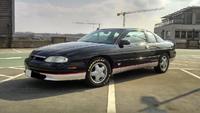
Hello all, I'm no mechanic but I think, I'm about to learn. I recently bought a 2002 Monte Carlo with the 3.4l engine. There is a lot of electric problems, a lot of shorts.
Problems:
1. No low beams. I hear clicking coming from around the drivers side and passenger side fuse box. I think. Bad relays? or Multi-function switch? Wipers only work on fast settings.
2. Temp guide and speedometer only occasionally work.
3. ABS and Trac idiot lights on.
I live in a small town in MS and there are few good mechanics. So I have a car electronics guide and a Harbour Freight voltmeter and I'm learning electronics.
I guess my question should be, where do you start to systematically check your whole electric system instead of just being a parts changer? Parts changers around here call themselves Mechanics!
Problems:
1. No low beams. I hear clicking coming from around the drivers side and passenger side fuse box. I think. Bad relays? or Multi-function switch? Wipers only work on fast settings.
2. Temp guide and speedometer only occasionally work.
3. ABS and Trac idiot lights on.
I live in a small town in MS and there are few good mechanics. So I have a car electronics guide and a Harbour Freight voltmeter and I'm learning electronics.
I guess my question should be, where do you start to systematically check your whole electric system instead of just being a parts changer? Parts changers around here call themselves Mechanics!





Joined: Feb 2008
Posts: 6,433

When you say "car electronic guide" do you mean the service manual with wiring diagrams for your specific car?
If not, that would be my first step - buying one of those. It's invaluable when troubleshooting electrical issues as it gives you pin-outs, wire colors, and where each of those wires goes.
Personally, when I'm doing electrical diagnosis. I start at the battery and work back from there along the circuit. Battery: has solid / clean positive and negative connections? Other end of the battery ground has good connection? Then I start working upstream towards the component in question along the + wire. Most items go thru one of the fuse boxes, so that's my next step to verify the circuit has 12v there / the fuse isn't nasty. Then I'll go to the component itself - does it have full 12v, does it have good continuity to battery ground (since sometimes it's tough to verify the ground connection itself if its buried behind stuff).
If any of that comes back bad, you know you've got work to do first on fixing the vehicle's electrical. Wherever it went from good to bad isolates the part of the circuit with the issue. If all ended up fine and you've got good +12v and a solid ground at the component, then I'll move to any external input wires on the harness to make sure they're working. Lastly I'll check the output wires in the harness for function - is the unit putting out the signals it's supposed to?
If not and everything else was good, it's generally an issue with that component. Dealer level repair is typically to replace, but for the DIY crowd, there are sometimes instructions online from others on how to fix internal component issues (although these won't be in your service manual).
If however everything at the plug is good, including the output, then you know to keep moving downstream to whatever that box controls that isn't working right (a light bulb, motor, etc). I repeat the same steps at the plug for the item being controlled. By that point you'll have verified the entire system and 99% of the time will have isolated which piece of the puzzle is broken.
That's not to say that's the only way to approach things, once you're familiar with the systems you can take some shortcuts to save time by verifying larger sections with a single test. But on a car I'm unfamiliar with, I like to start at step one and walk through each piece of the circuit one by one.
Edit 1 - to simplify, Id also pick a single issue and work that through to resolution on its own. Maybe it's interrelated and you fix something else at the same time by luck, but the big thing is to simplify the problem as much as possible so as not to overhwelm yourself. Low beams or wipers would be a good starting point.
Edit 2 - for systems with warning lights, you can get a scan tool that reads body codes to pull the code in question. That will greatly speed your troubleshooting as it will point you to the exact part within its system that is having an issue (a speed sensor, an input from another module, etc).
If not, that would be my first step - buying one of those. It's invaluable when troubleshooting electrical issues as it gives you pin-outs, wire colors, and where each of those wires goes.
Personally, when I'm doing electrical diagnosis. I start at the battery and work back from there along the circuit. Battery: has solid / clean positive and negative connections? Other end of the battery ground has good connection? Then I start working upstream towards the component in question along the + wire. Most items go thru one of the fuse boxes, so that's my next step to verify the circuit has 12v there / the fuse isn't nasty. Then I'll go to the component itself - does it have full 12v, does it have good continuity to battery ground (since sometimes it's tough to verify the ground connection itself if its buried behind stuff).
If any of that comes back bad, you know you've got work to do first on fixing the vehicle's electrical. Wherever it went from good to bad isolates the part of the circuit with the issue. If all ended up fine and you've got good +12v and a solid ground at the component, then I'll move to any external input wires on the harness to make sure they're working. Lastly I'll check the output wires in the harness for function - is the unit putting out the signals it's supposed to?
If not and everything else was good, it's generally an issue with that component. Dealer level repair is typically to replace, but for the DIY crowd, there are sometimes instructions online from others on how to fix internal component issues (although these won't be in your service manual).
If however everything at the plug is good, including the output, then you know to keep moving downstream to whatever that box controls that isn't working right (a light bulb, motor, etc). I repeat the same steps at the plug for the item being controlled. By that point you'll have verified the entire system and 99% of the time will have isolated which piece of the puzzle is broken.
That's not to say that's the only way to approach things, once you're familiar with the systems you can take some shortcuts to save time by verifying larger sections with a single test. But on a car I'm unfamiliar with, I like to start at step one and walk through each piece of the circuit one by one.
Edit 1 - to simplify, Id also pick a single issue and work that through to resolution on its own. Maybe it's interrelated and you fix something else at the same time by luck, but the big thing is to simplify the problem as much as possible so as not to overhwelm yourself. Low beams or wipers would be a good starting point.
Edit 2 - for systems with warning lights, you can get a scan tool that reads body codes to pull the code in question. That will greatly speed your troubleshooting as it will point you to the exact part within its system that is having an issue (a speed sensor, an input from another module, etc).
Last edited by bumpin96monte; Jan 15, 2025 at 07:27 AM.
Thread Starter
Joined: Jan 2025
Posts: 38
Sage advice bumpin96monte. Thanks. I found three volumes of GM service manuals on ebay for $40. Would this be better to buy than a couple of months subscription to Alldata? What I meant by car electronics guide is "How To Diagnose and Repair Automotive Electrical Systems" by Tracy Martin.
I'll take your advice and do one problem at a time.
I've got one other issue that has me completely stumped. Every few days I get a low coolant warning. When I check the coolant level is a quarter cup low. I have looked and looked and can't find the leak. There is no coolant in the oil and no sweet smell or white smoke coming from the exhaust. I have found a little trail of coolant flowing down the drivers side of the engine. I changed the thermostat ( what a pain) and replaced coolant. This didn't help. No water inside car. Any ideas were to look?
Thank you for your help.
I'll take your advice and do one problem at a time.
I've got one other issue that has me completely stumped. Every few days I get a low coolant warning. When I check the coolant level is a quarter cup low. I have looked and looked and can't find the leak. There is no coolant in the oil and no sweet smell or white smoke coming from the exhaust. I have found a little trail of coolant flowing down the drivers side of the engine. I changed the thermostat ( what a pain) and replaced coolant. This didn't help. No water inside car. Any ideas were to look?
Thank you for your help.

Joined: Feb 2013
Posts: 136
Always get the GM official Service Manuals. If you are serious in keeping a car always go with what the Techs use from the manufacturer.
Check the waterpump if you are losing water. Another area are the intake seals, they are known to fail.
Check the waterpump if you are losing water. Another area are the intake seals, they are known to fail.

Thread
Thread Starter
Forum
Replies
Last Post
6th Gen ('00-'05): 2002 Monte Carlo SS (Exterior Customization)
DingusJones
Showcase Your Ride
4
Apr 8, 2023 01:44 PM
6th Gen ('00-'05): 2002 Monte Carlo SS (21st Birthday)
DingusJones
Monte Carlo Repair Help
2
Apr 7, 2023 09:54 PM
Colton"Breakdown"Anderson
Engine/Transmission/Performance Adders
1
Sep 19, 2010 10:55 PM