


Project "SQ Monte"


Thread Starter
|

Joined: May 2005
Posts: 3,221
 Project "SQL Monte v.2" complete!
The time has finally come! I have been acquiring parts and pieces over the past 3yrs to put together a system that not only looks clean, but sounds clean as well. There hasn't been a rush on it because I had some 12's in the trunk already so I was able to take my time and get what I wanted instead of settling for something else. Any and all installation and fabrication was done by me, it wasn't easy at times but in the end it was all worth it. So enough talking, let's get on with the build!
I.C.E.
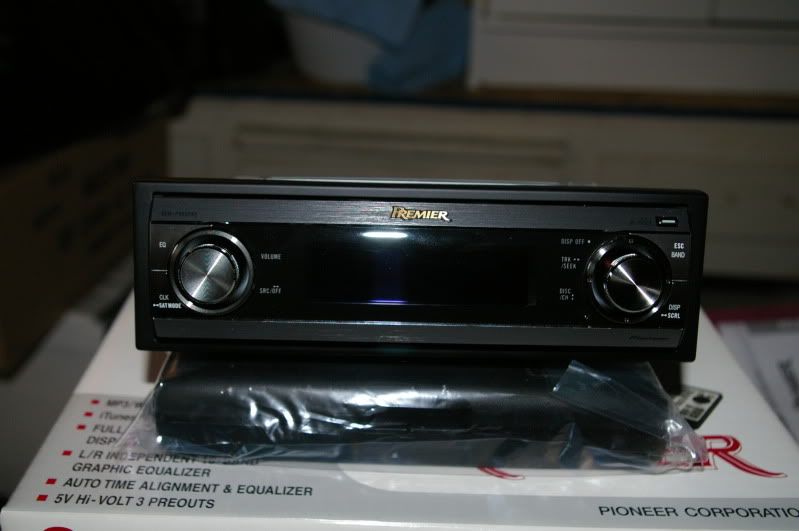
Pioneer Premier DEH-P880PRS
CDT Audio CL-61A Pro 6.5" components
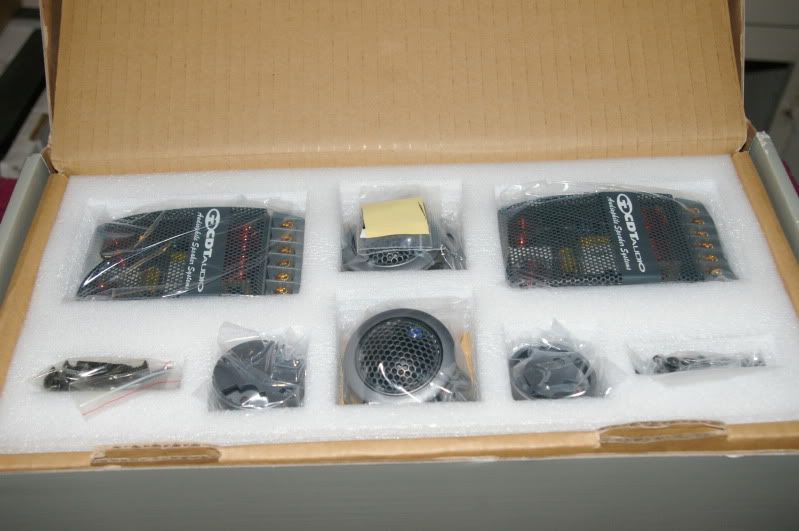
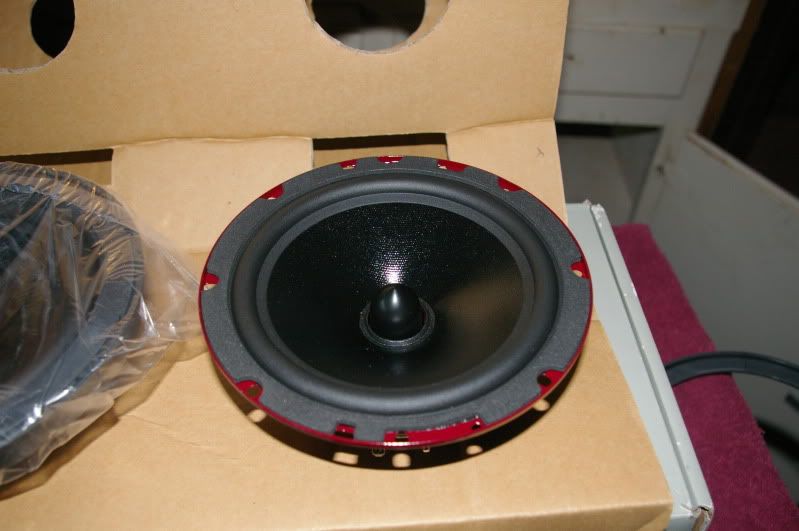
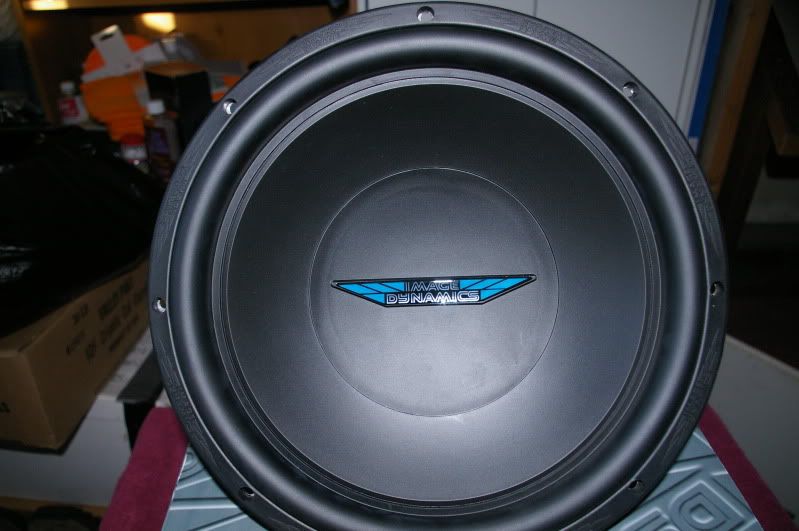
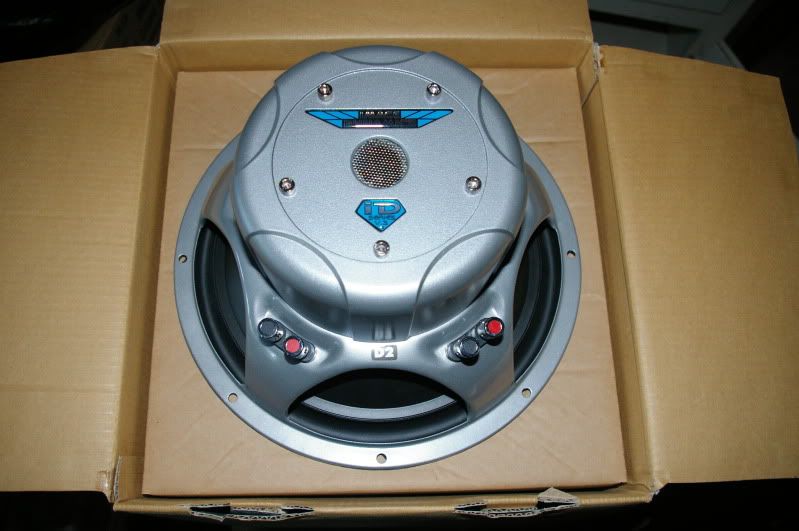
Image Dynamics ID12 subs
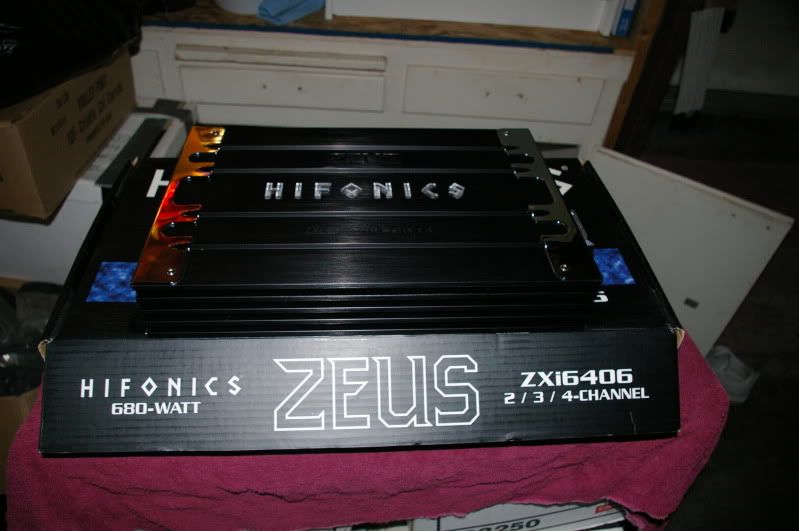
HiFonics Zeus ZXi6406 4ch amp 85 x 4 @ 4ohms
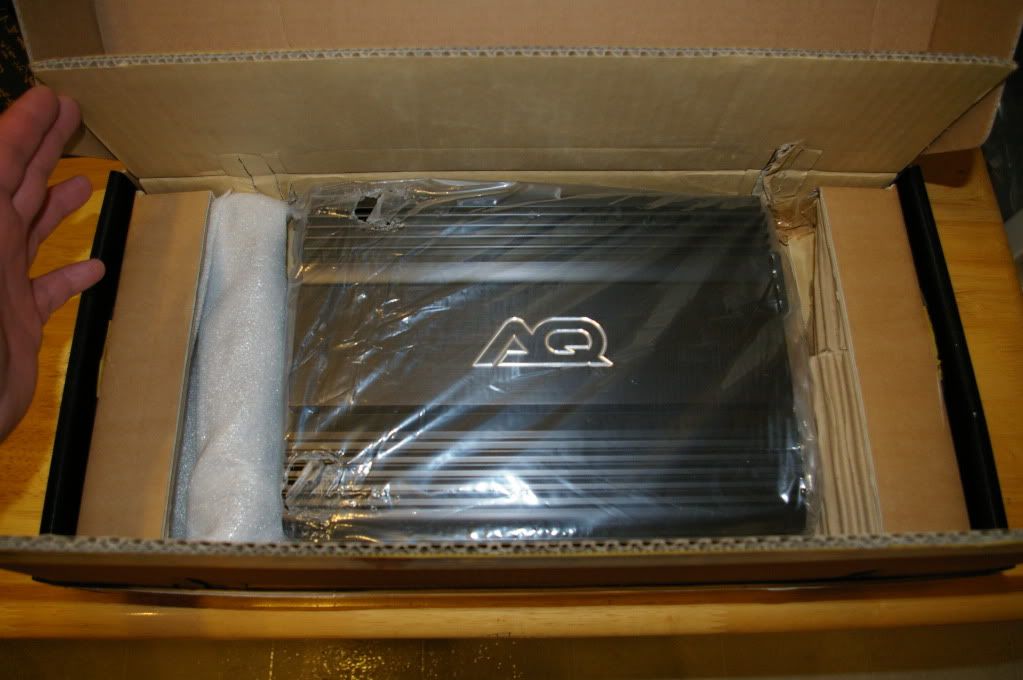
AudioQue AQ1200D mono amp, 870 x 1 @ 2ohms
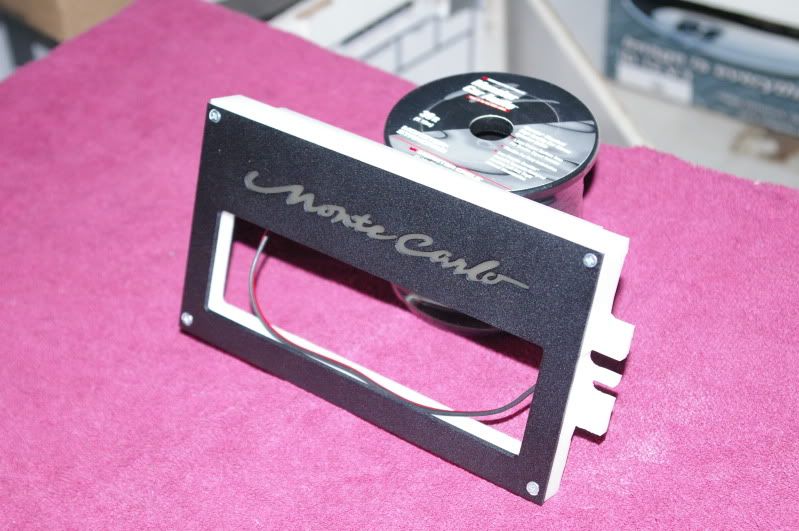
HUMount.com flush mount head unit install bezel, script w/blue LED's
Wiring and other materials
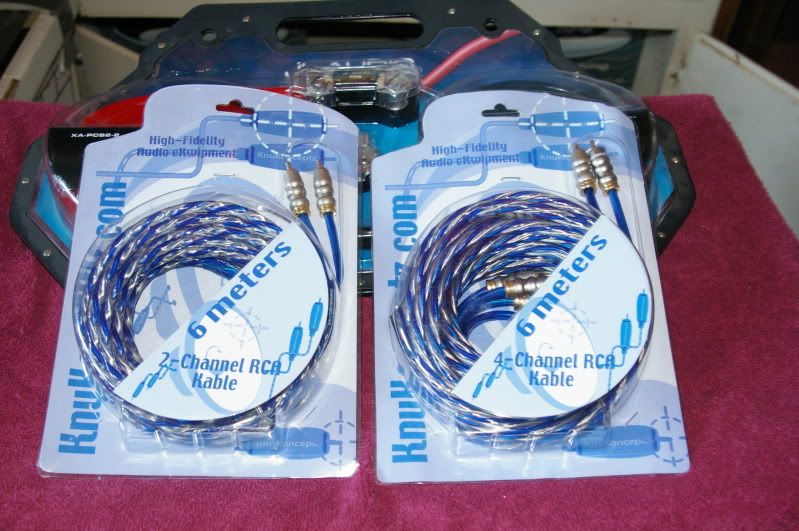
KnuKonceptz RCA's, one set of 4ch, one 2ch, Karma Series
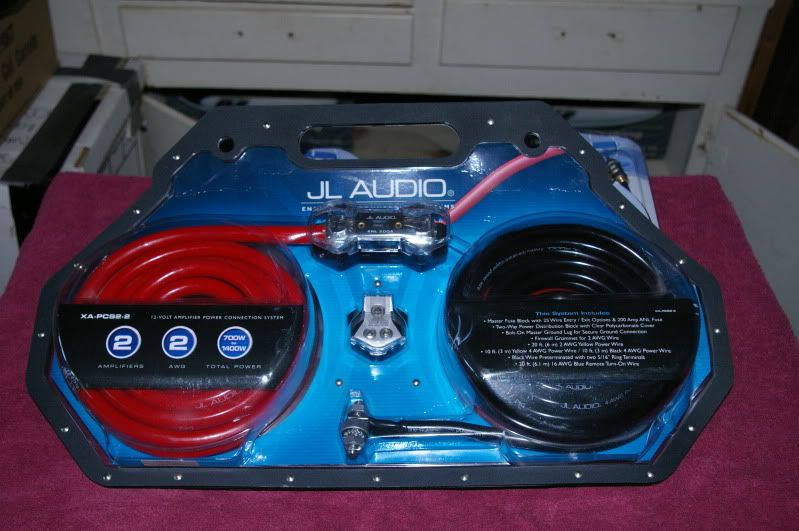
JL Audio dual amp install kit
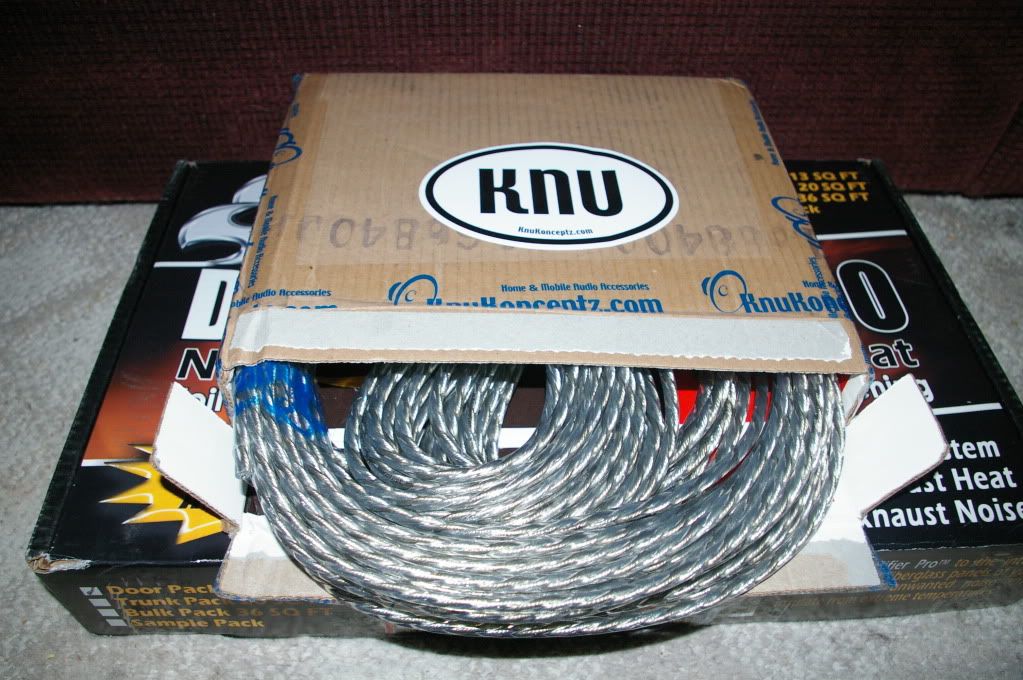
KnuKonceptz speaker wire, 100ft. 16ga, 10ft. 12ga
XScorpion ANL fuse holder (for Alt pwr wire on Big 3)

SVR Deep Cycle battery

XScorpion Ring battery terminals

That pretty much sums it up as far as equipment goes, now on to the actual build.
I.C.E.
Pioneer Premier DEH-P880PRS
CDT Audio CL-61A Pro 6.5" components
Image Dynamics ID12 subs
HiFonics Zeus ZXi6406 4ch amp 85 x 4 @ 4ohms
AudioQue AQ1200D mono amp, 870 x 1 @ 2ohms
HUMount.com flush mount head unit install bezel, script w/blue LED's
Wiring and other materials
KnuKonceptz RCA's, one set of 4ch, one 2ch, Karma Series
JL Audio dual amp install kit
KnuKonceptz speaker wire, 100ft. 16ga, 10ft. 12ga
XScorpion ANL fuse holder (for Alt pwr wire on Big 3)
SVR Deep Cycle battery
XScorpion Ring battery terminals
That pretty much sums it up as far as equipment goes, now on to the actual build.
Last edited by 04MonteLS; Jun 4, 2010 at 03:02 PM.
Thread Starter
|
Joined: May 2005
Posts: 3,221
The Big 3 upgrade (only Big 2 at the moment :) )
This upgrade calls for using bigger diameter wiring for the following wires:
battery to chassis ground
engine to chassis ground
alternator power lead
This is supposed to allow your charging system to be more efficient by getting rid of the bottleneck due to the small guage wiring the factory used. Whenever I do this upgrade I simply add the wiring and leave the factory stuff in place, you can replace the wires if you want but it's at your own risk.
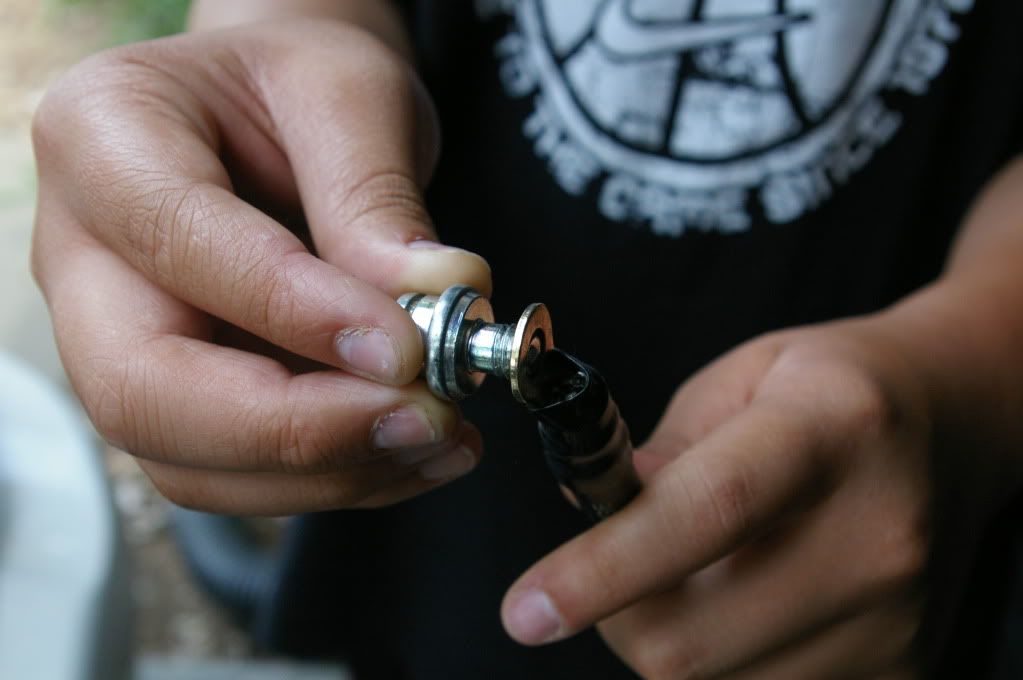
The first wire I went to upgrade was the battery to chassis ground but as you can see in the picture, the ring terminal hole wasn't big enough so I had to drill it out.
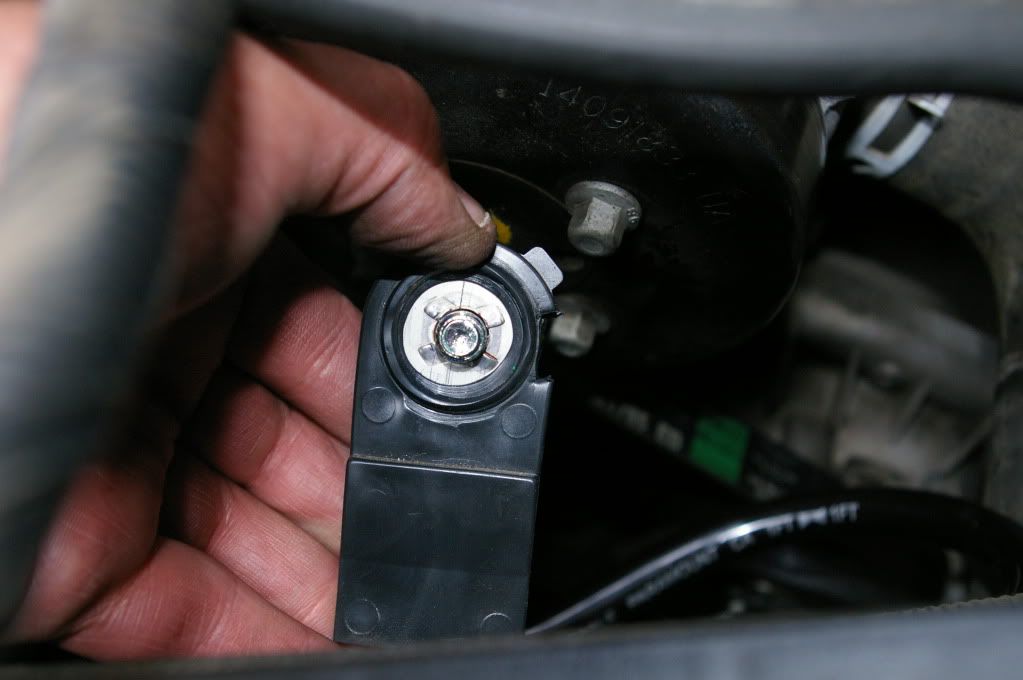
Then after I made the hole big enough, the terminal wouldn't fit onto the factory lug due to the huge boot they use on the negative battery terminal.
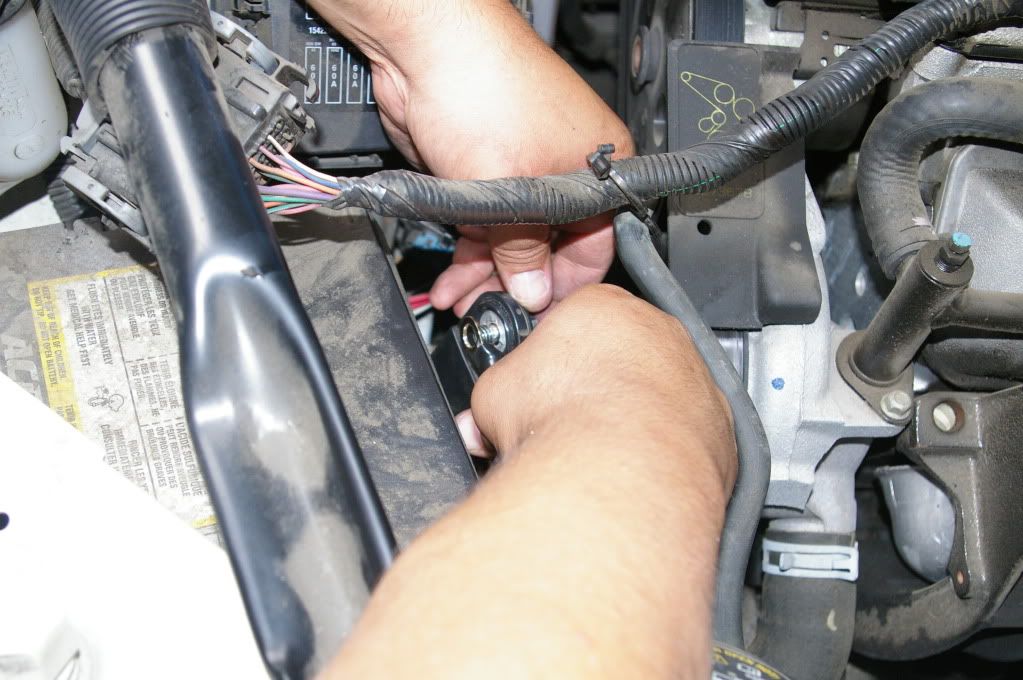
So I had to notch the boot to allow the terminal enough clearance
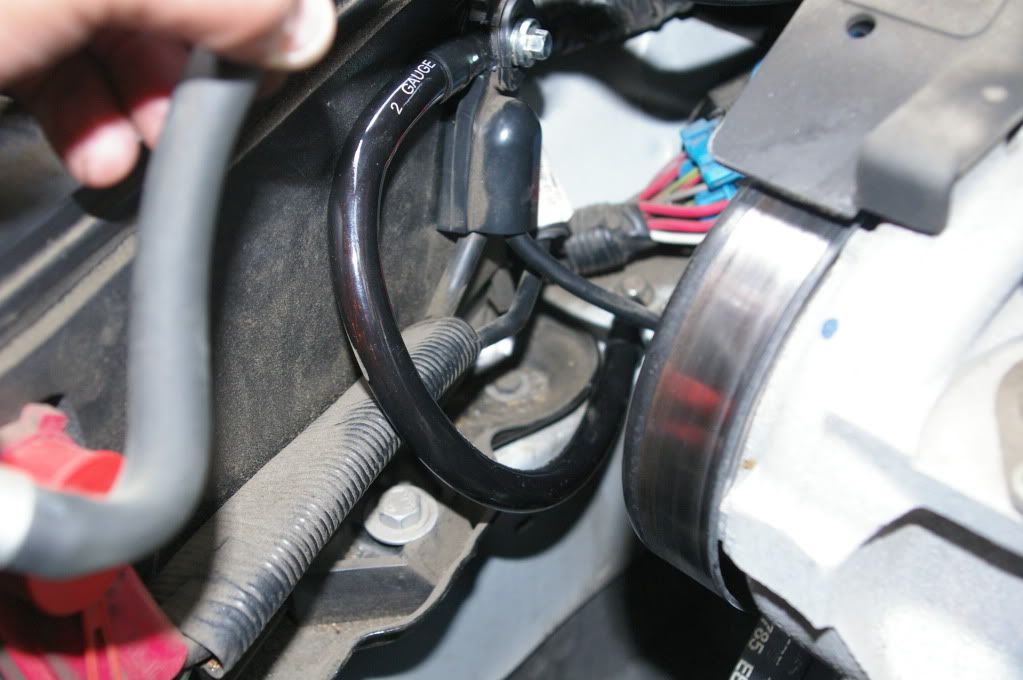
Then it was on to the engine to chassis ground, I used the same location on the chassis for this ground as I did for the battery to chassis ground, no problem getting anything to fit here.
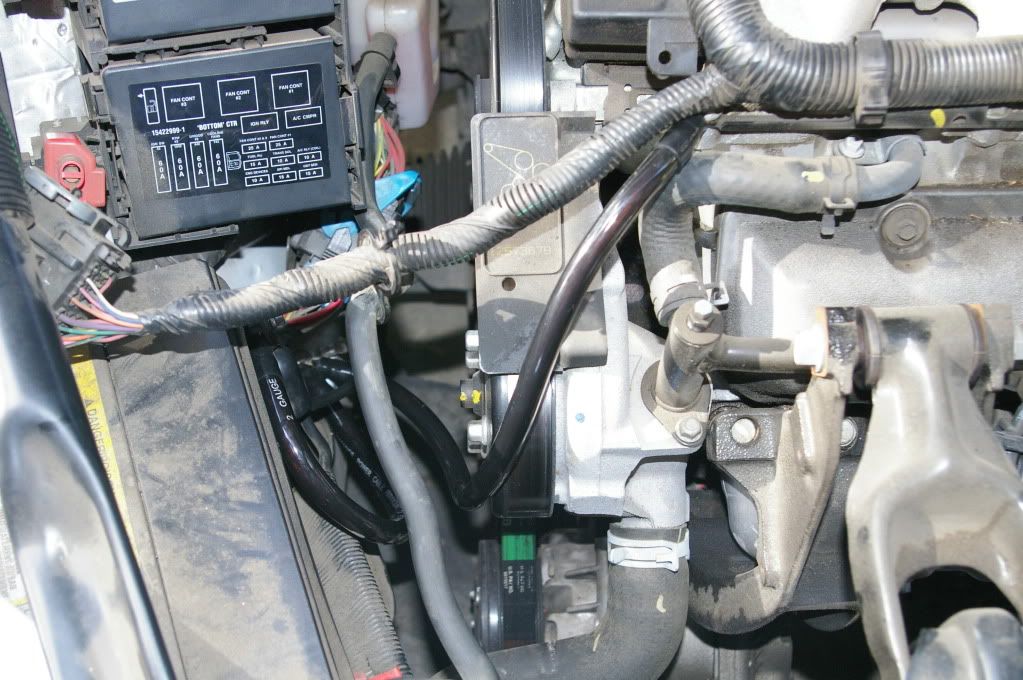

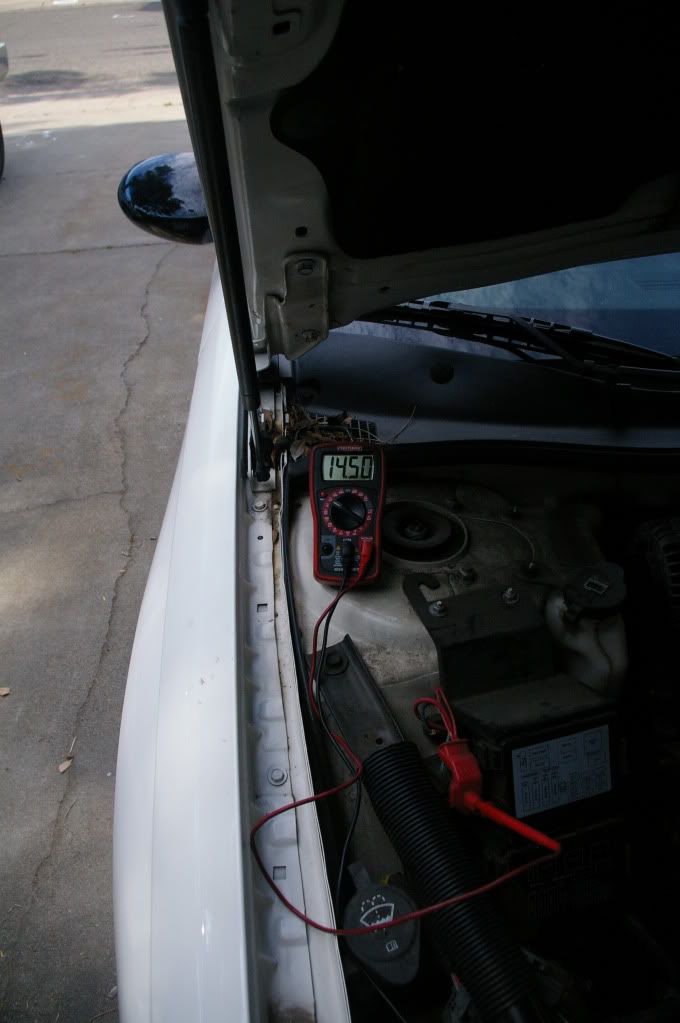
After finishing this, I started up the car, turned the headlights on and turned the system up and my voltage stayed between 13.8 and 14.5!
battery to chassis ground
engine to chassis ground
alternator power lead
This is supposed to allow your charging system to be more efficient by getting rid of the bottleneck due to the small guage wiring the factory used. Whenever I do this upgrade I simply add the wiring and leave the factory stuff in place, you can replace the wires if you want but it's at your own risk.
The first wire I went to upgrade was the battery to chassis ground but as you can see in the picture, the ring terminal hole wasn't big enough so I had to drill it out.
Then after I made the hole big enough, the terminal wouldn't fit onto the factory lug due to the huge boot they use on the negative battery terminal.
So I had to notch the boot to allow the terminal enough clearance
Then it was on to the engine to chassis ground, I used the same location on the chassis for this ground as I did for the battery to chassis ground, no problem getting anything to fit here.
After finishing this, I started up the car, turned the headlights on and turned the system up and my voltage stayed between 13.8 and 14.5!





Joined: Jul 2007
Posts: 1,544
From: Wyoming
Hey, those are the subs I was wanting to get, but I want to get 10s. I'll be watching to see how you go about installing all this. I'm wanting to do the same thing but I'm waiting on getting another car first because I plan on making mine non-drivable during the install.



Thread Starter
|
Joined: May 2005
Posts: 3,221
SecondSkin Damplifier Pro installation
Any good stereo installation will utilize some sound deadening material to help keep unwanted noise out of the car as well as to help get rid of resonant noise produced by vibration of metal panels in the car. I'm a member of another forum owned by a local guy who is a hardcore stereo guy and an internet star of sorts for his insane system builds, one of which is his own 99 Tahoe sitting on 26's, sporting 20,000 watts of power supplied by Rockford Fosgate amps, 4 18" Fi BTL subs in a ported box. He still can seat 5 comfortably and his truck is hitting high 150's on a TL meter.
He has alot of connections in the car audio world and some manufacturers who have partnered up with him and his forum, one of which is SecondSkin Automotive Insulation. The owner, Anthony Collova, had a giveaway to kickoff this new partnership in which he put up 10 door packs of SecondSkin Damplifier Pro. Members had to post in his thread and agree to the terms of the promotion and after 2 weeks he was going to randomly pick the 10 winners out of all who entered. 68 members entered in that time and he ended up giving all 68 of us a door pack, free wooden roller and a free folding blade to assist in installation of the product. These door packs retail for $60 on the SecondSkin site, plus $8 for the blade and $8 for the roller, that's a total of $76 retail per pack given away, for a grand total of $5168 worth of product GIVEN AWAY FOR FREE!
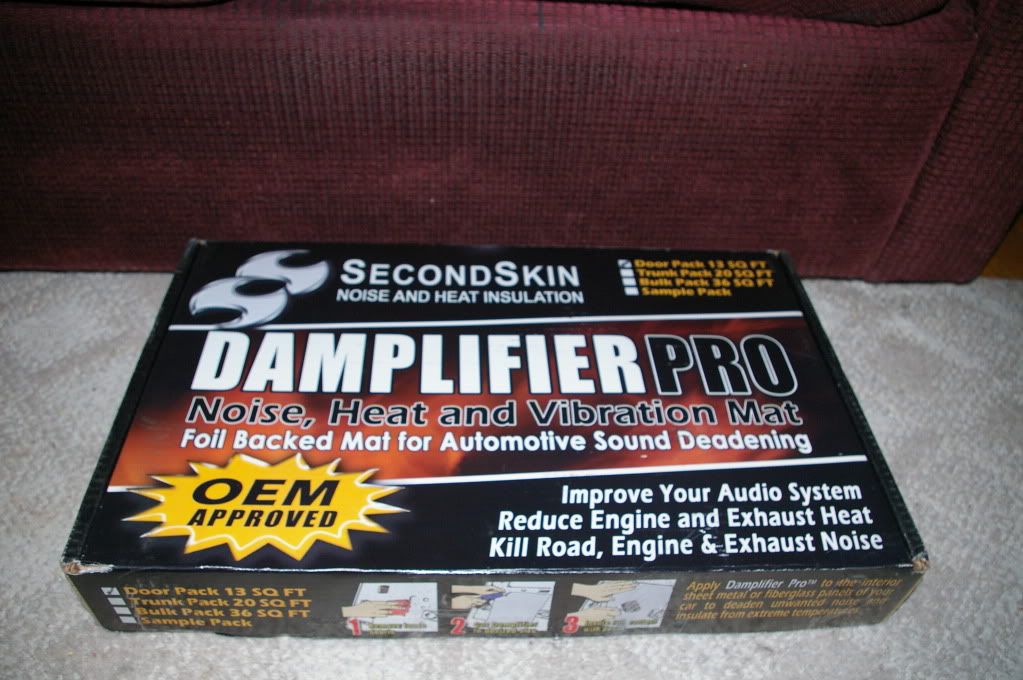
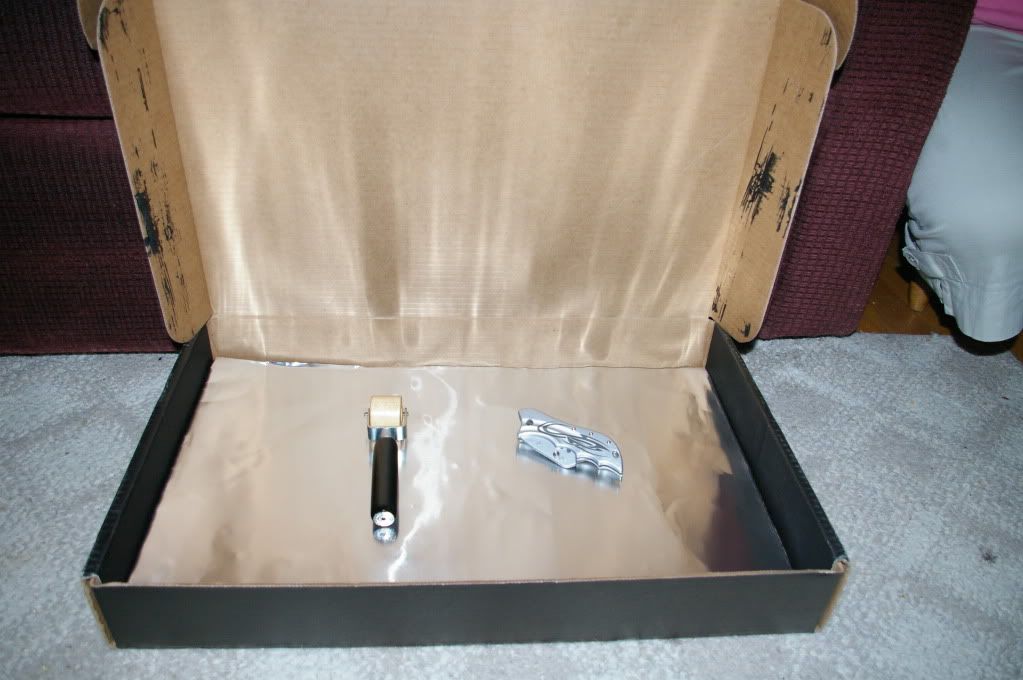
Here's my pics of the product and install
The first thing to do, of course, was remove the door panels and check out the door to see how much of a pain this was going to be. It was already going to be kind of a pain cause I had never before used or applied sound deadening so today was a very special day for me as I got my deadening material virginity popped In the process of removing the panels I ran into a slight issue, the geniuses at Chevy decided to put the plugs in with the release mechanism in the worst possible spot so when I was removing the passenger side panel the window switch broke apart while I was trying to flip the panel upside down so I could gain access to the release mechanism. When I say split apart, I mean just that, the internal pins were exposed and all. I just knew I'd have to pony up for a new switch but I was able to get it back together securely with no issues. Whew, dodged one there.
So I get the panels off and this is what is staring at me
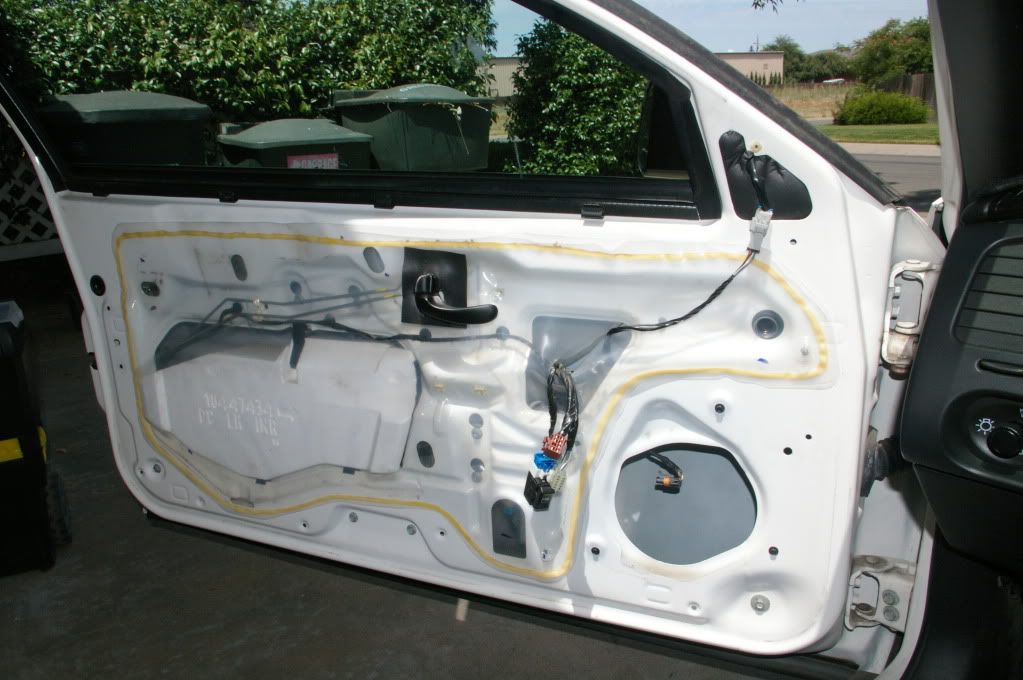
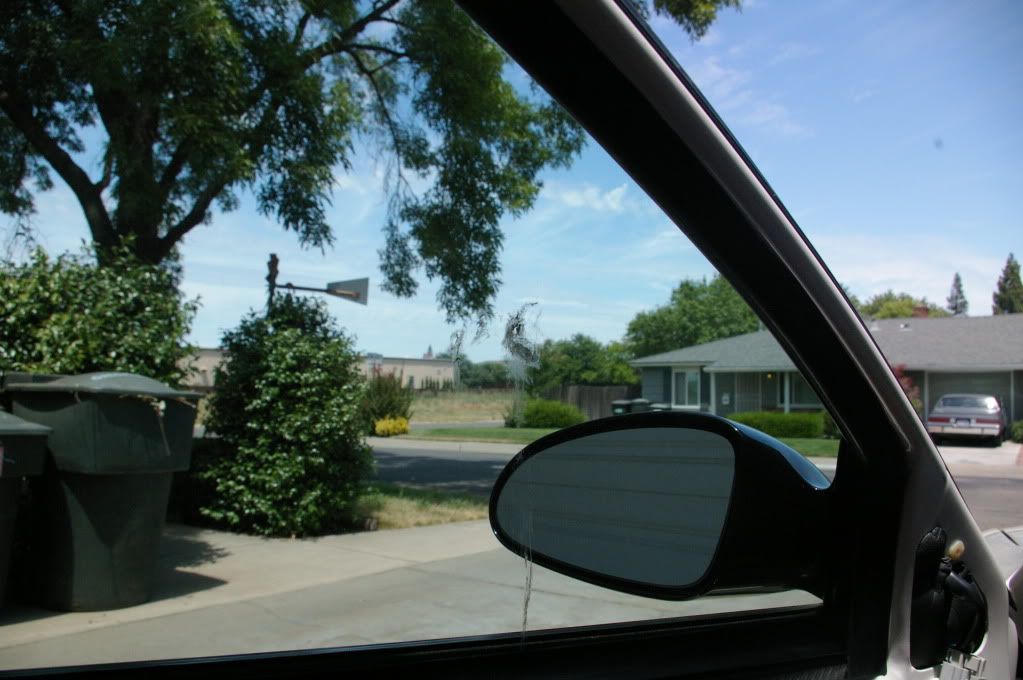
Not too bad, I suppose. Before I go any further I decide to look for the culprit of this nasty sticky stuff thats on the inside of my window. It's horrible stuff. I detail cars and have lots of products in my garage but none of them could do any damage to this stuff so I had to resort to using a brillo pad. It got the stuff off but if you look hard enough you can see some fine scratches. Not a big deal, but a deal none the less. So this is the nastiness that's on my inner window, again.
Close inspection of the door panel and wiring revealed the cause:
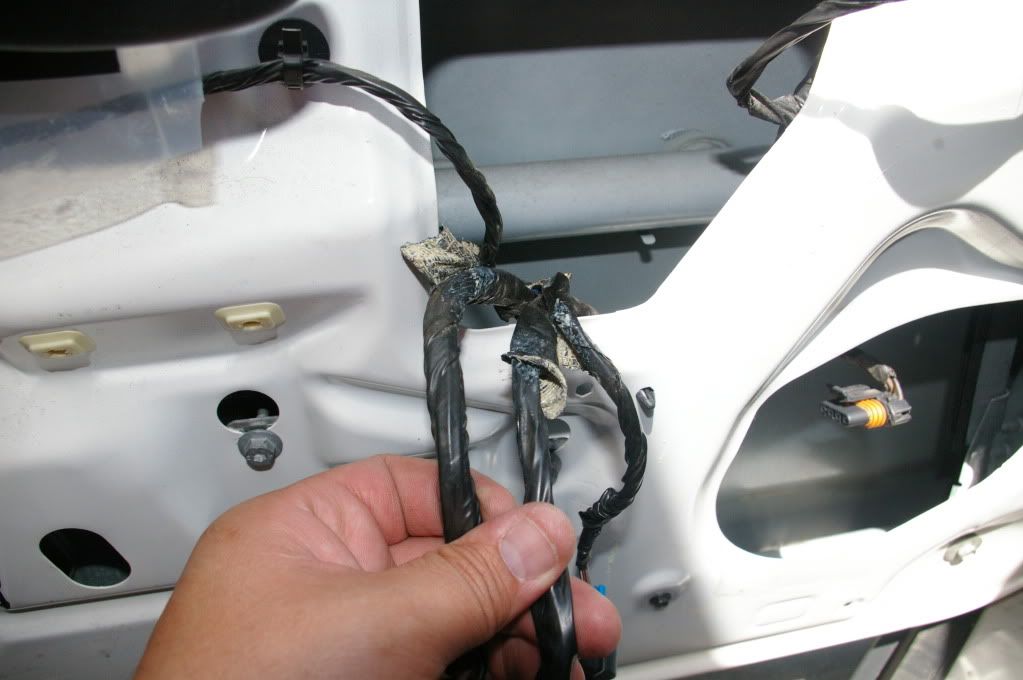
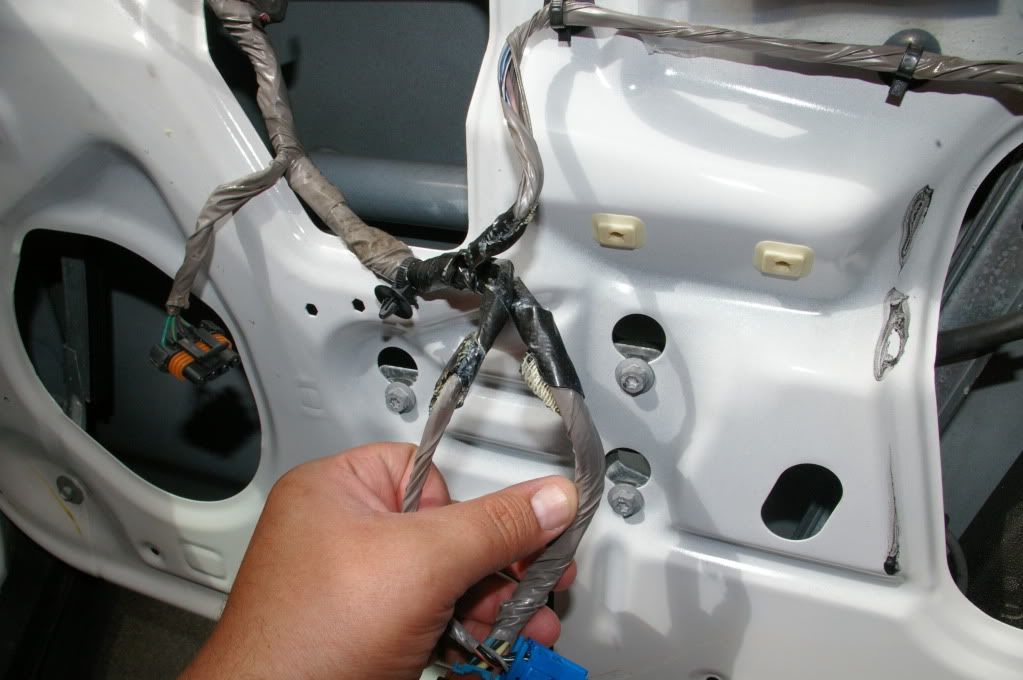
Again, the geniuses at Chevy came up with a great idea and decided using duct tape on the inner door wiring was the thing to do. The adhesive melted and the tape unraveled, getting that sticky mess on my window
So the first order of the day was to remove the plastic lining from the door panel and handle that issue with the tape. You see what the wiring looked like before, this is what it looks like now:
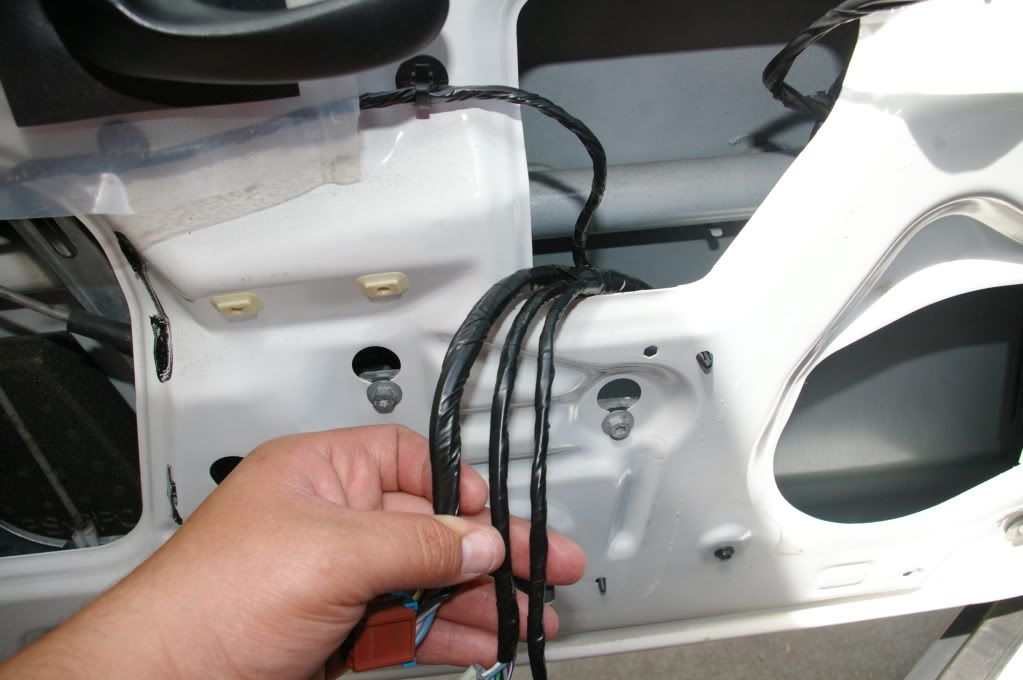
Now I can rest assured that I'll no longer have to worry about the sticky stuff getting on my window and can move on to the real job, should be fun.
I pop open the box of Damplifier Pro and notice the deadener is sticking to the sides, not a big deal, rather an observation. I pulled a little harder and it opened right up. It was a little warm out today so I set a sheet of deadener on my dash board so it can warm up a little and hopefully be a little easier to work with and stick a little better. Worked like a charm! I pulled up a milk crate and began to proceed. Like everybody else who won this via the promotion, I got the Fury blade, but I found myself using a pair of scissors to cut the sheets of material and the knife for cutting the more intricate cuts when the material was on the door; for things like holes for bolts, clips, etc. Worked out well. The Fury blade looks pretty sick but when I first picked it up it didn't scream "high quality" or "heavy duty", my first impression was "Wow, this thing is pretty lightweight, I hope it holds up." At the end of the day, it did what I needed it to do and with no issues at all.
My goal was to use as many large, solid pieces as possible, but that didn't work out too well. Far too many ridges, angles, and curves for me to do so. Either that, or I just don't have the technique to do so. I'm thinking a combo of both. In any case, I was able to get the driver side door done with no major issues. It took me about 2-3 hrs to get it done, including a 30 minute lunch break, and about 30 minutes to clean/organize my garage/tools and to reinstall my subs and box which I had removed last weekend after a little technical issue. It felt like it took longer than it really did and i'm sure it should have been done faster but I was taking my sweet time since it was all new to me. The product was easy to work with, although cutting with scissors probably wasn't the best way to go even though it did prevent me from having to get up and go to my work bench every time I needed to cut a sheet. I think i'm going to have to devise a better way to locate screw holes and the like because this stuff is pretty thick so it makes locating the holes beneath a bit of a task if the holes are small. It was very pliable and conformed to the angles and curves of the panel with ease (I think setting it on the dash to get warm prior to using was a good idea). So this is what my first door came out like:
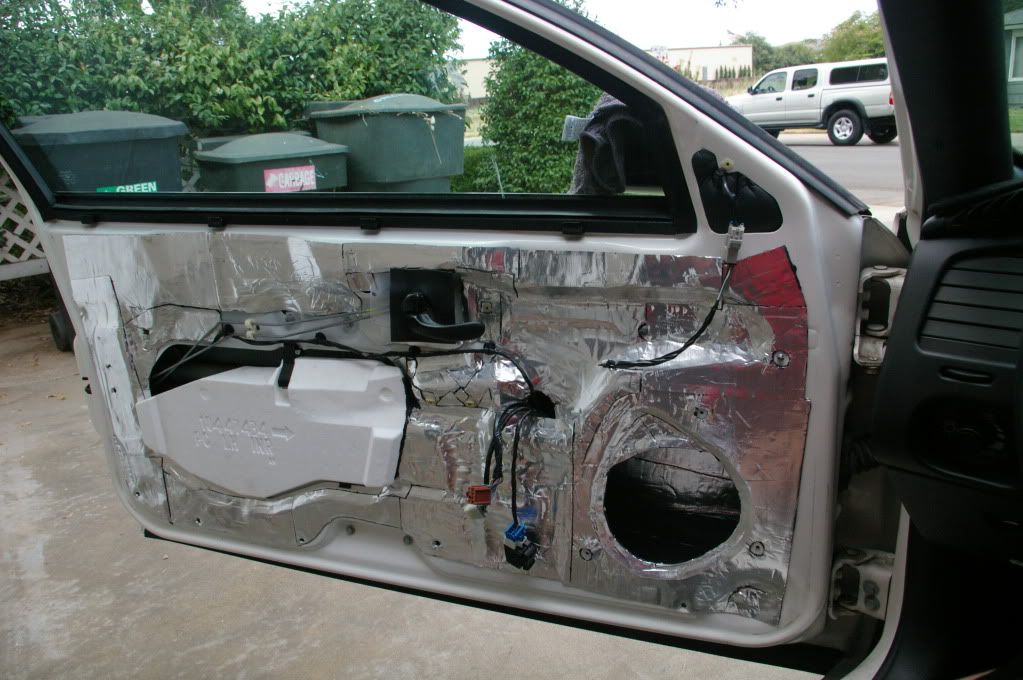
I think it came out alright, could be better, but not bad for a deadening material noob.
So I move on to the passenger side, and aside from the issue I had with the window switch as stated above, it went rather smooth. I got this one done in about an hour to hour and a half. I hadn't had any issues with the wiring getting adhesive on the window but I noticed this side also had duct tape on it which was loose and sloppy so I handled that before I started the deadening.
Before:
After:

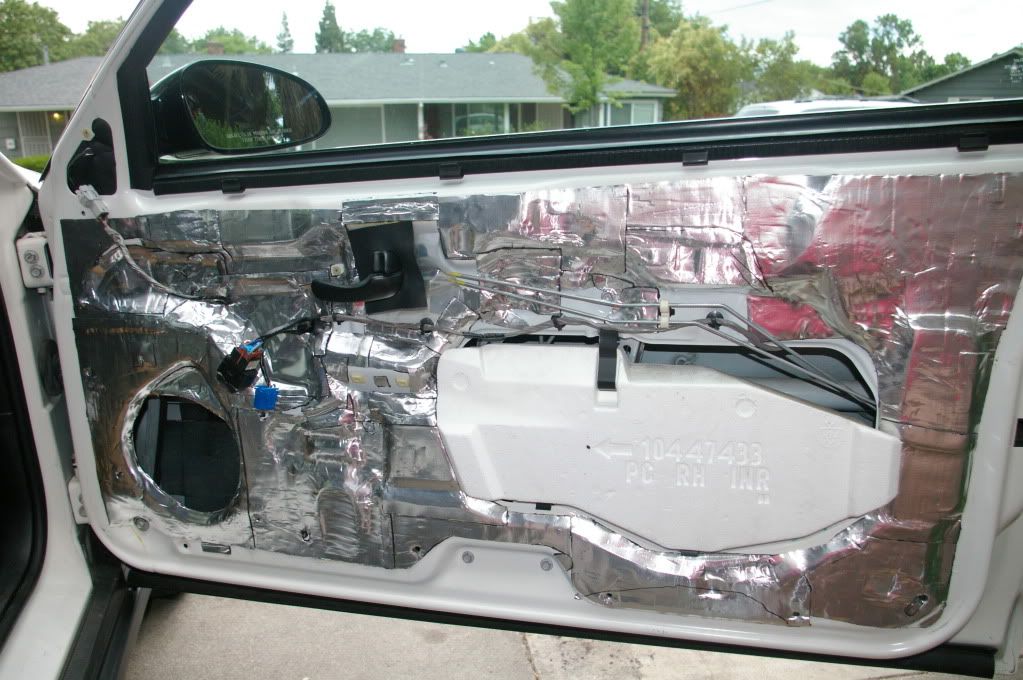
And this is how this door came out
Once I was done and had removed all tools and what not from inside my car, I closed the door and heard a solid "thud", it put a smile on my face. It sounded far less hollow and more solid than before...the sound was so impressive that after cleaning up my mess and locking everything up, I watered my lawn and once I was done with that I went over to my car and opened and closed the doors again just to hear it. LOL.
Once again, big ups to Ant for the promotion, the product is easy to work with and even though I haven't been able to confirm yet how much of a difference it made when playing music, the sound of my doors closing has me feeling very optimistic about it. The freebie folding knife looks cool as hell and came in handy during the install. So far, I give it two thumbs up, I'll report back once I get my speakers in and powered up.
He has alot of connections in the car audio world and some manufacturers who have partnered up with him and his forum, one of which is SecondSkin Automotive Insulation. The owner, Anthony Collova, had a giveaway to kickoff this new partnership in which he put up 10 door packs of SecondSkin Damplifier Pro. Members had to post in his thread and agree to the terms of the promotion and after 2 weeks he was going to randomly pick the 10 winners out of all who entered. 68 members entered in that time and he ended up giving all 68 of us a door pack, free wooden roller and a free folding blade to assist in installation of the product. These door packs retail for $60 on the SecondSkin site, plus $8 for the blade and $8 for the roller, that's a total of $76 retail per pack given away, for a grand total of $5168 worth of product GIVEN AWAY FOR FREE!
Here's my pics of the product and install
The first thing to do, of course, was remove the door panels and check out the door to see how much of a pain this was going to be. It was already going to be kind of a pain cause I had never before used or applied sound deadening so today was a very special day for me as I got my deadening material virginity popped
In the process of removing the panels I ran into a slight issue, the geniuses at Chevy decided to put the plugs in with the release mechanism in the worst possible spot so when I was removing the passenger side panel the window switch broke apart while I was trying to flip the panel upside down so I could gain access to the release mechanism. When I say split apart, I mean just that, the internal pins were exposed and all. I just knew I'd have to pony up for a new switch but I was able to get it back together securely with no issues. Whew, dodged one there.So I get the panels off and this is what is staring at me
Not too bad, I suppose. Before I go any further I decide to look for the culprit of this nasty sticky stuff thats on the inside of my window. It's horrible stuff. I detail cars and have lots of products in my garage but none of them could do any damage to this stuff so I had to resort to using a brillo pad. It got the stuff off but if you look hard enough you can see some fine scratches. Not a big deal, but a deal none the less. So this is the nastiness that's on my inner window, again.
Close inspection of the door panel and wiring revealed the cause:
Again, the geniuses at Chevy came up with a great idea and decided using duct tape on the inner door wiring was the thing to do. The adhesive melted and the tape unraveled, getting that sticky mess on my window
So the first order of the day was to remove the plastic lining from the door panel and handle that issue with the tape. You see what the wiring looked like before, this is what it looks like now:
Now I can rest assured that I'll no longer have to worry about the sticky stuff getting on my window and can move on to the real job, should be fun.
I pop open the box of Damplifier Pro and notice the deadener is sticking to the sides, not a big deal, rather an observation. I pulled a little harder and it opened right up. It was a little warm out today so I set a sheet of deadener on my dash board so it can warm up a little and hopefully be a little easier to work with and stick a little better. Worked like a charm! I pulled up a milk crate and began to proceed. Like everybody else who won this via the promotion, I got the Fury blade, but I found myself using a pair of scissors to cut the sheets of material and the knife for cutting the more intricate cuts when the material was on the door; for things like holes for bolts, clips, etc. Worked out well. The Fury blade looks pretty sick but when I first picked it up it didn't scream "high quality" or "heavy duty", my first impression was "Wow, this thing is pretty lightweight, I hope it holds up." At the end of the day, it did what I needed it to do and with no issues at all.
My goal was to use as many large, solid pieces as possible, but that didn't work out too well. Far too many ridges, angles, and curves for me to do so. Either that, or I just don't have the technique to do so. I'm thinking a combo of both. In any case, I was able to get the driver side door done with no major issues. It took me about 2-3 hrs to get it done, including a 30 minute lunch break, and about 30 minutes to clean/organize my garage/tools and to reinstall my subs and box which I had removed last weekend after a little technical issue. It felt like it took longer than it really did and i'm sure it should have been done faster but I was taking my sweet time since it was all new to me. The product was easy to work with, although cutting with scissors probably wasn't the best way to go even though it did prevent me from having to get up and go to my work bench every time I needed to cut a sheet. I think i'm going to have to devise a better way to locate screw holes and the like because this stuff is pretty thick so it makes locating the holes beneath a bit of a task if the holes are small. It was very pliable and conformed to the angles and curves of the panel with ease (I think setting it on the dash to get warm prior to using was a good idea). So this is what my first door came out like:
I think it came out alright, could be better, but not bad for a deadening material noob.
So I move on to the passenger side, and aside from the issue I had with the window switch as stated above, it went rather smooth. I got this one done in about an hour to hour and a half. I hadn't had any issues with the wiring getting adhesive on the window but I noticed this side also had duct tape on it which was loose and sloppy so I handled that before I started the deadening.
Before:
After:
And this is how this door came out
Once I was done and had removed all tools and what not from inside my car, I closed the door and heard a solid "thud", it put a smile on my face. It sounded far less hollow and more solid than before...the sound was so impressive that after cleaning up my mess and locking everything up, I watered my lawn and once I was done with that I went over to my car and opened and closed the doors again just to hear it. LOL.
Once again, big ups to Ant for the promotion, the product is easy to work with and even though I haven't been able to confirm yet how much of a difference it made when playing music, the sound of my doors closing has me feeling very optimistic about it. The freebie folding knife looks cool as hell and came in handy during the install. So far, I give it two thumbs up, I'll report back once I get my speakers in and powered up.
Thread Starter
|
Joined: May 2005
Posts: 3,221
Amp rack
This was easily the most challenging part of this build for me since it is my first woodworking project since high school wood shop class over 15 years ago. But I was up for the challenge.

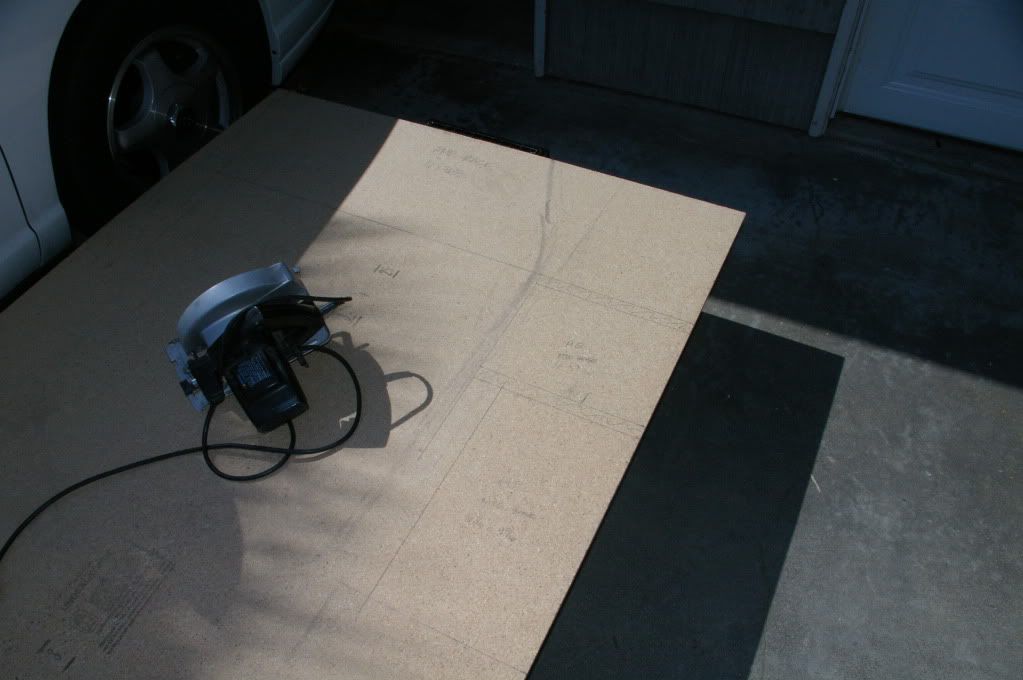
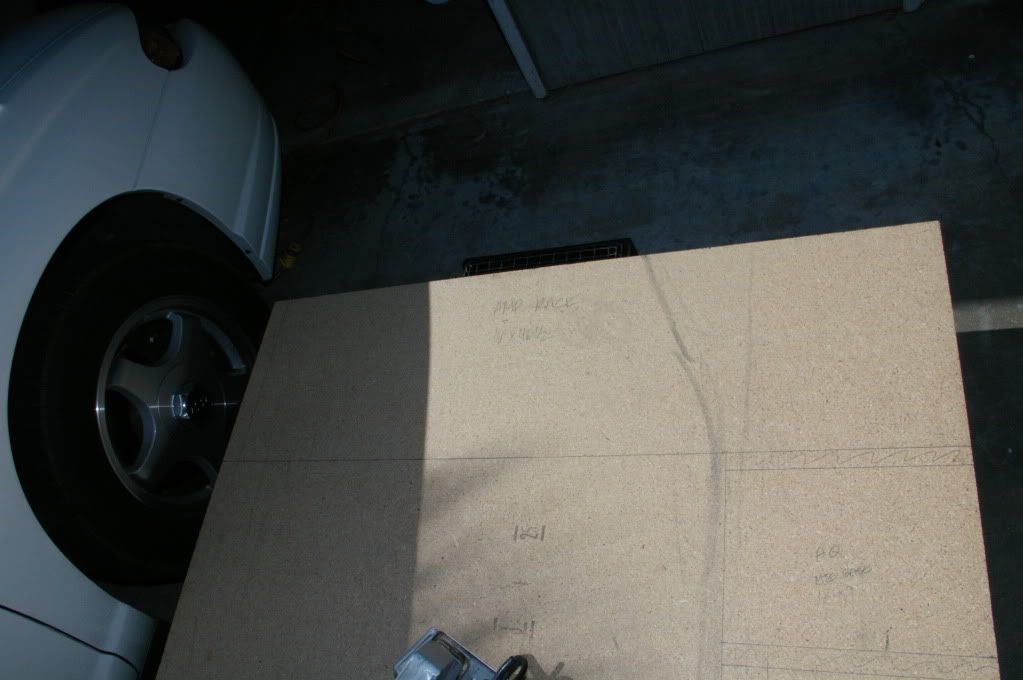
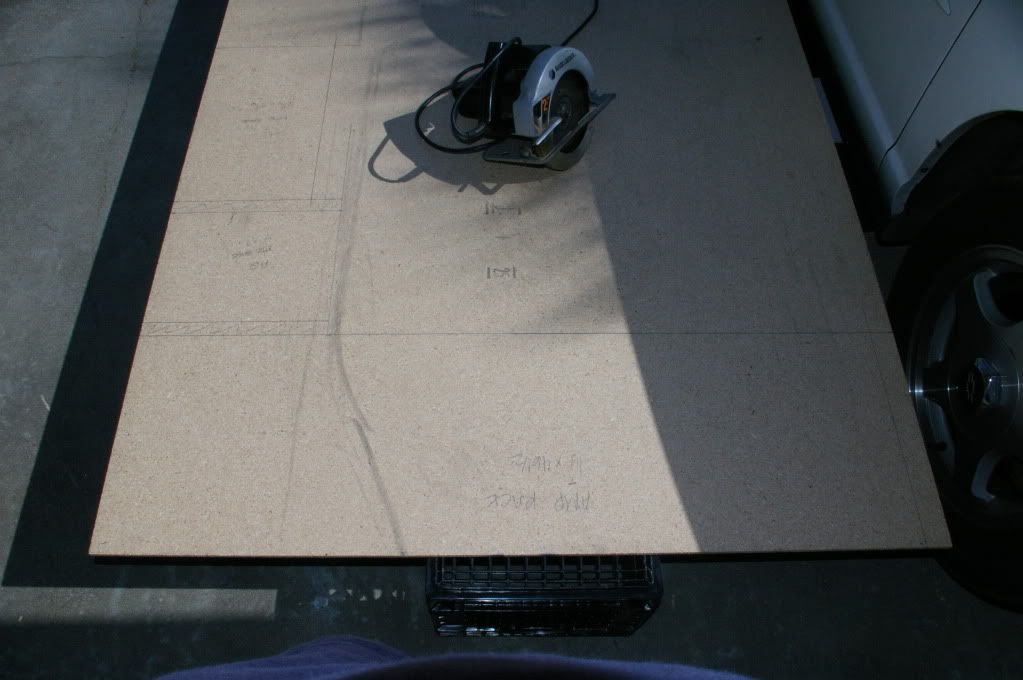

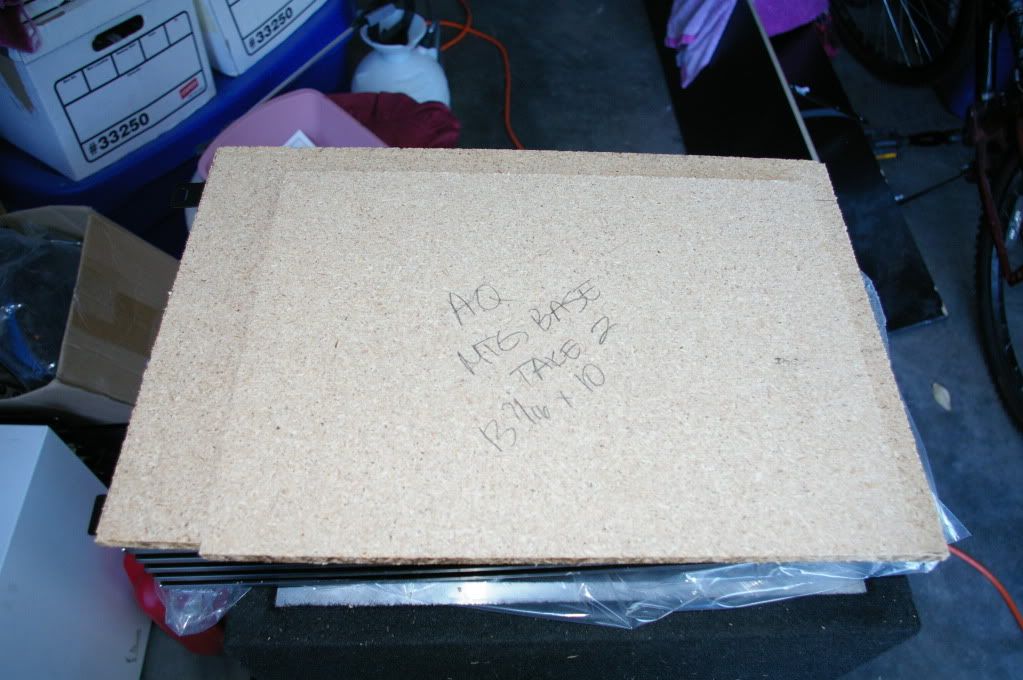
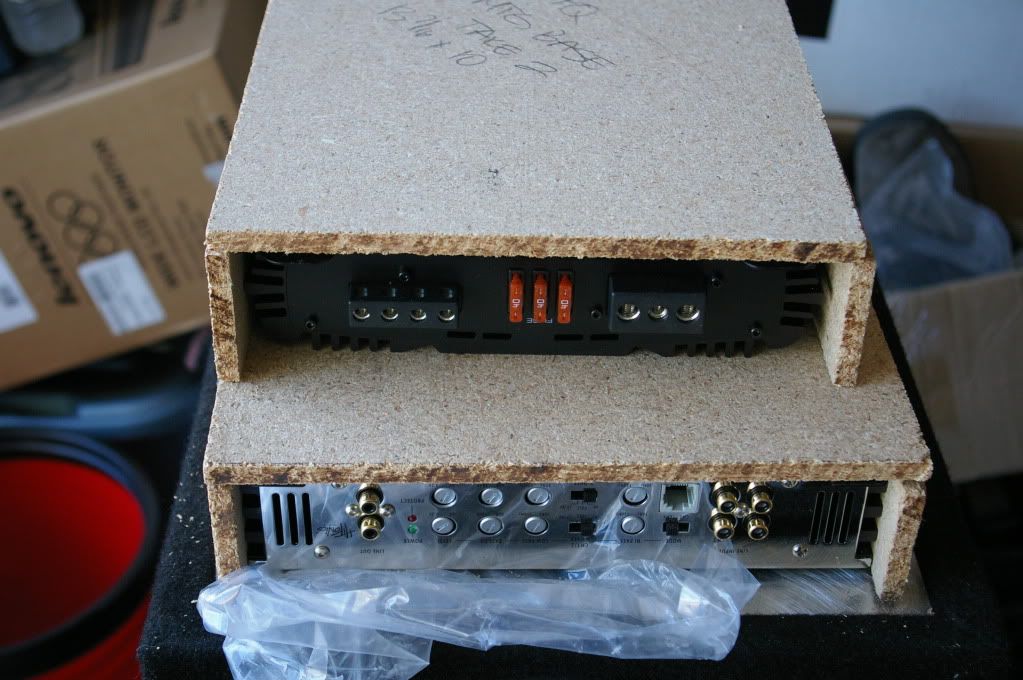
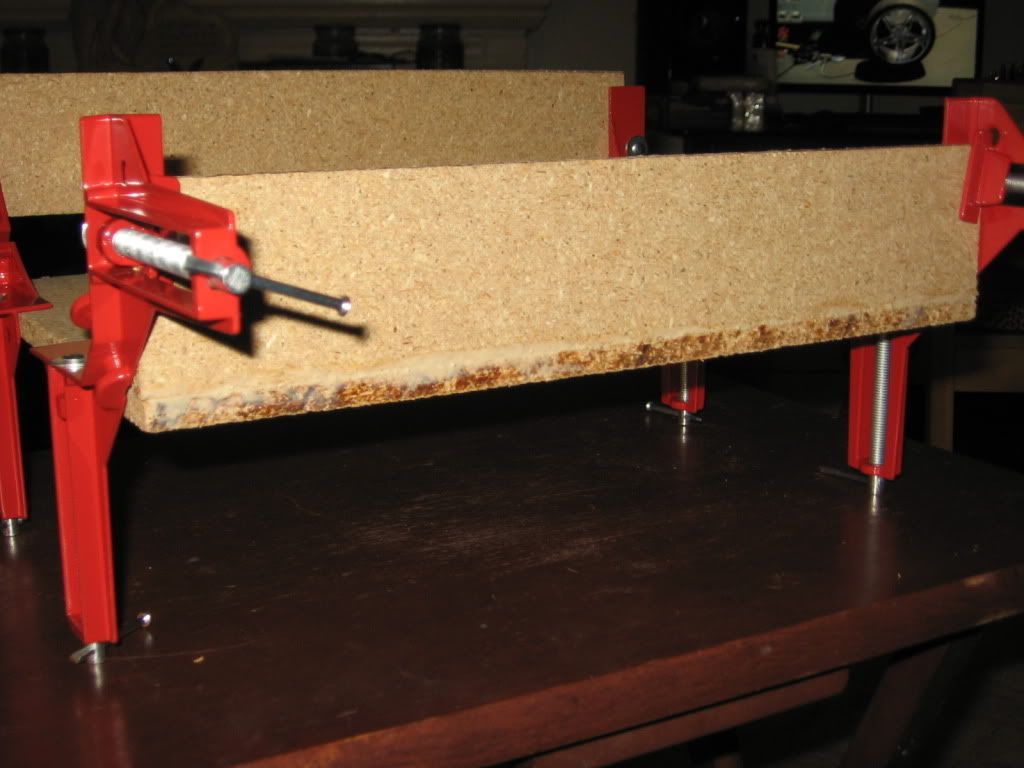
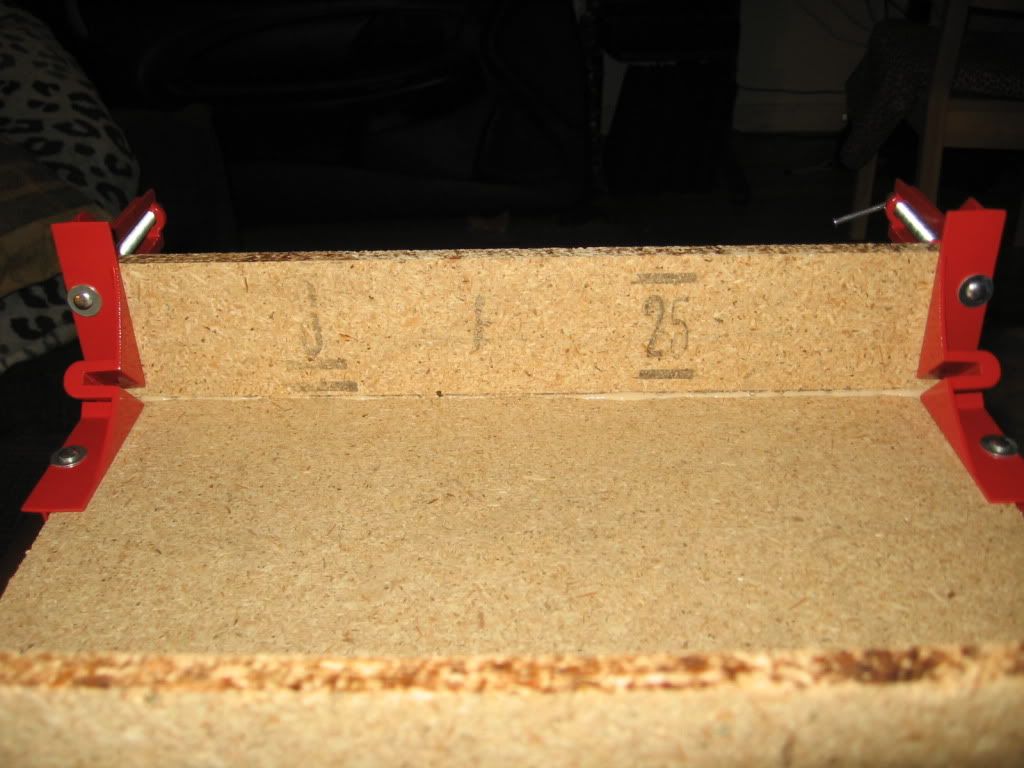
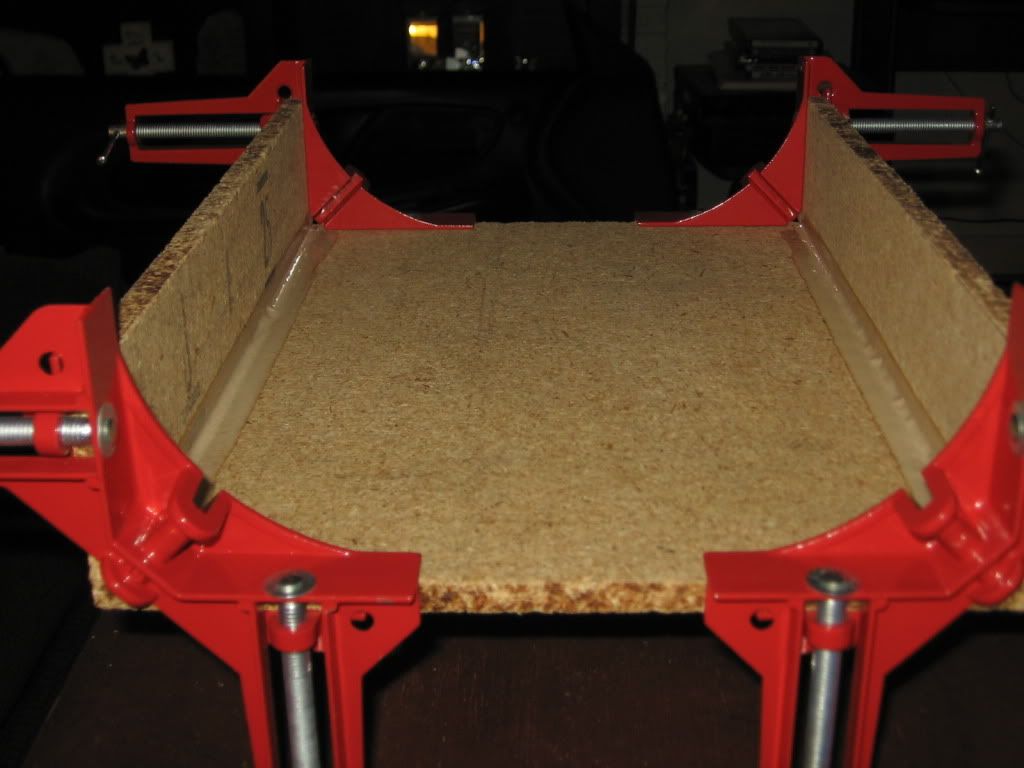
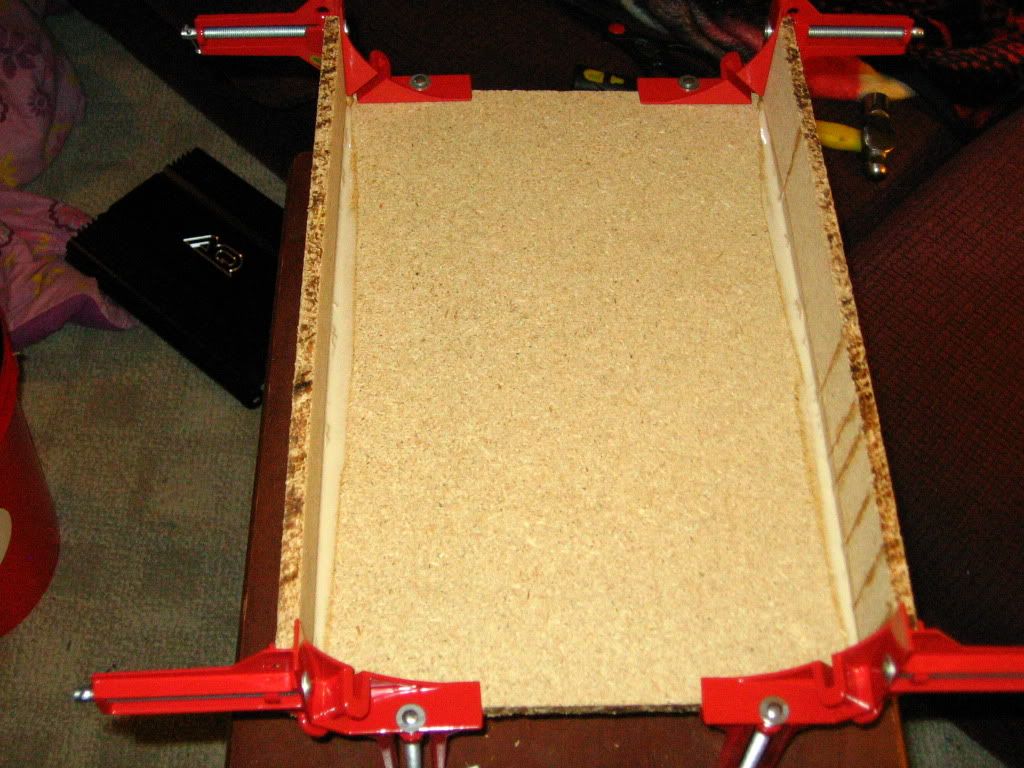
Assembling the amp rack housings:
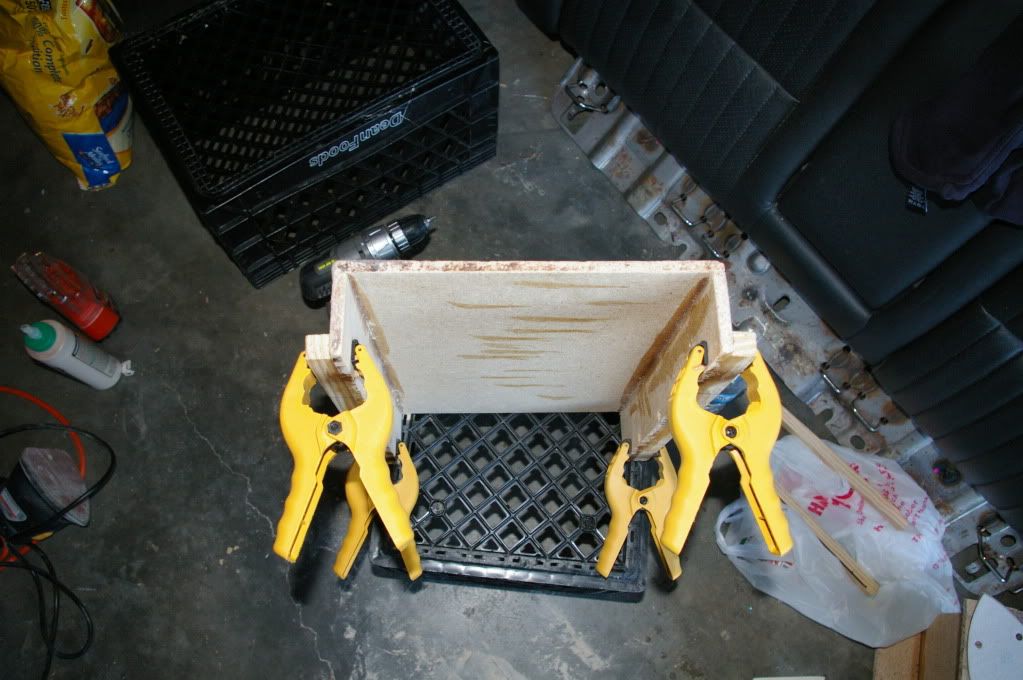
I put the wood in, clamped it up and aligned it and then raised up the side piece so I could lay a bead of Titebond and then put it in place and clamped it down
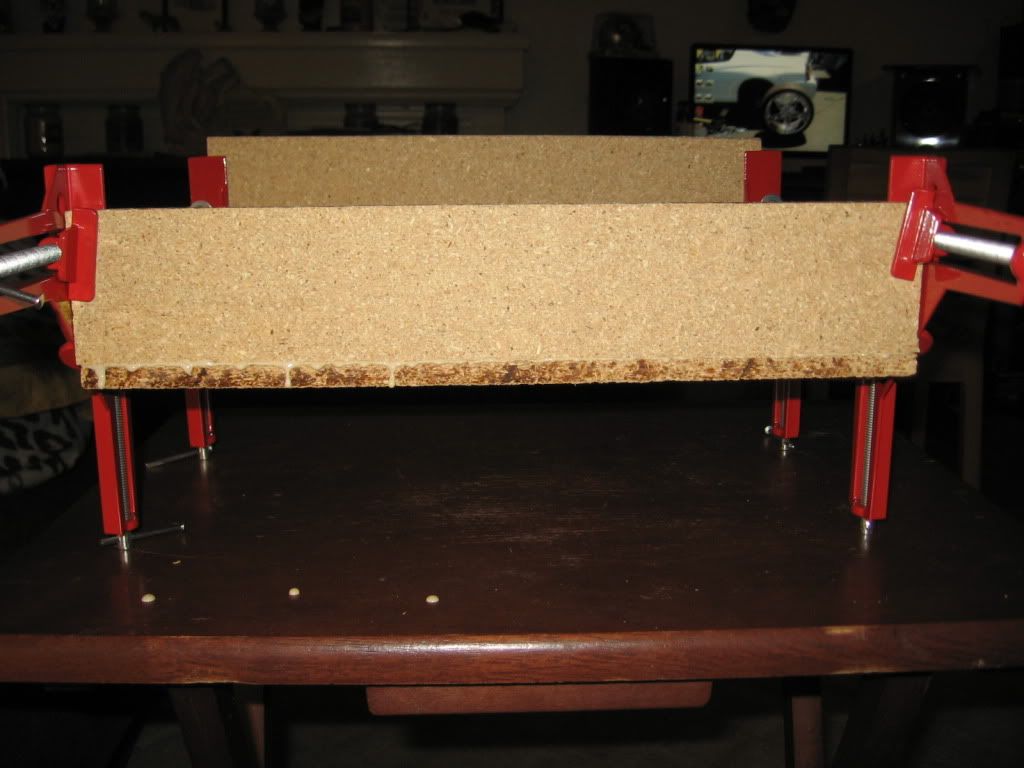
Forgot to put something down to catch the drips, whoops.

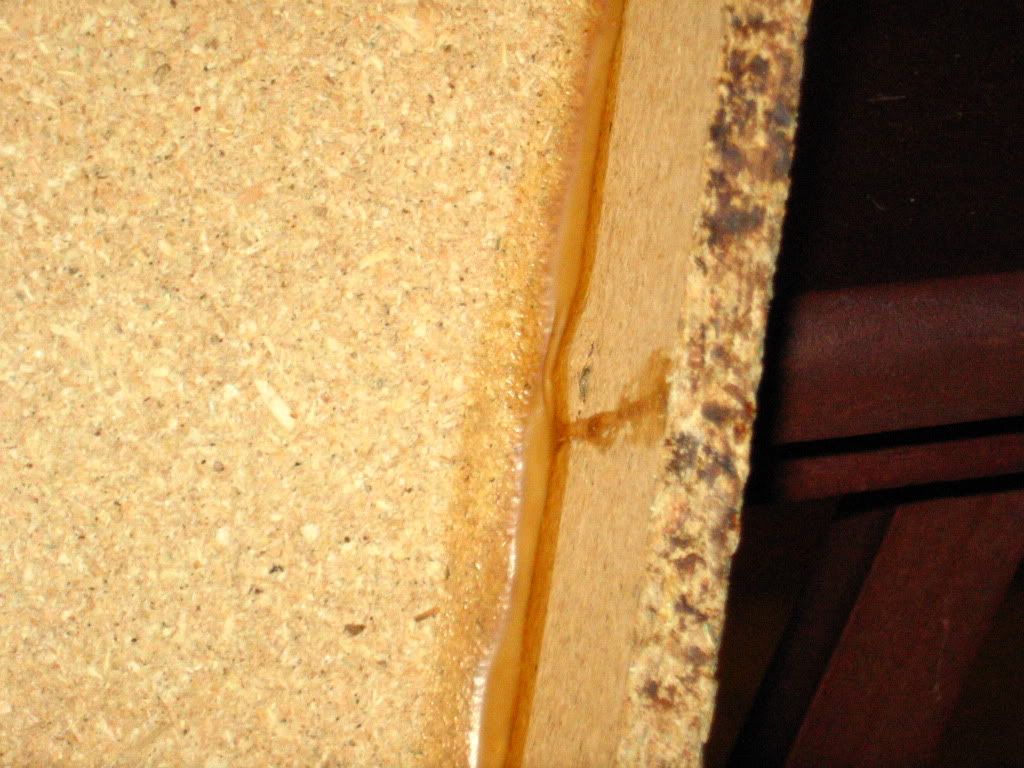
Cleaned up the drips on the stand and the amp rack housing
After the glue dried I used a few nails on each side to secure and strengthen the joint even more
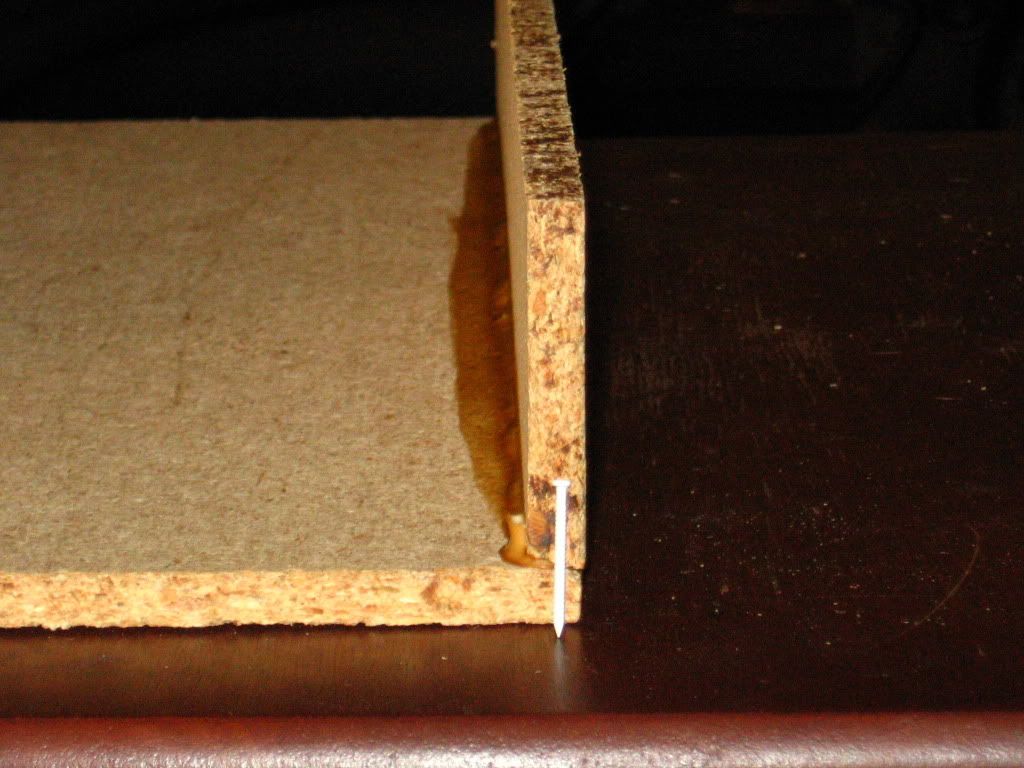
See where I didn't drive the nail in straight?
Both enclosures assembled and ready for fiberglass reinforcement on the back side.
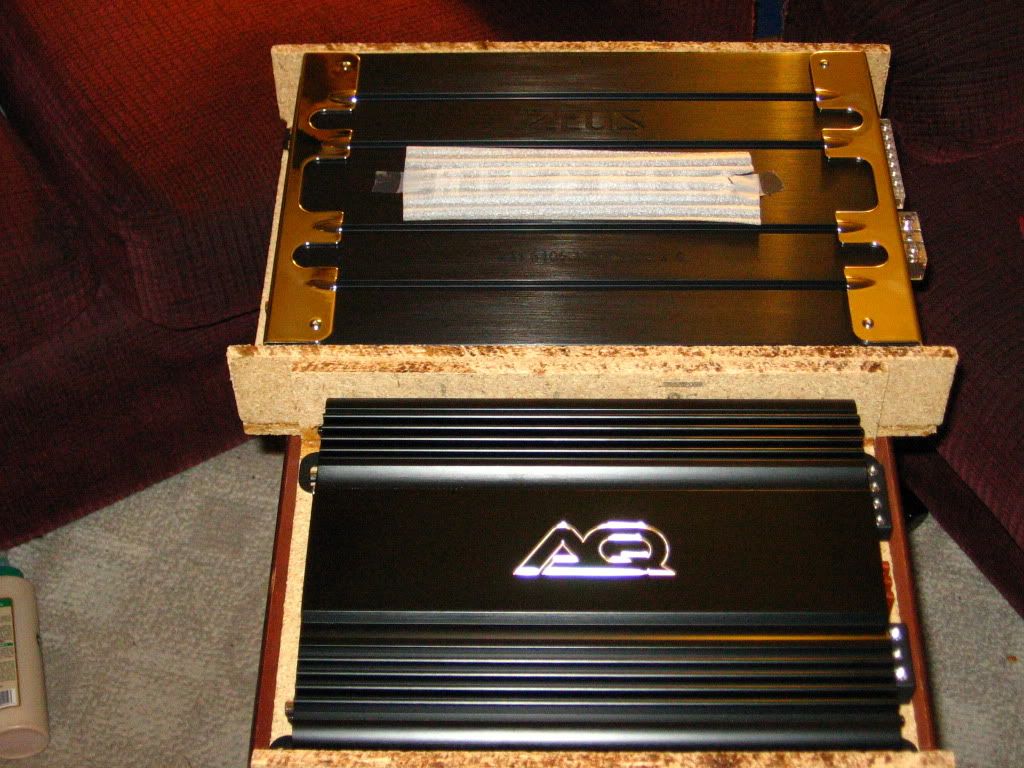
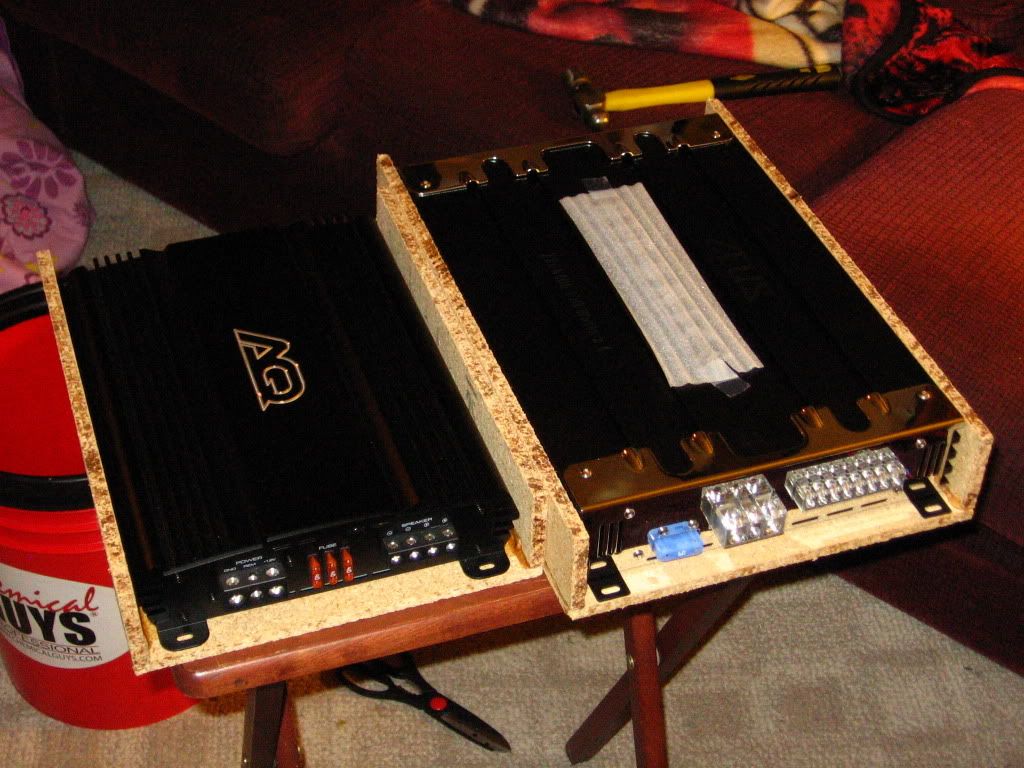
Then I moved on the the fiberglass part of the project
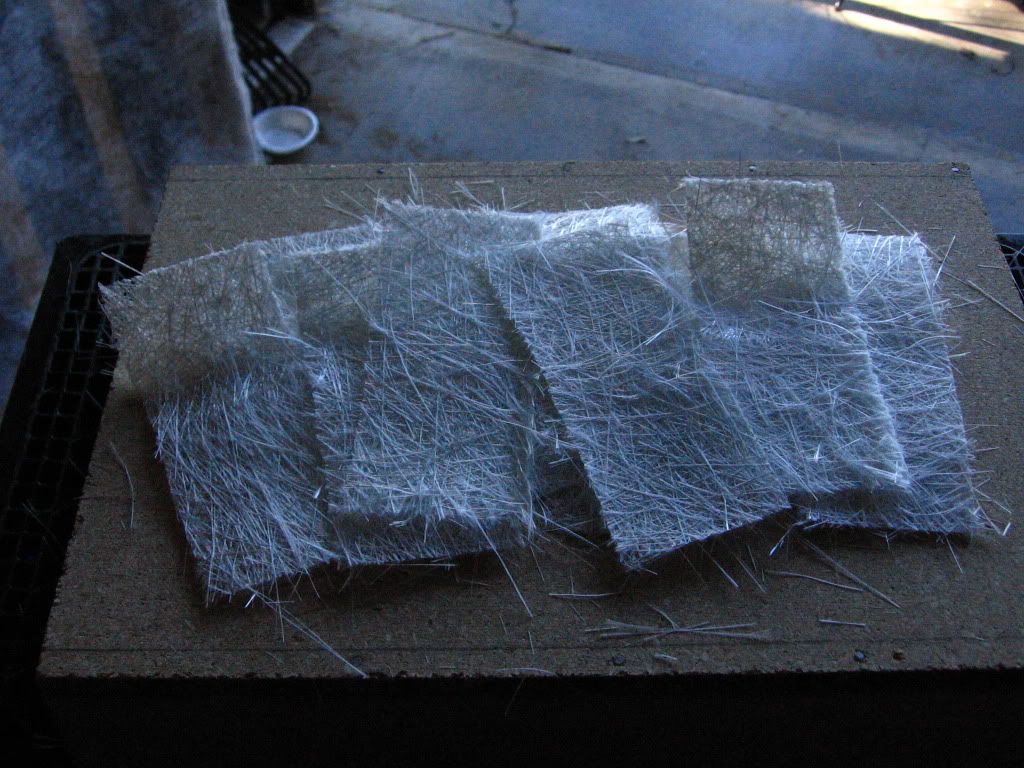
I cut up the glass mat to the size I needed for the job, 24 pieces here, all for this enclosure. 3 pieces = 1 layer, doing 4 layers on each joint.
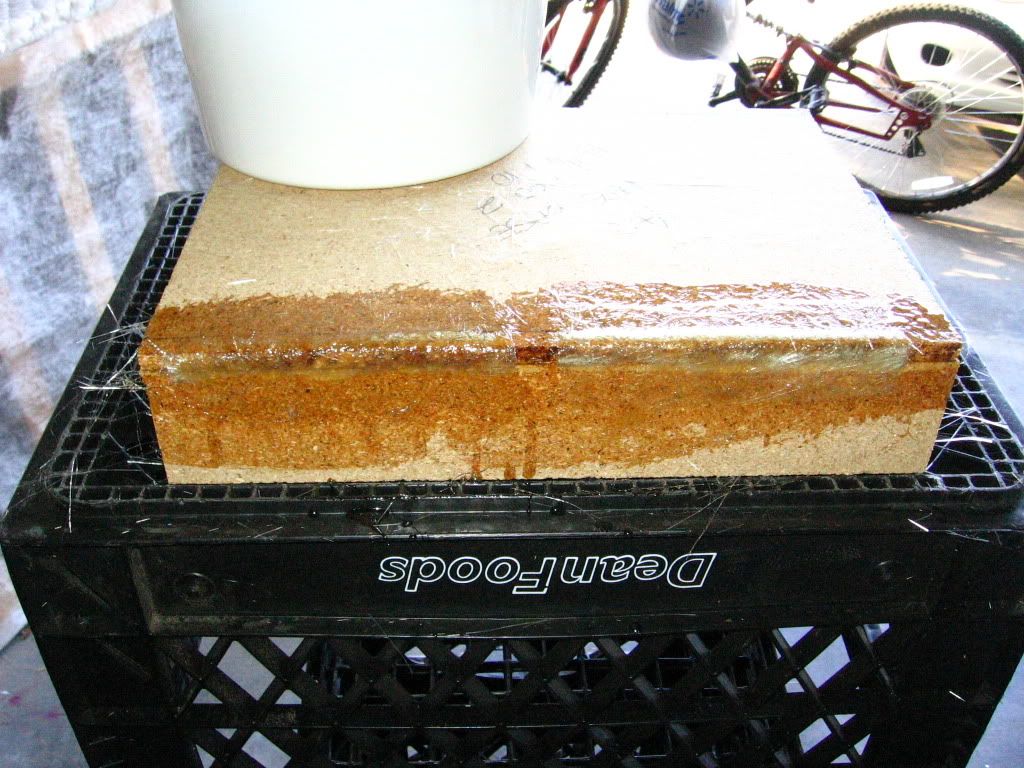
Two pieces layed, no matter how hard I tried I wasn't able to get rid of the frickin' air bubble at the joint
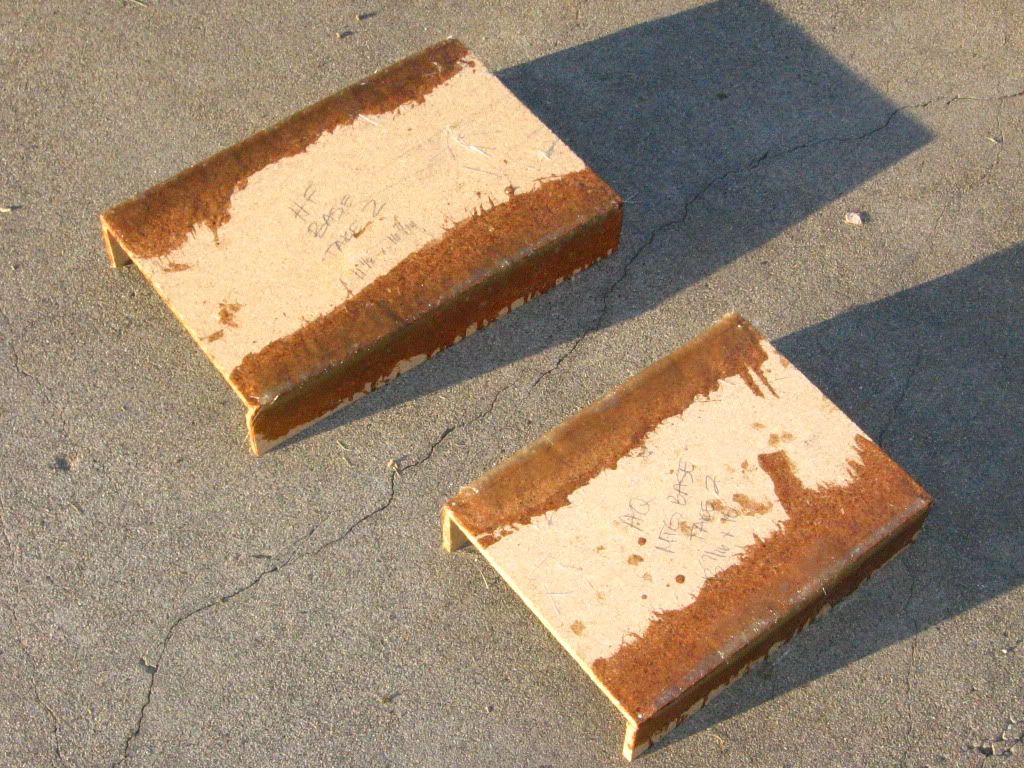
But I dealt with it and pushed on and this is how they came out
Assembling the amp rack housings:
I put the wood in, clamped it up and aligned it and then raised up the side piece so I could lay a bead of Titebond and then put it in place and clamped it down
Forgot to put something down to catch the drips, whoops.
Cleaned up the drips on the stand and the amp rack housing
After the glue dried I used a few nails on each side to secure and strengthen the joint even more
See where I didn't drive the nail in straight?
Both enclosures assembled and ready for fiberglass reinforcement on the back side.
Then I moved on the the fiberglass part of the project
I cut up the glass mat to the size I needed for the job, 24 pieces here, all for this enclosure. 3 pieces = 1 layer, doing 4 layers on each joint.
Two pieces layed, no matter how hard I tried I wasn't able to get rid of the frickin' air bubble at the joint
But I dealt with it and pushed on and this is how they came out
Thread Starter
|
Joined: May 2005
Posts: 3,221
Amp Rack, part 2
After the fiberglass cured it was time to move on
I sanded as much of the resin drips as I could and glued and screwed into place a 1x1 block which serves a couple purposes...first it will add another layer lateral support for the housing and it'll give me a solid foundation to screw into when I glue and screw them into the face of the amp rack.
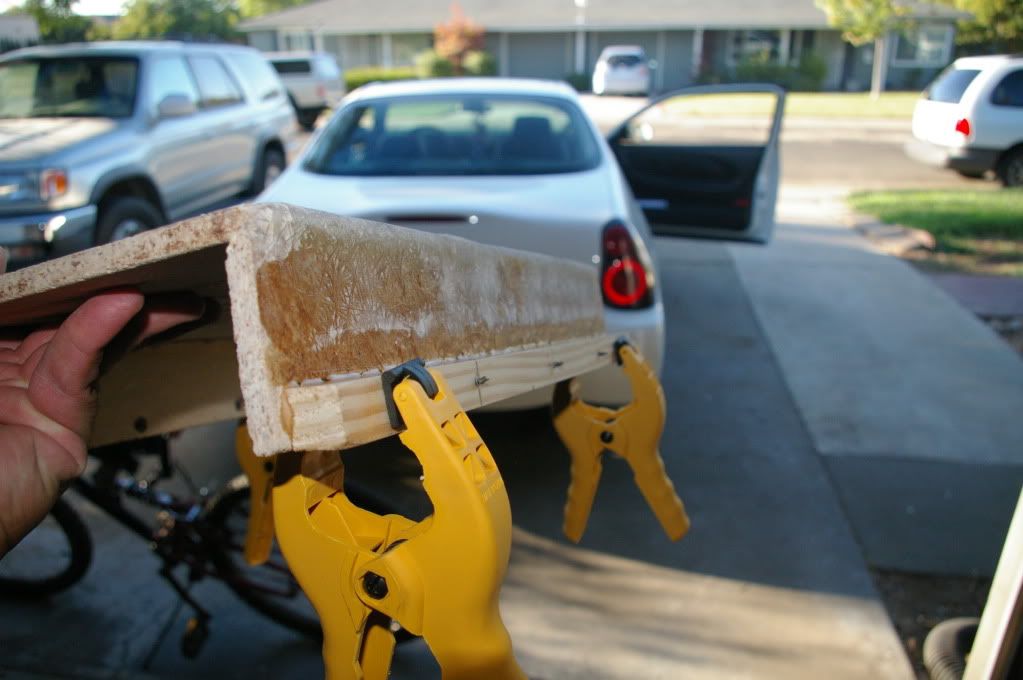

I filled in the holes above with wood filler after putting the screws in, and then grinded down the part of the screw that stuck out the other side.
After that it was time to focus on the face of the amp rack
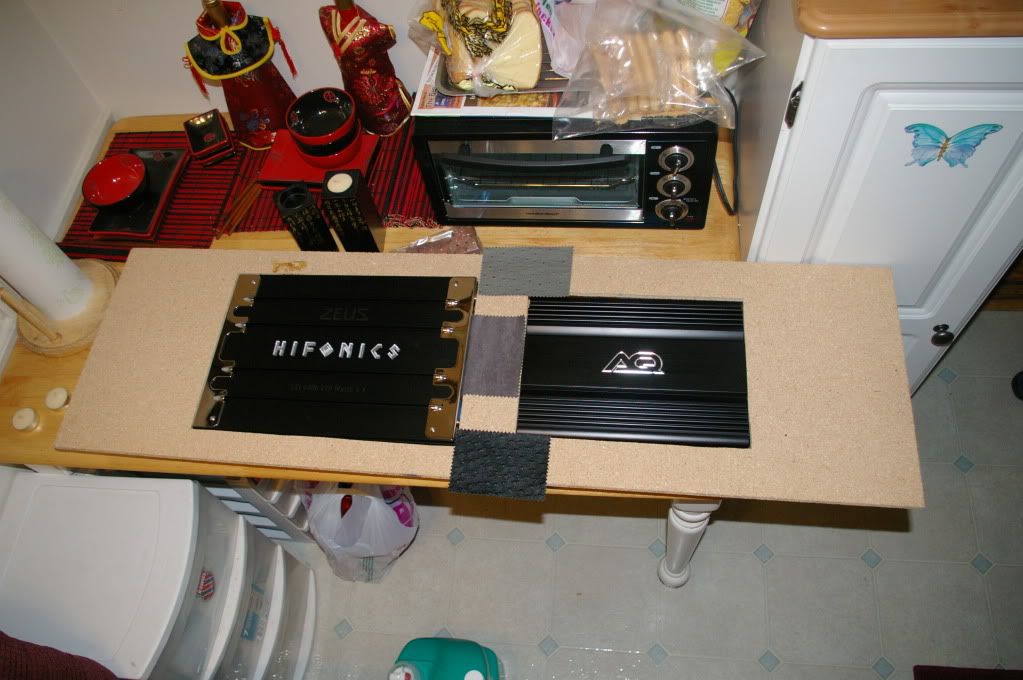
I got the face of the rack cut to size, cut out the openings for the amps and test fit. The swatches of material you see on the top of it are fabric samples I got to help me decide which color and fabrick I wanted to use to wrap it.
I ended up going with black Ostrich
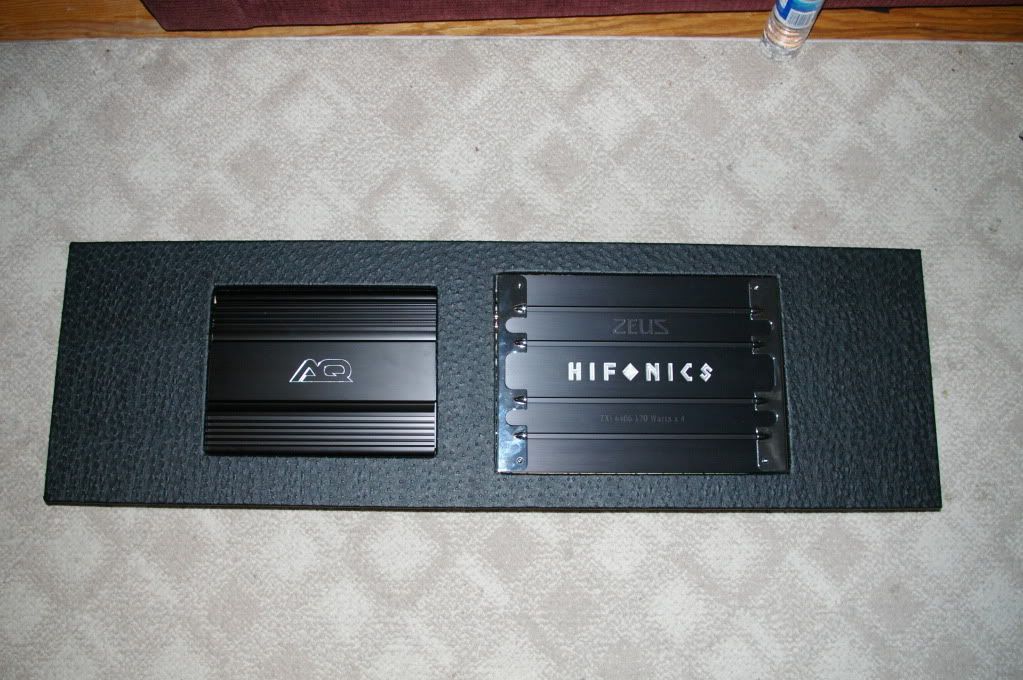
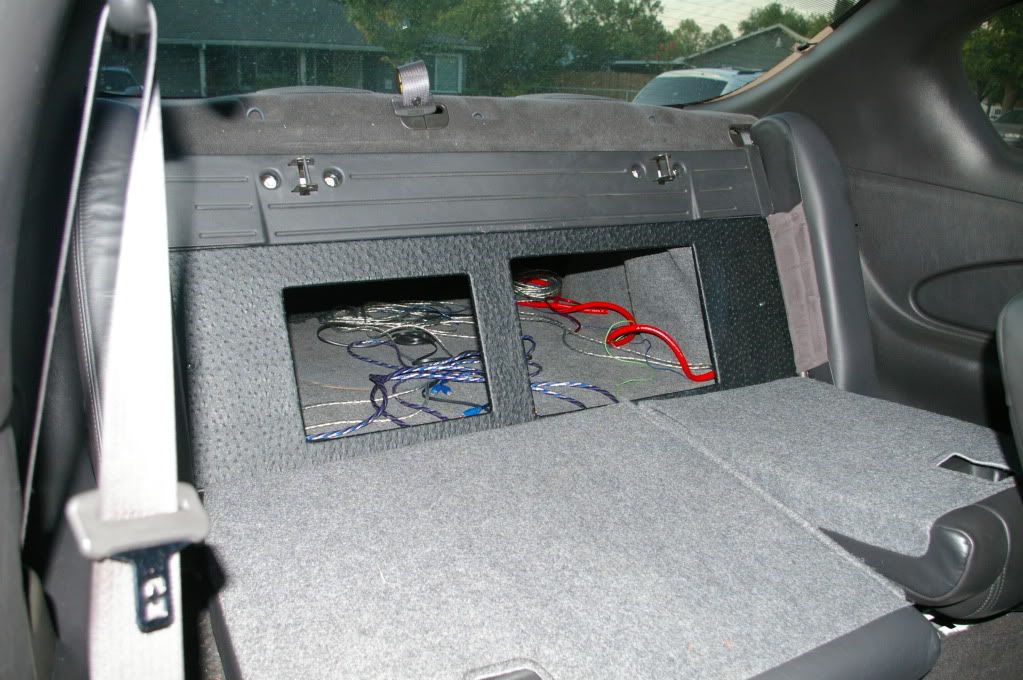
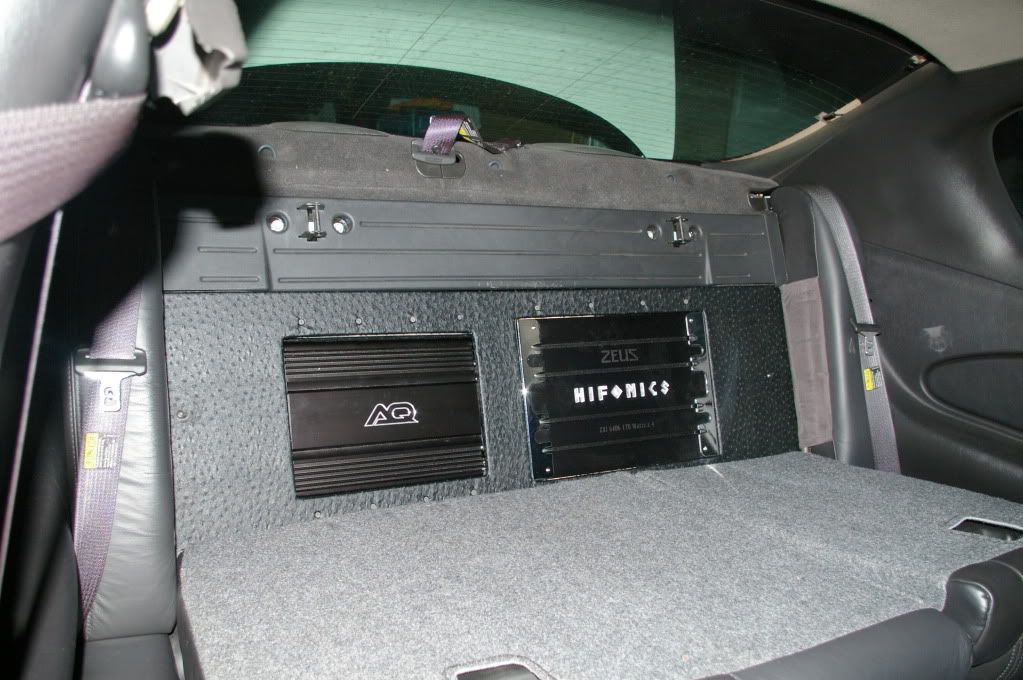
The only thing I don't like about it is due to my design...when I started planning this I was going to paint it so the plan was to fill in the screw holes, sand down and paint. But since I changed it up and decided to wrap it, can't fill in the screw holes. So I think i'm going to punch out some circles of black ostrich and glue them over the screw heads to blend it in better than it is now.
I sanded as much of the resin drips as I could and glued and screwed into place a 1x1 block which serves a couple purposes...first it will add another layer lateral support for the housing and it'll give me a solid foundation to screw into when I glue and screw them into the face of the amp rack.
I filled in the holes above with wood filler after putting the screws in, and then grinded down the part of the screw that stuck out the other side.
After that it was time to focus on the face of the amp rack
I got the face of the rack cut to size, cut out the openings for the amps and test fit. The swatches of material you see on the top of it are fabric samples I got to help me decide which color and fabrick I wanted to use to wrap it.
I ended up going with black Ostrich
The only thing I don't like about it is due to my design...when I started planning this I was going to paint it so the plan was to fill in the screw holes, sand down and paint. But since I changed it up and decided to wrap it, can't fill in the screw holes. So I think i'm going to punch out some circles of black ostrich and glue them over the screw heads to blend it in better than it is now.

Wow great thread, makes me want to redo mine lol. i always like when people post great pics and info on how the installation went.
Are you makeing a box for the subs.
where you put your amps is the same way i have mine

I have a few stray wires around, your looks more cleaner but you also have your amps recessed in the amp rack mine is not.
Are you makeing a box for the subs.
where you put your amps is the same way i have mine
I have a few stray wires around, your looks more cleaner but you also have your amps recessed in the amp rack mine is not.
Thread Starter
|
Joined: May 2005
Posts: 3,221
Installing front components
I installed the components into the factory speaker pod. I had to modify the door panel a bit on the backside, just had to open up the tweeter opening a bit more so my tweets would fit. Nothing the Fury folding blade couldn't handle! After mounting the components in the pod I went out and installed the pod into the door and then test fit the door panel. It's all good!

I decided to mount my components like this for a few reasons...
#1 It's ideal to keep your tweeter mounted as close to the mid as possible to ensure ideal soundstage imaging.
#2 I have Rainbow DreamLine tweets installed in my door panels and it's already a tight fit, my CDT tweets are a little bigger so they wouldn't fit there even if I wanted to put them there.
#3 My door panels are black, my CDT tweets are grey, I didn't want them to stand out like that.
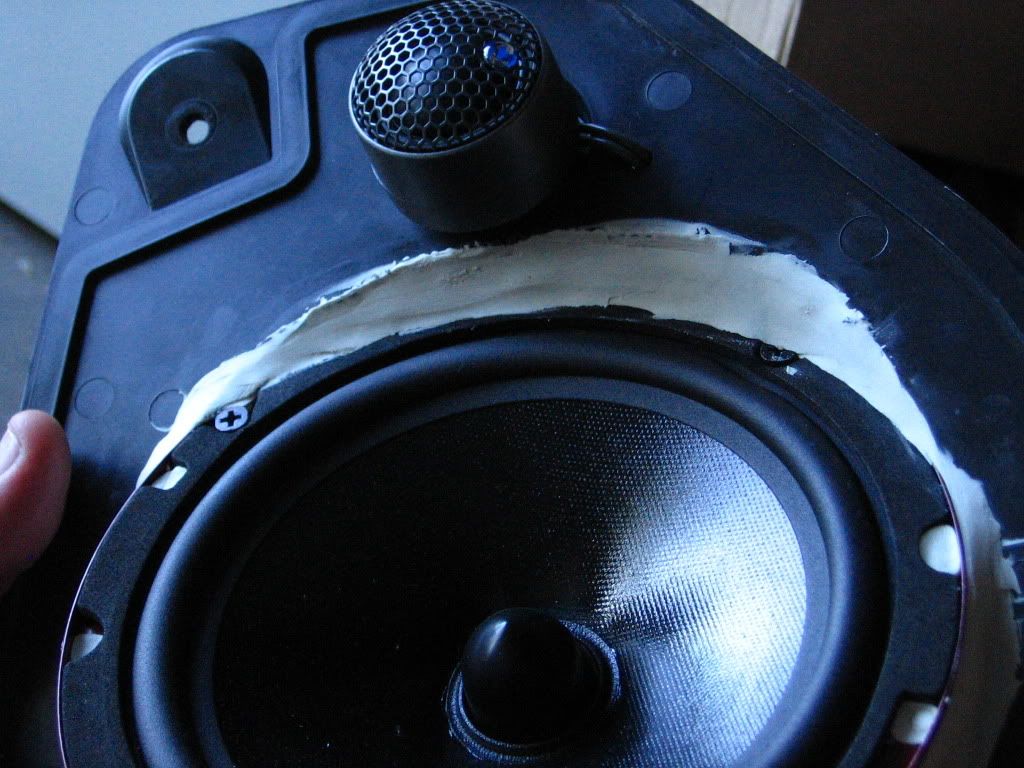
So once I got the components mounted in the pods I had a pretty noticeable gap between the basket ring and the pod itself
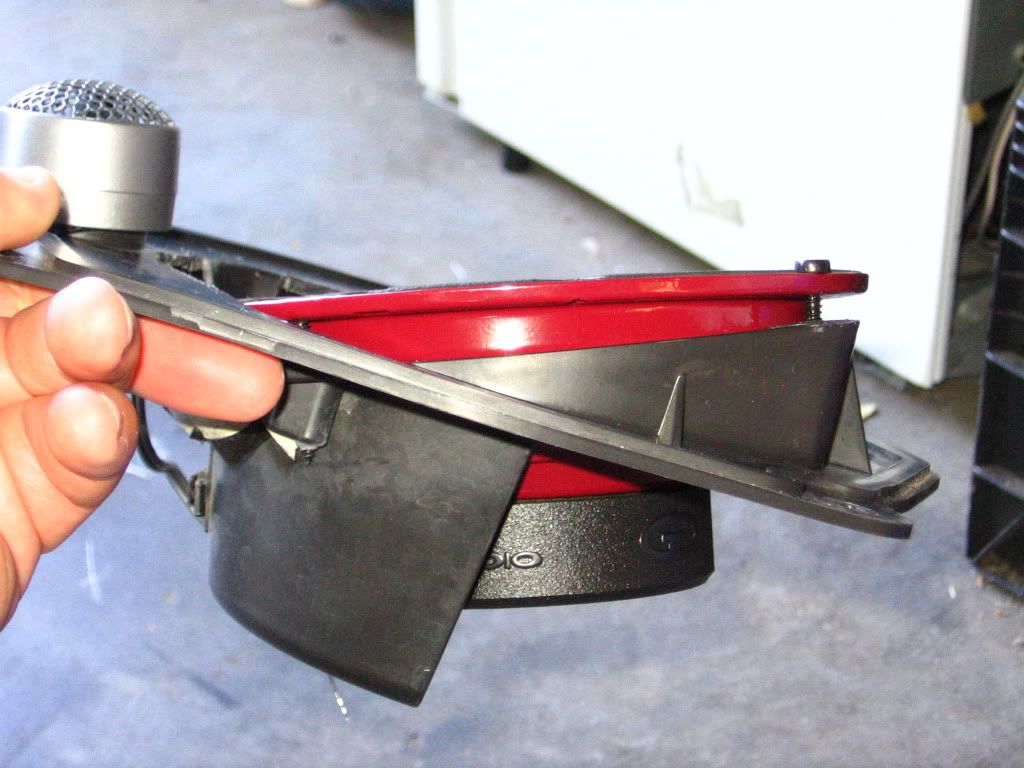
I decided the best way to fix this would be to seal the speaker in with non-hardening modeling clay. I sealed it up all the way around to prevent the possibility of any leaks. Since i'm gonna be running fronts only (no rear fill) I figured this is necessary to make the front stage as strong as possible.
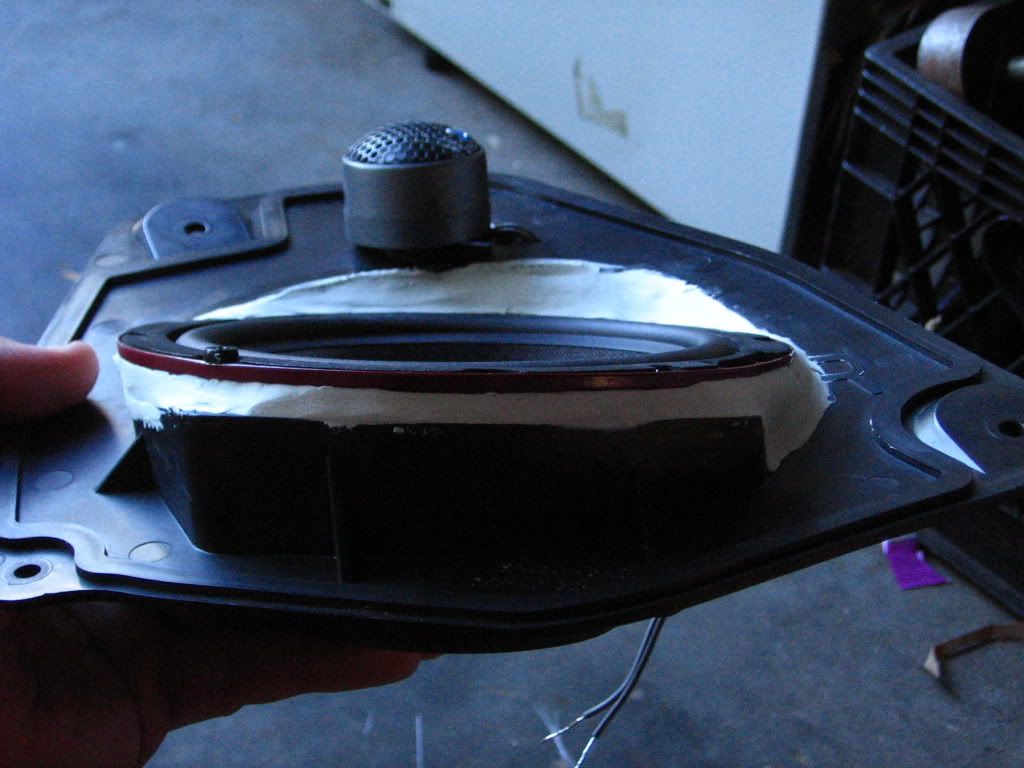

Then I needed to run speaker wire for them
KnuKonceptz 16ga. run through the factory door loom and into the cabin
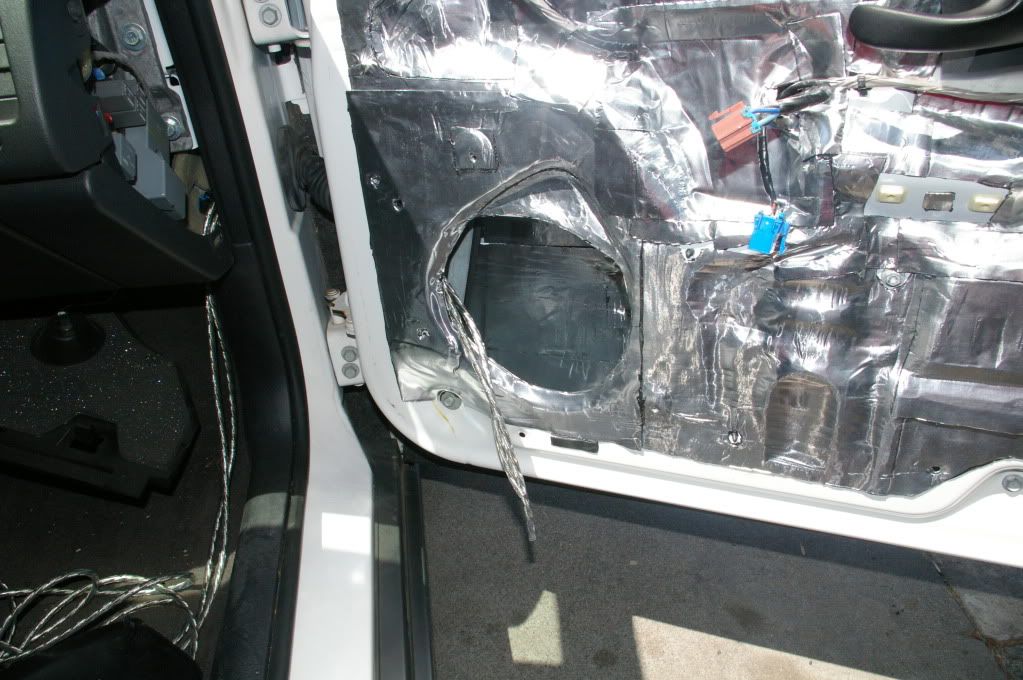
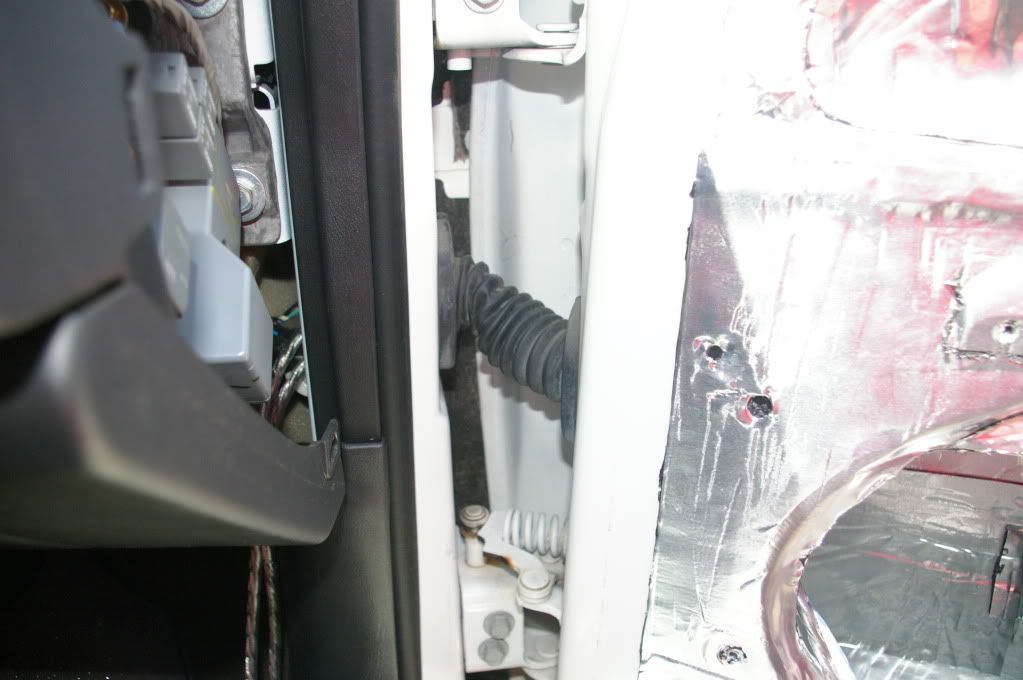
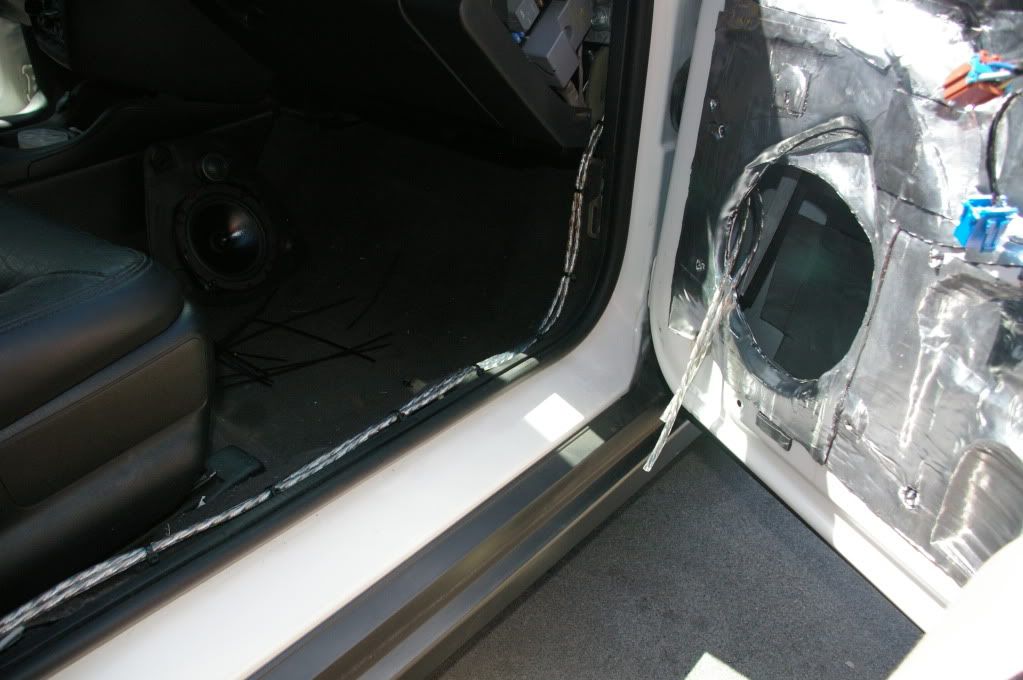
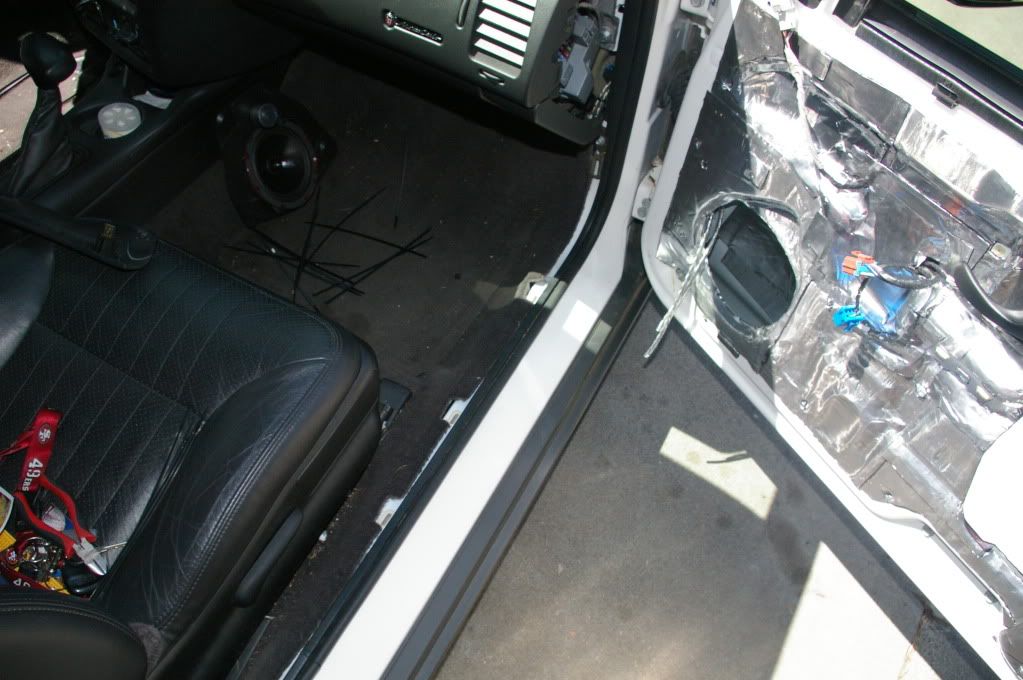
The drivers side was more challenging because again, my ham-hock of a hand proved to be an issue with the lack of space in the lower dash for me to reach up to where the loom enters the cabin so I could pull the wire through. I forced my hand in there and got it done but i've got small cuts all over, showering should be lovely. But again, once I got it through it was all good. Then I tagged the wires so I know which one is for the mid and which one is for the tweeter.

After that it was time to solder up the speaker wires and install the pods to the doors.
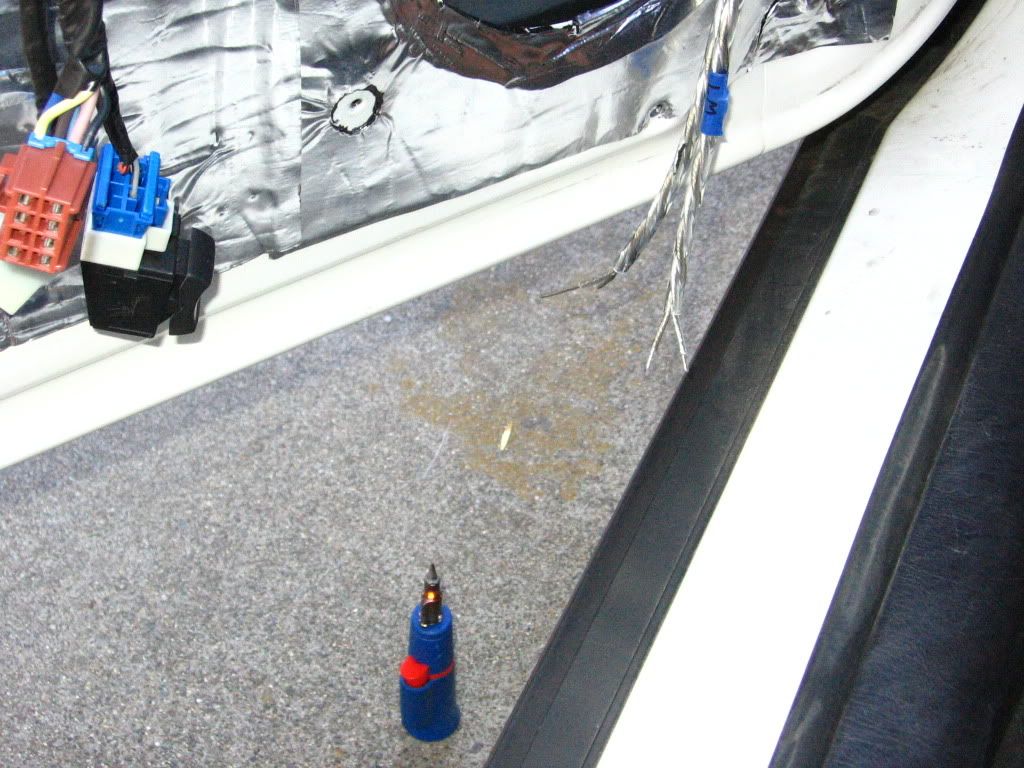
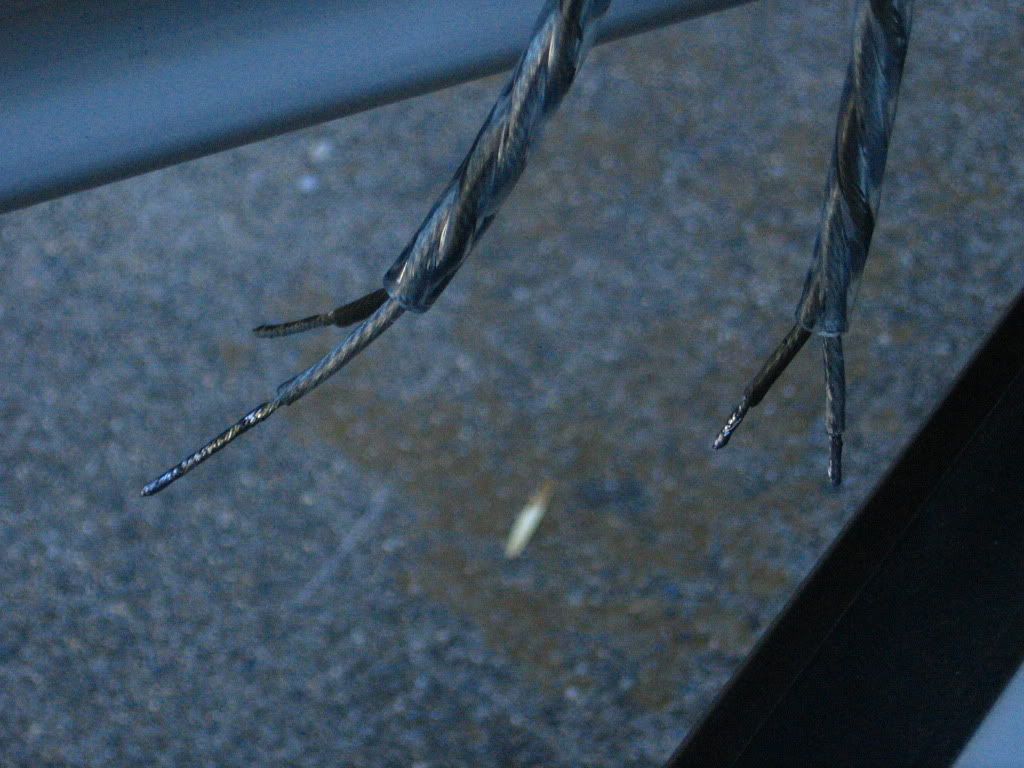
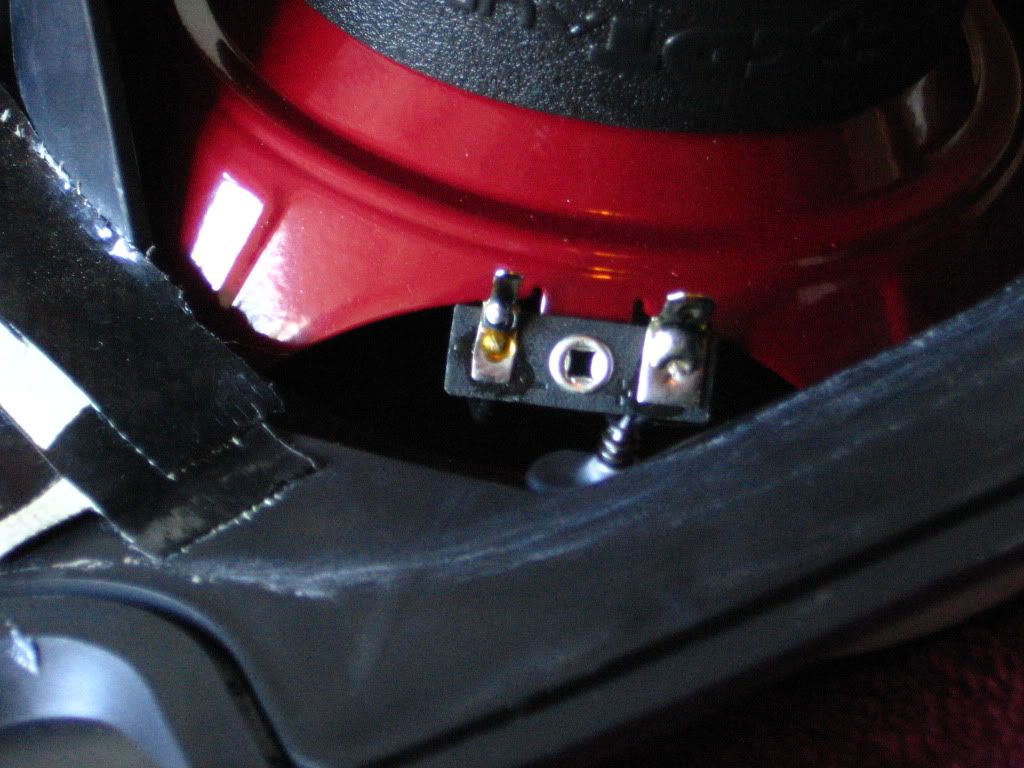
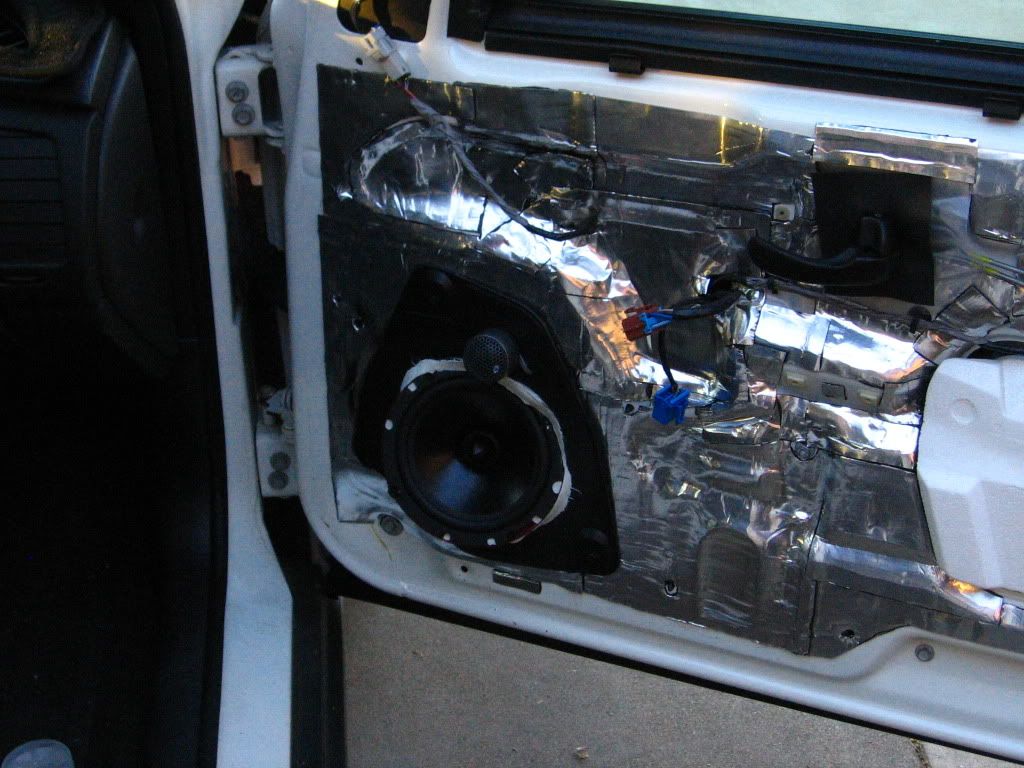
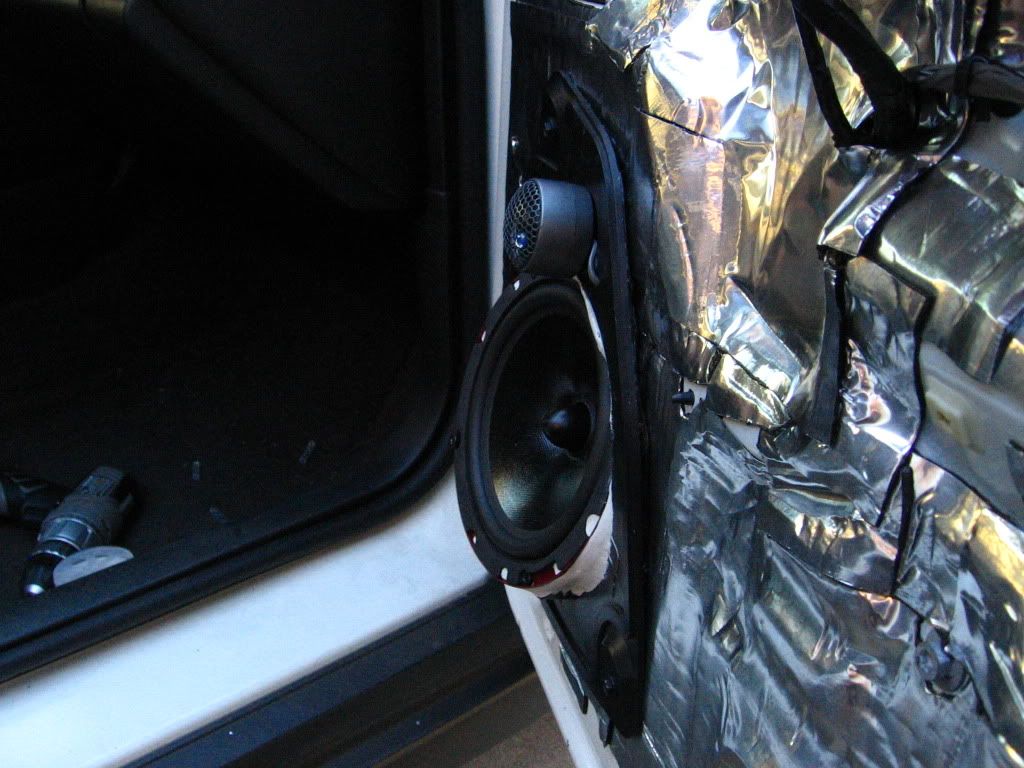
As you can see there was a little gap between the pod and the door panel, but nothing a little modeling clay couldn't handle
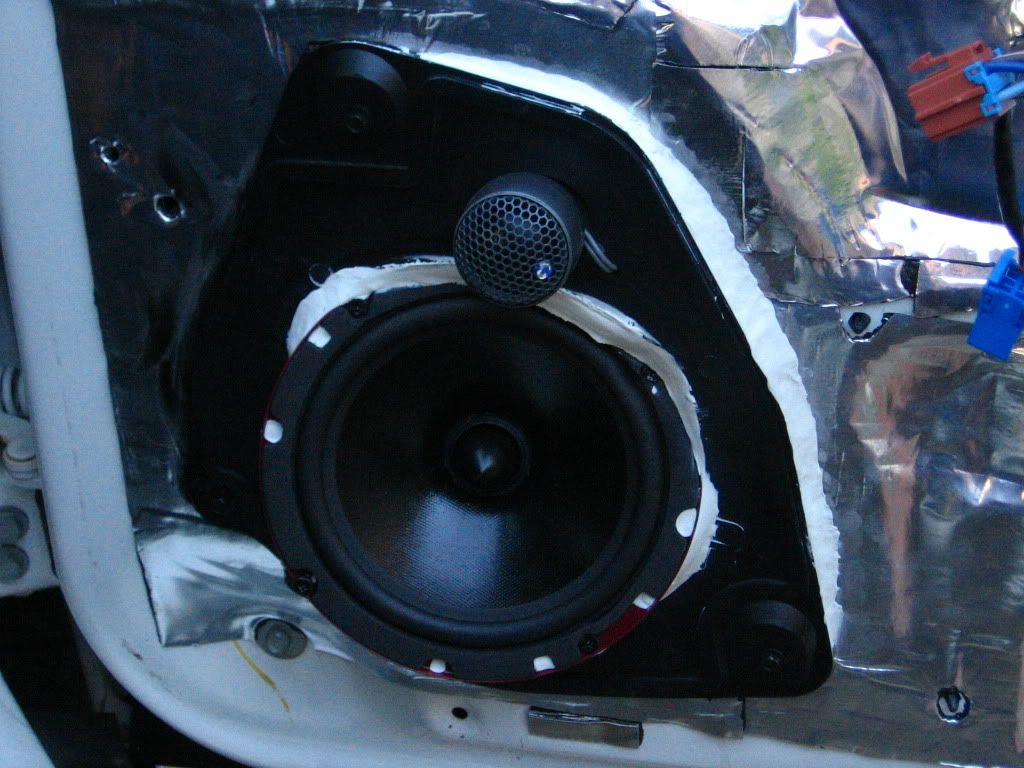
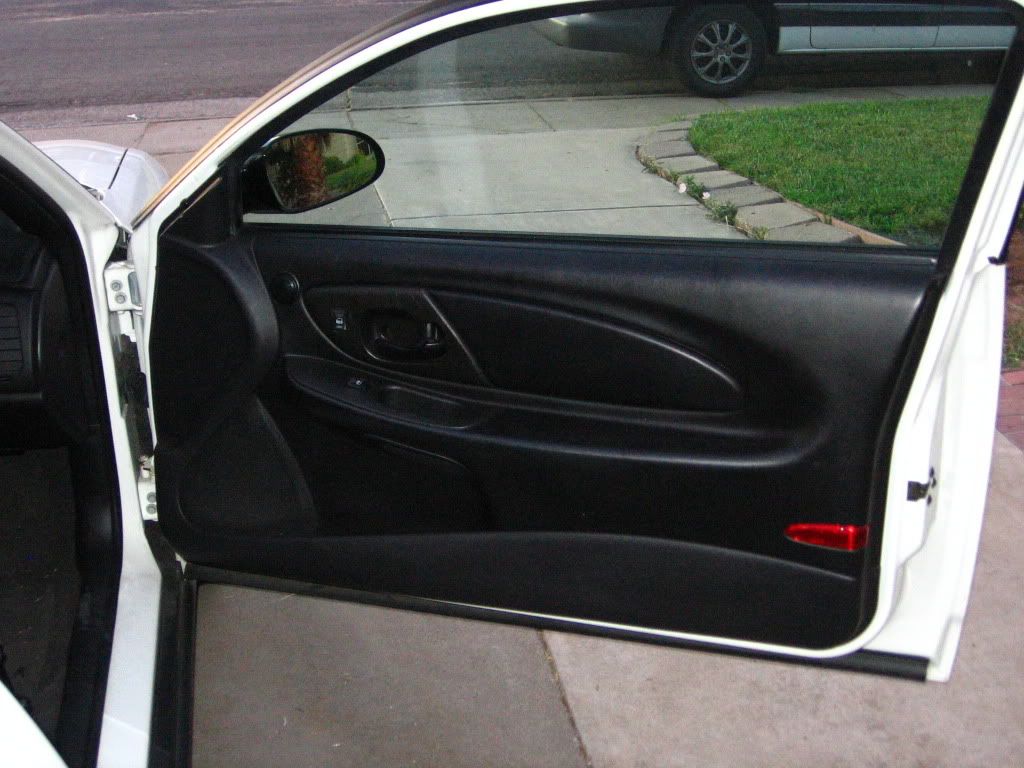
I decided to mount my components like this for a few reasons...
#1 It's ideal to keep your tweeter mounted as close to the mid as possible to ensure ideal soundstage imaging.
#2 I have Rainbow DreamLine tweets installed in my door panels and it's already a tight fit, my CDT tweets are a little bigger so they wouldn't fit there even if I wanted to put them there.
#3 My door panels are black, my CDT tweets are grey, I didn't want them to stand out like that.
So once I got the components mounted in the pods I had a pretty noticeable gap between the basket ring and the pod itself
I decided the best way to fix this would be to seal the speaker in with non-hardening modeling clay. I sealed it up all the way around to prevent the possibility of any leaks. Since i'm gonna be running fronts only (no rear fill) I figured this is necessary to make the front stage as strong as possible.
Then I needed to run speaker wire for them
KnuKonceptz 16ga. run through the factory door loom and into the cabin
The drivers side was more challenging because again, my ham-hock of a hand proved to be an issue with the lack of space in the lower dash for me to reach up to where the loom enters the cabin so I could pull the wire through. I forced my hand in there and got it done but i've got small cuts all over, showering should be lovely. But again, once I got it through it was all good. Then I tagged the wires so I know which one is for the mid and which one is for the tweeter.
After that it was time to solder up the speaker wires and install the pods to the doors.
As you can see there was a little gap between the pod and the door panel, but nothing a little modeling clay couldn't handle
Thread Starter
|
Joined: May 2005
Posts: 3,221
Power/Signal cables and bass **** installation
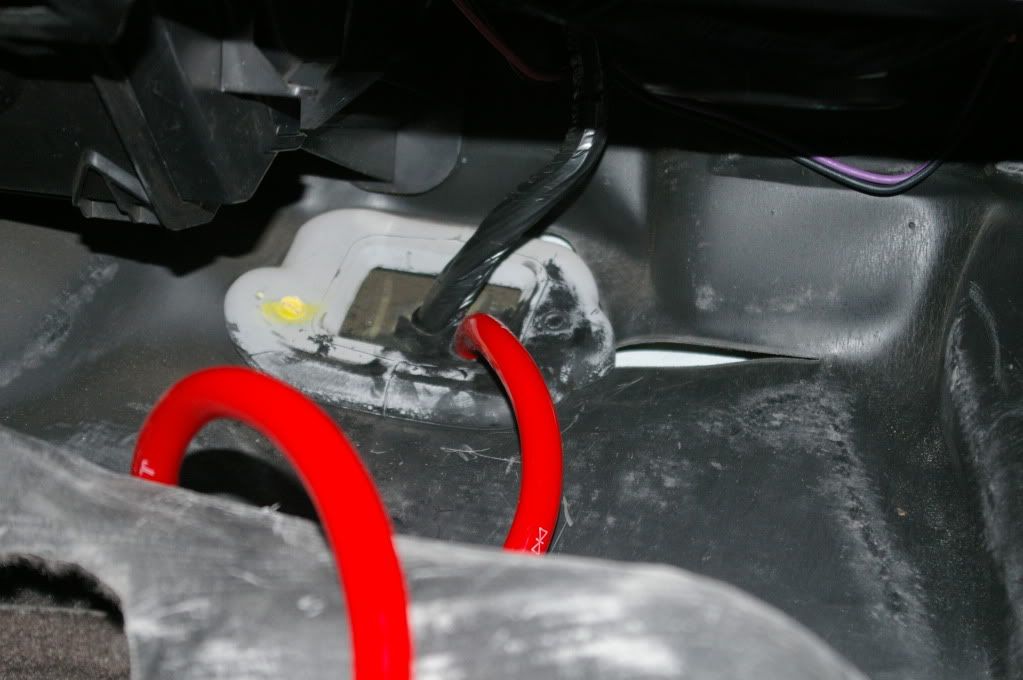
Running the power lead was a huge pain in the a**. The only way I could see to get it into the engine bay from the cabin was through a super thick factory grommet on the passenger side. Judging from the way the wires were routed from the inside and from what I could tell in the engine bay, it looked like the lower right side of the grommet was free and clear so that's where I decided to go for it. About 45 minutes later and having used lots of lube, I finally got my 2ga through the hole. Bad choice of words 
Then came the task of routing it under the carpet into the trunk, no big deal right? Ha! Chevy used a thick, dense foam on the underside of the carpet so not only was it pretty much stuck to the floor, but once I got it separated it was so damn sticky that it made not only getting my arm in there a task, but pulling the wire under it was pretty damn difficult too. This was easily the hardest part of the built so far, but I got it done.
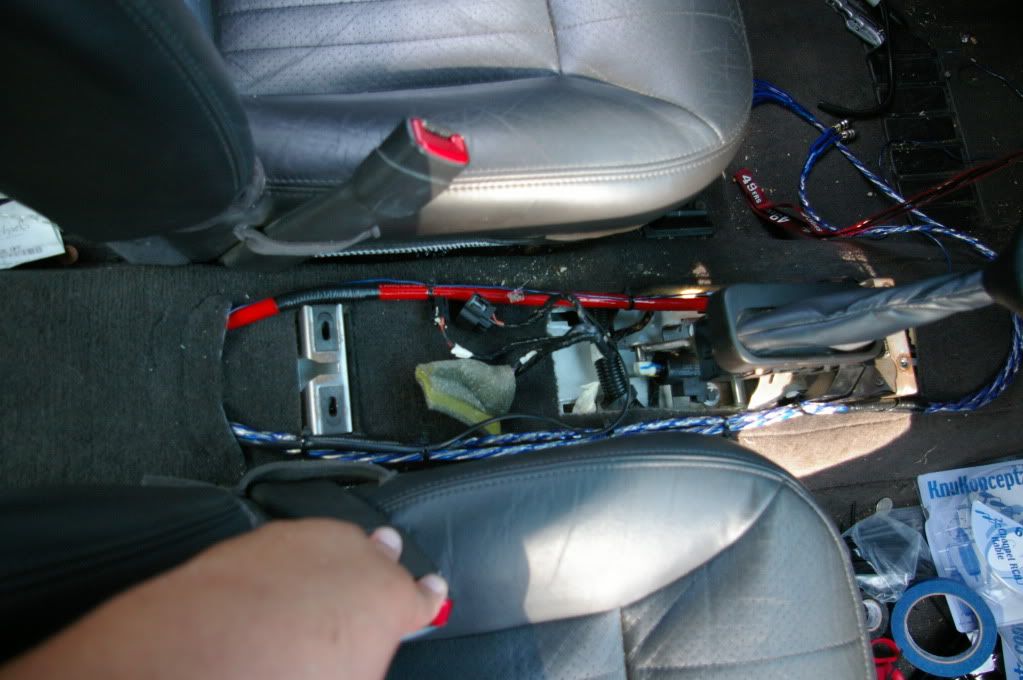
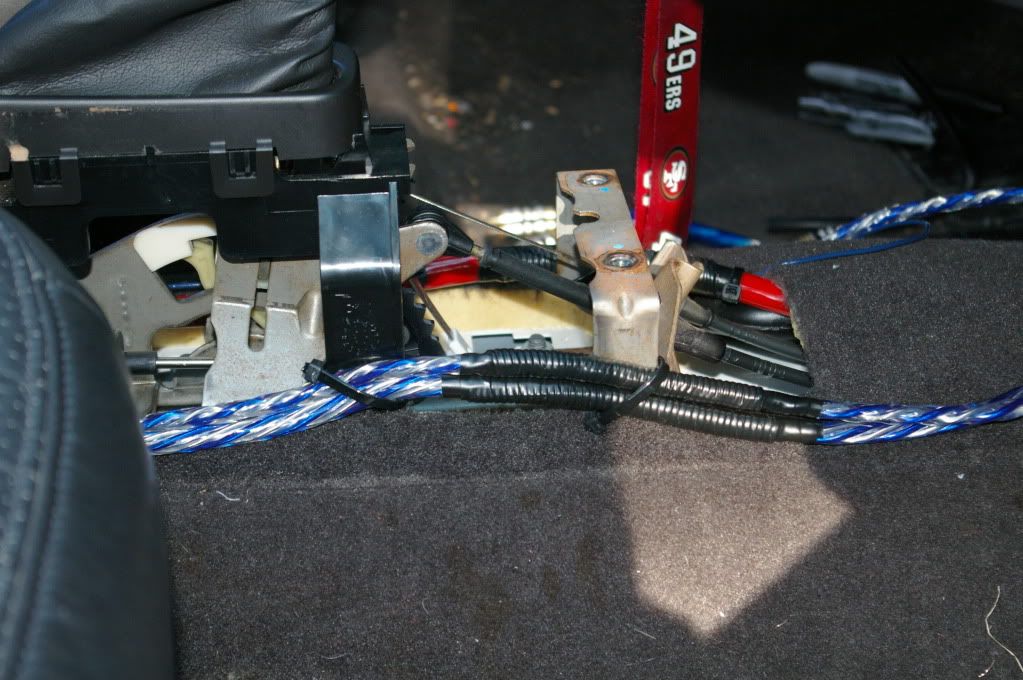
I wrapped a section of the lead w/loom to protect it from the metal it runs next to up by the gearshifter

The little blue wire is the remote lead
So the power/remote leads are run on the left side, rca's and bass **** wires run on the left
Once I got the wires into the back of the car it was smooth sailing
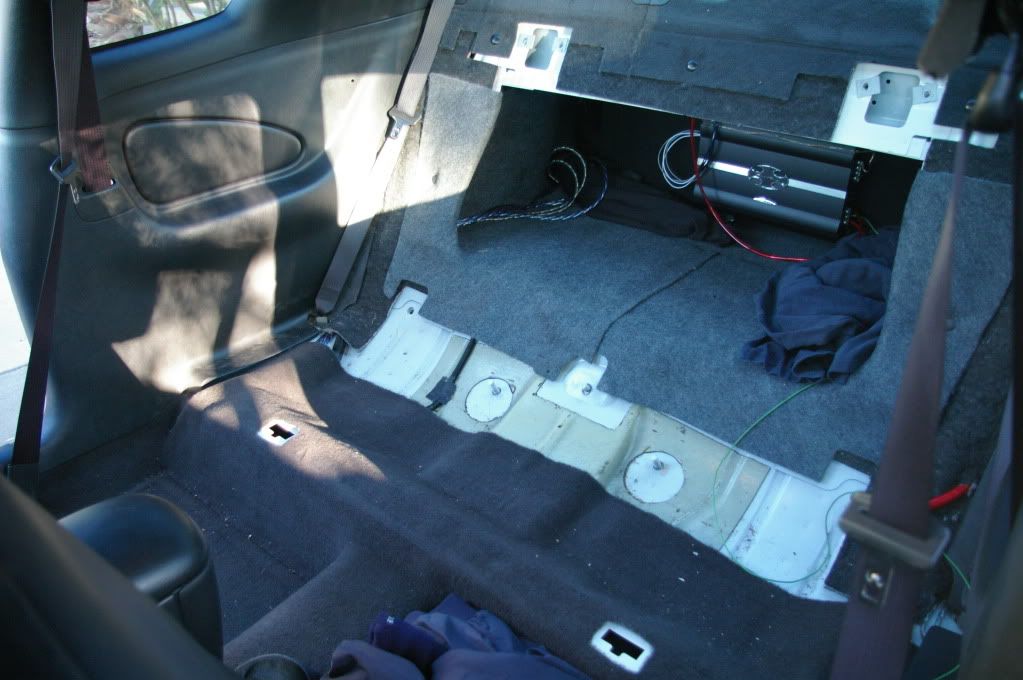
The green wire is the current remote wire, the new remote wire is blue and zip tied to the power lead. The power lead was too big to go under the side trim panel so that's why that little bit of it is exposed. I just ran it right through the backseat insulation material and into the trunk. Obviously my foam seat will be covering it so no worries.
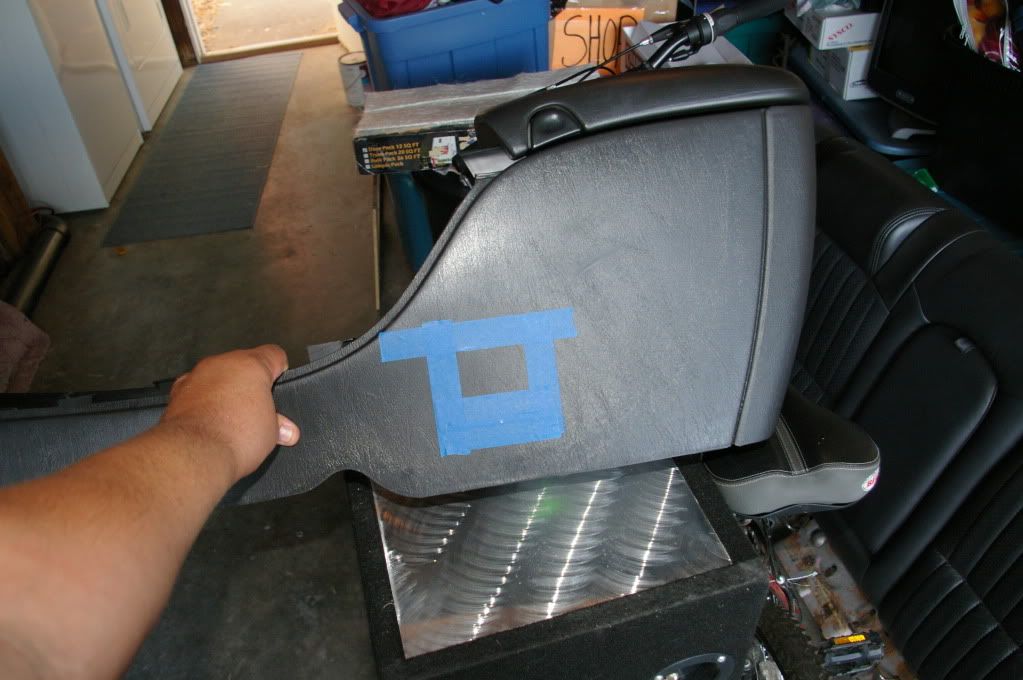
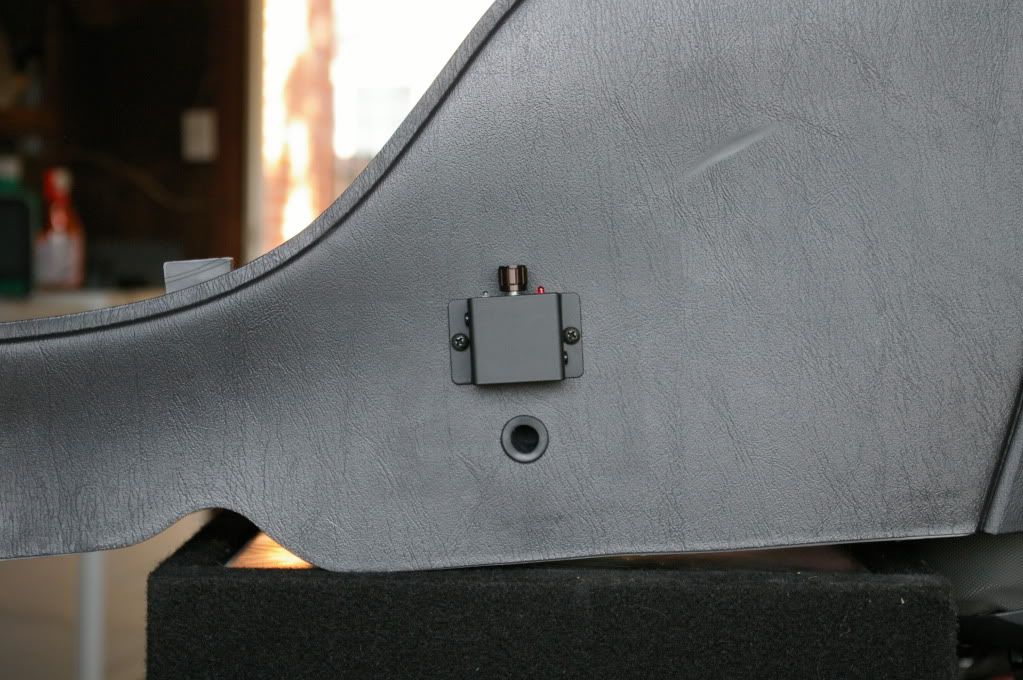
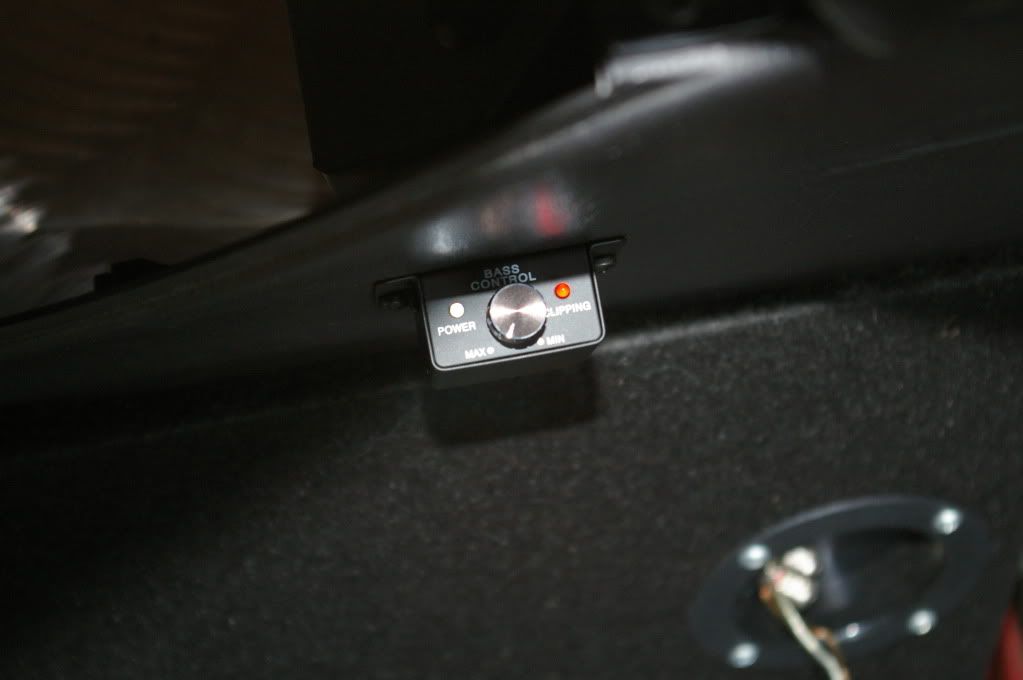
Once that was done it was on to the bass **** installation. I sat in the driver seat and figured where I wanted it, laid some tape down to mark the area I wanted it to be, drilled a few holes, installed a grommet, bolted it up, connected the wire and it was done.
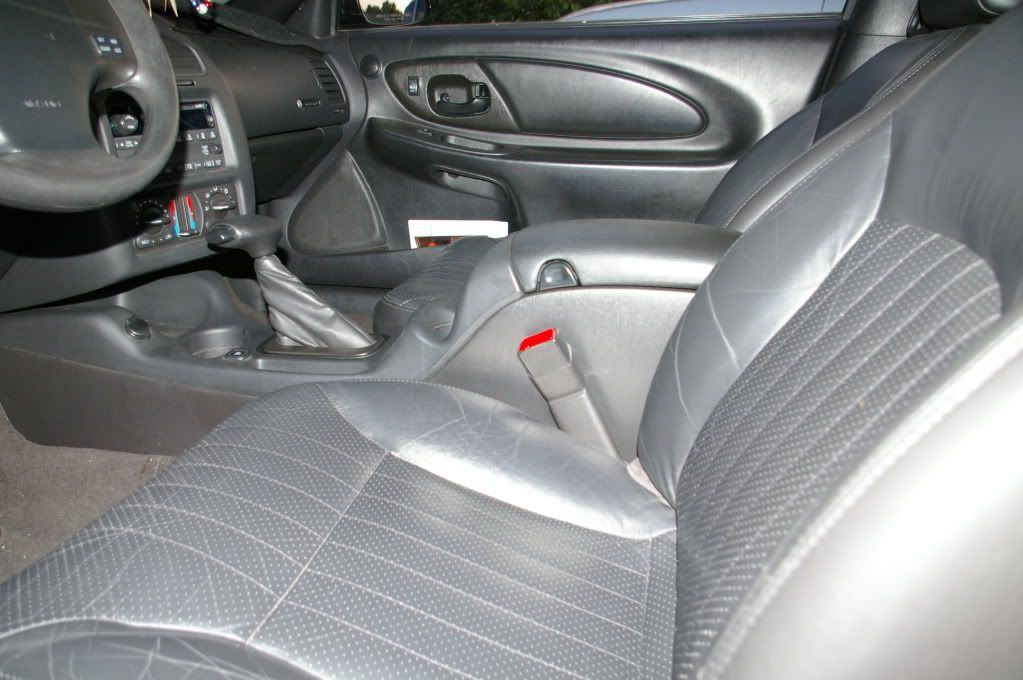
Can't even see it from outside the car
Then came the task of routing it under the carpet into the trunk, no big deal right? Ha! Chevy used a thick, dense foam on the underside of the carpet so not only was it pretty much stuck to the floor, but once I got it separated it was so damn sticky that it made not only getting my arm in there a task, but pulling the wire under it was pretty damn difficult too. This was easily the hardest part of the built so far, but I got it done.
I wrapped a section of the lead w/loom to protect it from the metal it runs next to up by the gearshifter
The little blue wire is the remote lead
So the power/remote leads are run on the left side, rca's and bass **** wires run on the left
Once I got the wires into the back of the car it was smooth sailing
The green wire is the current remote wire, the new remote wire is blue and zip tied to the power lead. The power lead was too big to go under the side trim panel so that's why that little bit of it is exposed. I just ran it right through the backseat insulation material and into the trunk. Obviously my foam seat will be covering it so no worries.
Once that was done it was on to the bass **** installation. I sat in the driver seat and figured where I wanted it, laid some tape down to mark the area I wanted it to be, drilled a few holes, installed a grommet, bolted it up, connected the wire and it was done.
Can't even see it from outside the car